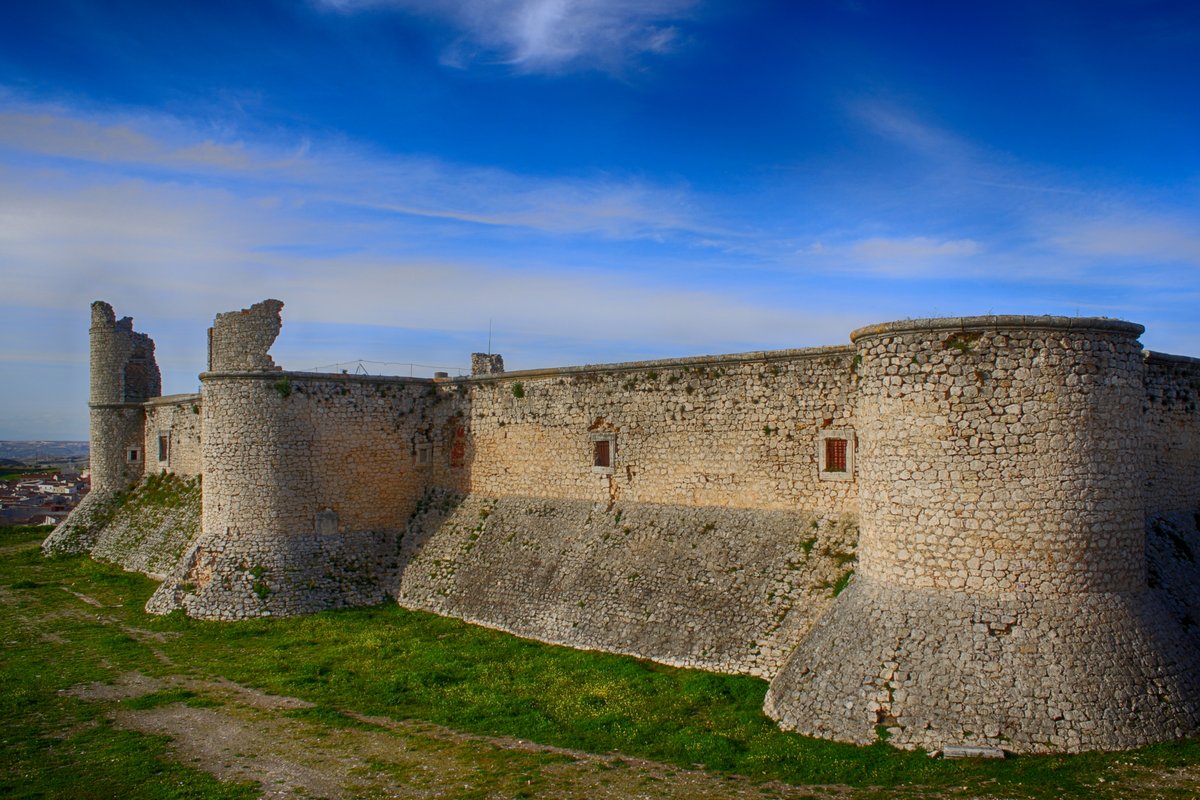

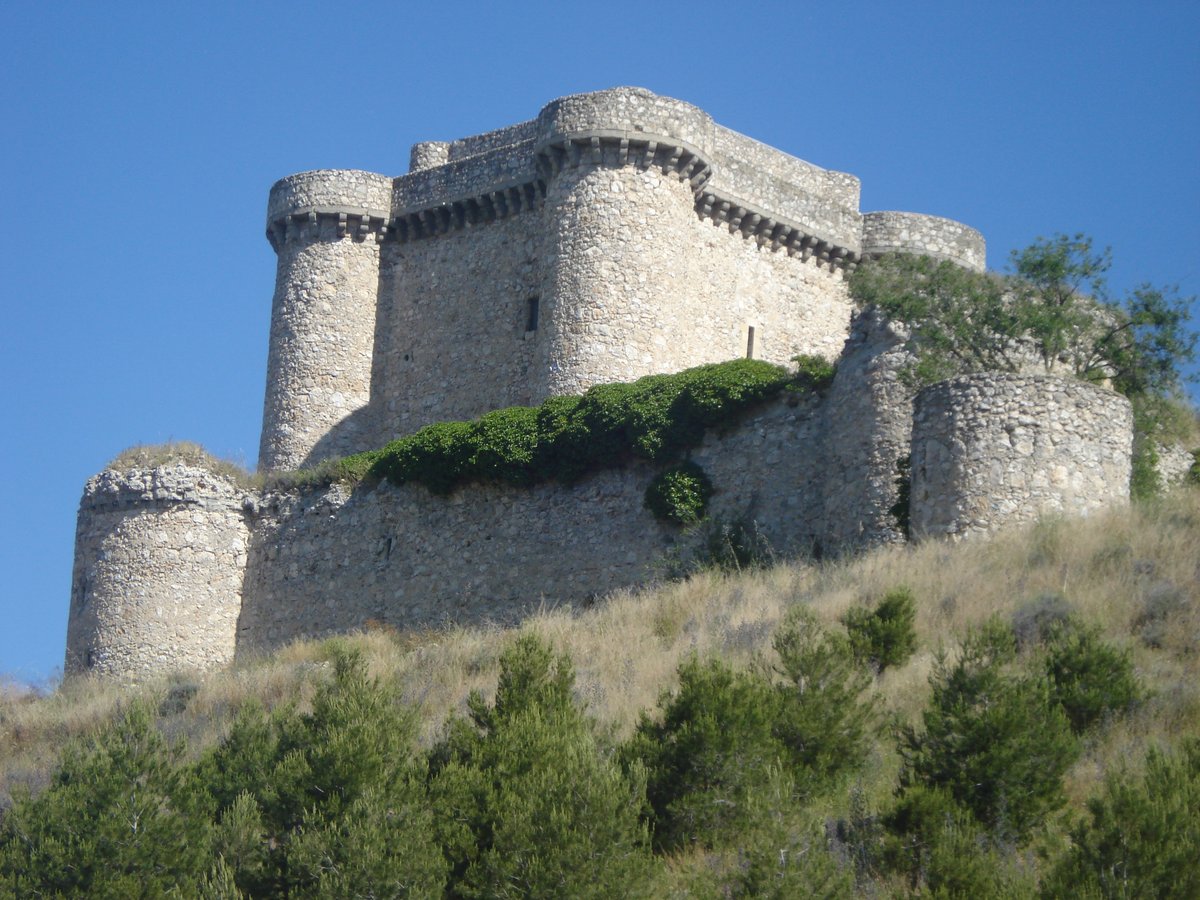
The Castillo de Chinchón is located south of the urban center of Chinchón and is part of the historic-artistic site of Chinchón, declared in 1974. Built in the 15th century, it is composed of two interlocking quadrangular bodies with cylindrical towers at the corners. The building suffered significant damage during an attack by the tropas comuneras in 1520, and the plaza was surrendered with all its artillery on January 21, 1521.
The structure was well preserved until 1705, when it suffered the consequences of the War of Spanish Succession. At that date, it was occupied by the troops of the army of the Archduke of Austria and later suffered a fire in its northwest part due to the storage of hemp. In 1808, during a three-day siege of Chinchón, it was looted and burned by the Polish Brigade of Marshal Claude Perrin Victor during the War of Independence.
In the 20th century, some of its materials were used for the regeneration of roads, fences, and houses, and the building was also used as a liquor factory. Today, only the ground floor of the castle is preserved, as the upper floor was destroyed during various sieges, fires, and lootings. The interior features a large central courtyard surrounded by galleries with rooms and an aljibe in the center. Access to the interior of the castle is not allowed.
Sources: Wikipedia, OpenStreetMap, Wikidata, Wikimedia Commons
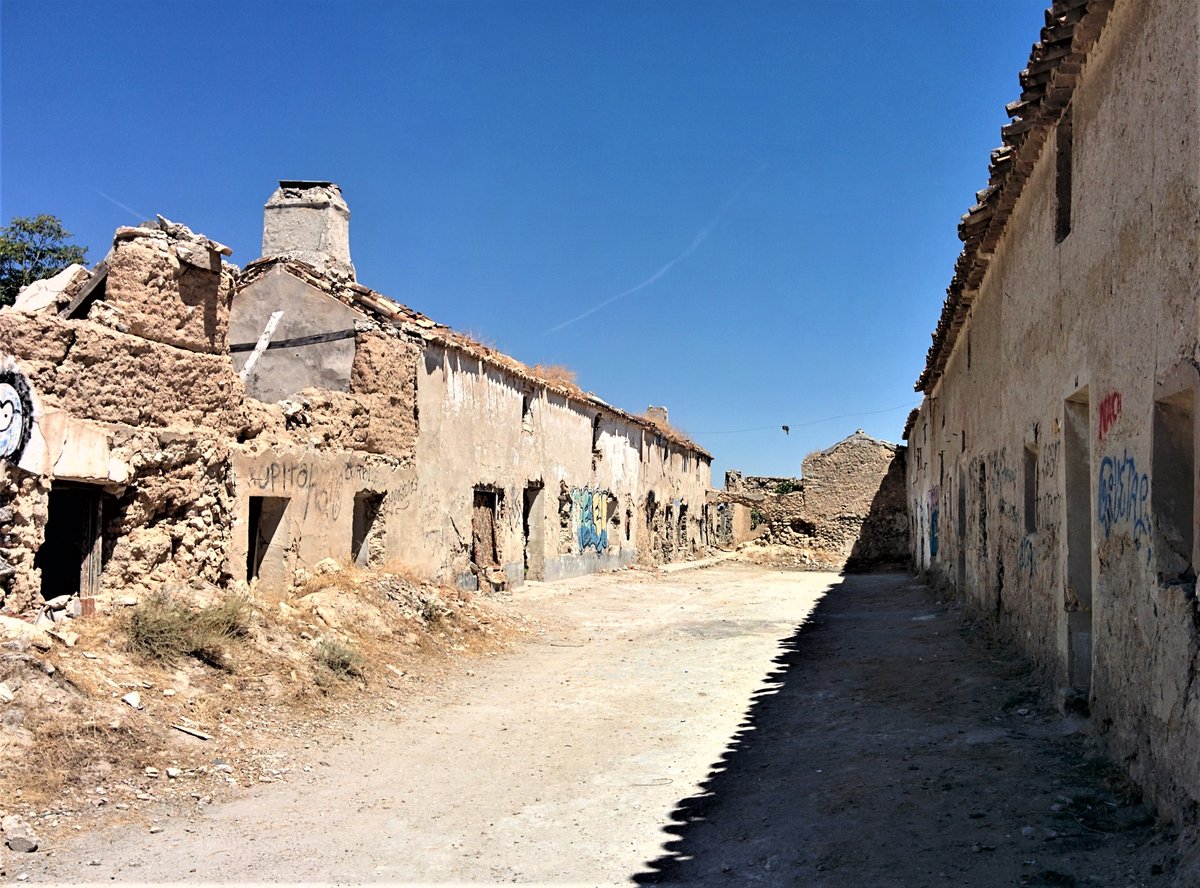
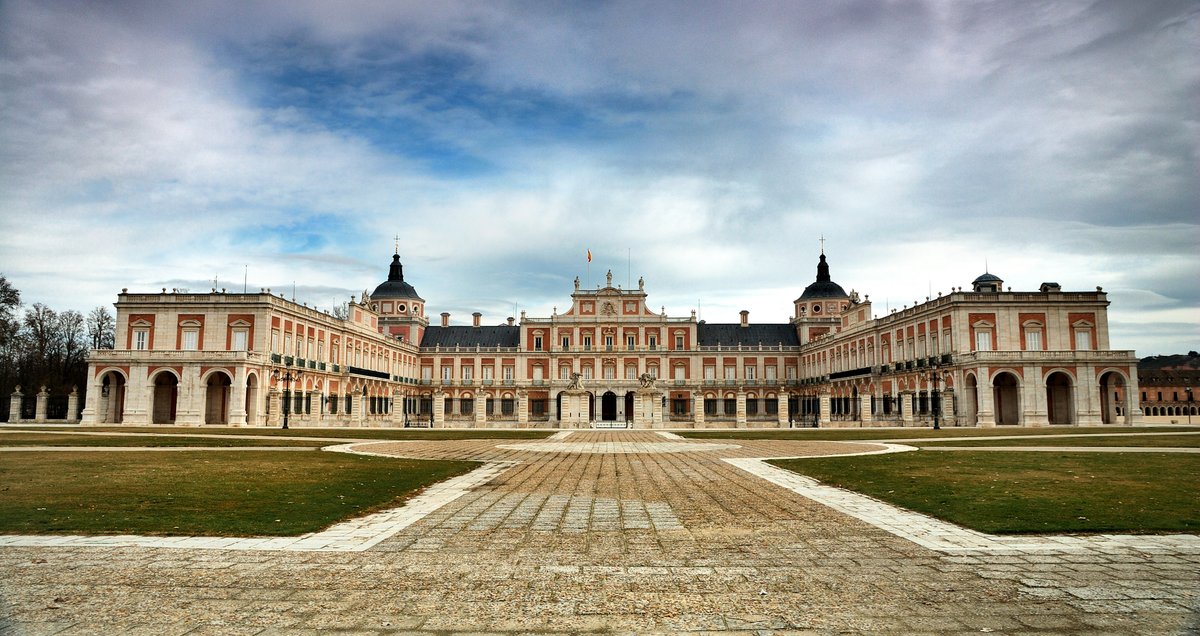
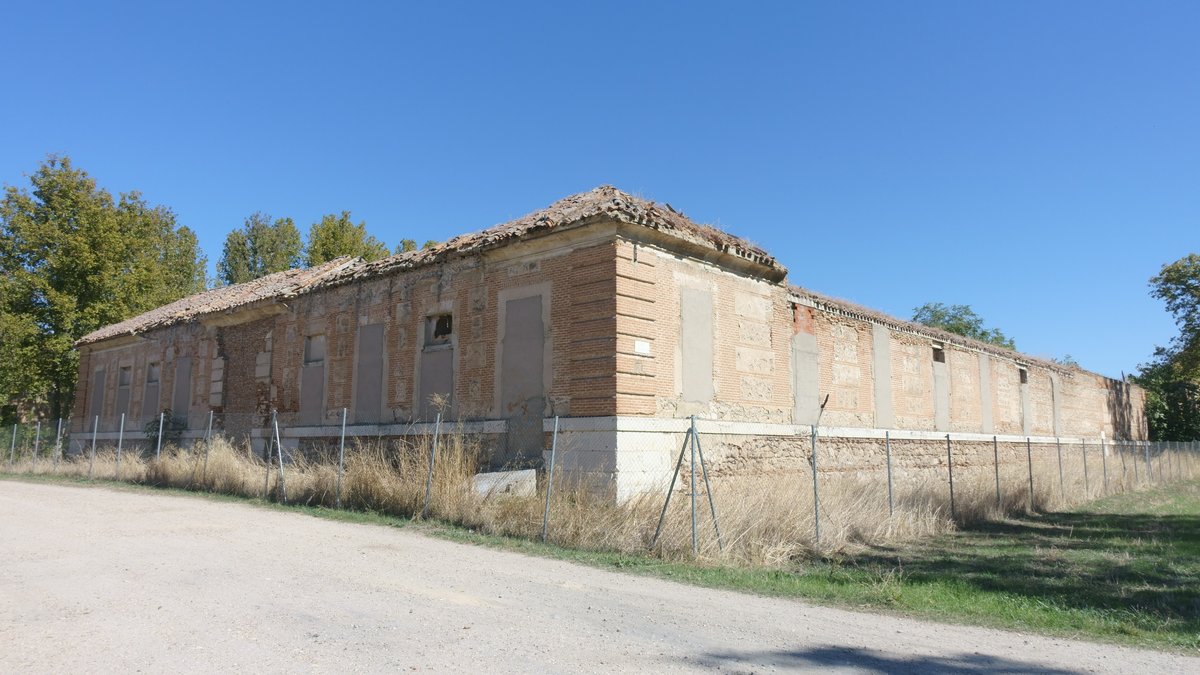
Written by Nik Frost
Discuss this with the author and others
No comments yet. Be the first to start the conversation.