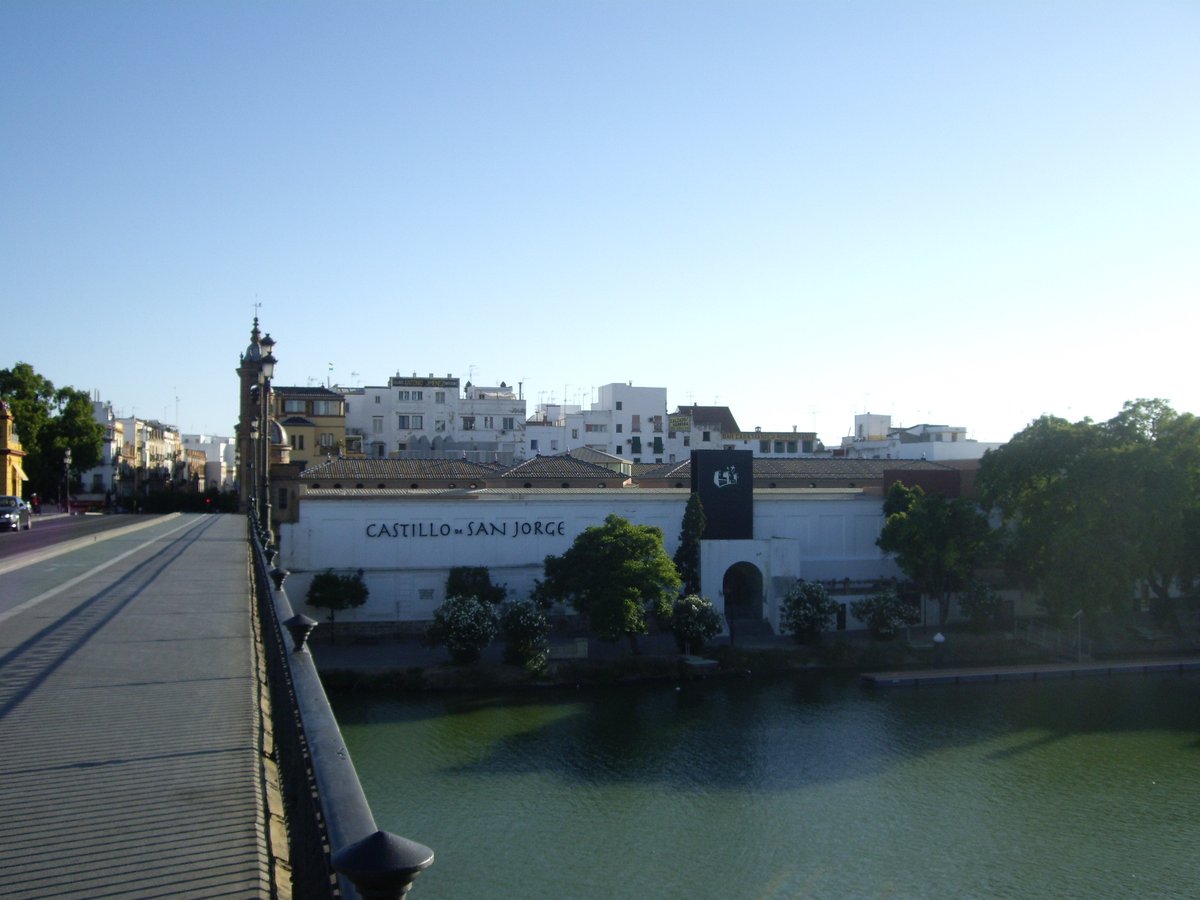

Beneath the lively activity of the Mercado de Triana lies a hidden world. You can observe the 19th-century changes where a medieval fortress was dismantled to create a grain warehouse and marketplace. While people shop today, the site preserves an underground museum focusing on the history of the castle and the Spanish Inquisition.
This location functioned as a defensive stronghold on the west bank of the Guadalquivir long before it became a market. In 1171, the Almohad king Jucef Abu Jacub established a bridge of chained boats to connect the shores to the castle. Its purpose shifted in 1481 when the Spanish Inquisition took control, using the site as a headquarters and prison until 1626.
This atmosphere of confinement influenced Beethoven's opera Fidelio. The story focuses on prisoners in a Sevillian jail, and it is very likely that the composer meant the castle of San Jorge. It was a site of religious repression, a truth the city now honors with a commemorative plaque.
We invite you to explore these underground ruins at the museum and interpretation center. These archaeological remains preserve the fortress and offer a look into a history of persecution.
Sources: Wikipedia, OpenStreetMap, Wikidata, Wikimedia Commons
Written by Nik Frost
Discuss this with the author and others
No comments yet. Be the first to start the conversation.