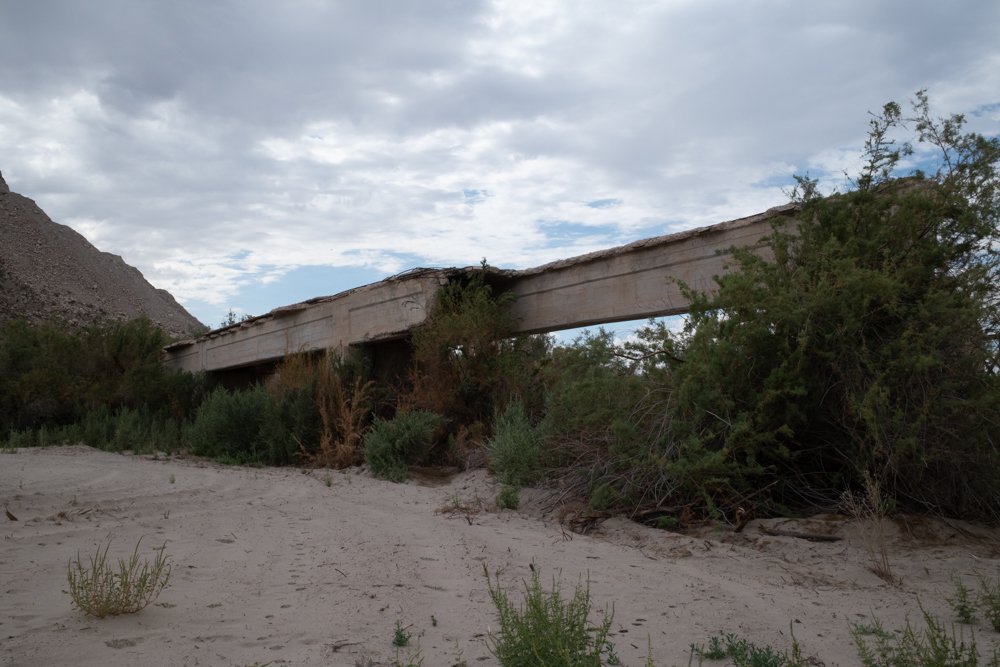
The Arizona state government had a plan in 1913 to build a massive concrete girder bridge over the Gila River, but they had a bit of a logistical hiccup. They initially rejected every single construction bid because they wanted to use prison labor. When the contractors complained about the lack of manpower, the state engineer had to go back to the drawing board and redesign the entire structure just to make it doable for the inmates.
Contractor Parry Borchers eventually took the job in 1914, but he defaulted on his loans almost immediately. The state had to step in and finish the job with the convict crew as planned. By August 1915, the Antelope Hill Highway Bridge was open. It was a centerpiece of the Ocean to Ocean Highway, carrying traffic between Yuma and Phoenix, including the Dixie Overland Highway and the Old Spanish Trail.
Nature, however, had other plans. The bridge sat on a weak soil area in the floodplain, and the Gila River didn't care about engineering aesthetics. It took several floods to eventually wash out the northern approach and submerge the structure entirely. By 1922, the state gave up and built a new route through Gila Bend. The old bridge served as a secondary north-south link for a few more years until 1929, when the McPhaul Suspension Bridge officially retired it to the scrap heap of history.
Today, the ruins sit on the National Register of Historic Places. It is a solid reminder that you can't outrun a river with concrete and convict labor.
Sources: Wikipedia, OpenStreetMap, Wikidata, Wikimedia Commons
Written by Kyle McLonely
Discuss this with the author and others
No comments yet. Be the first to start the conversation.