
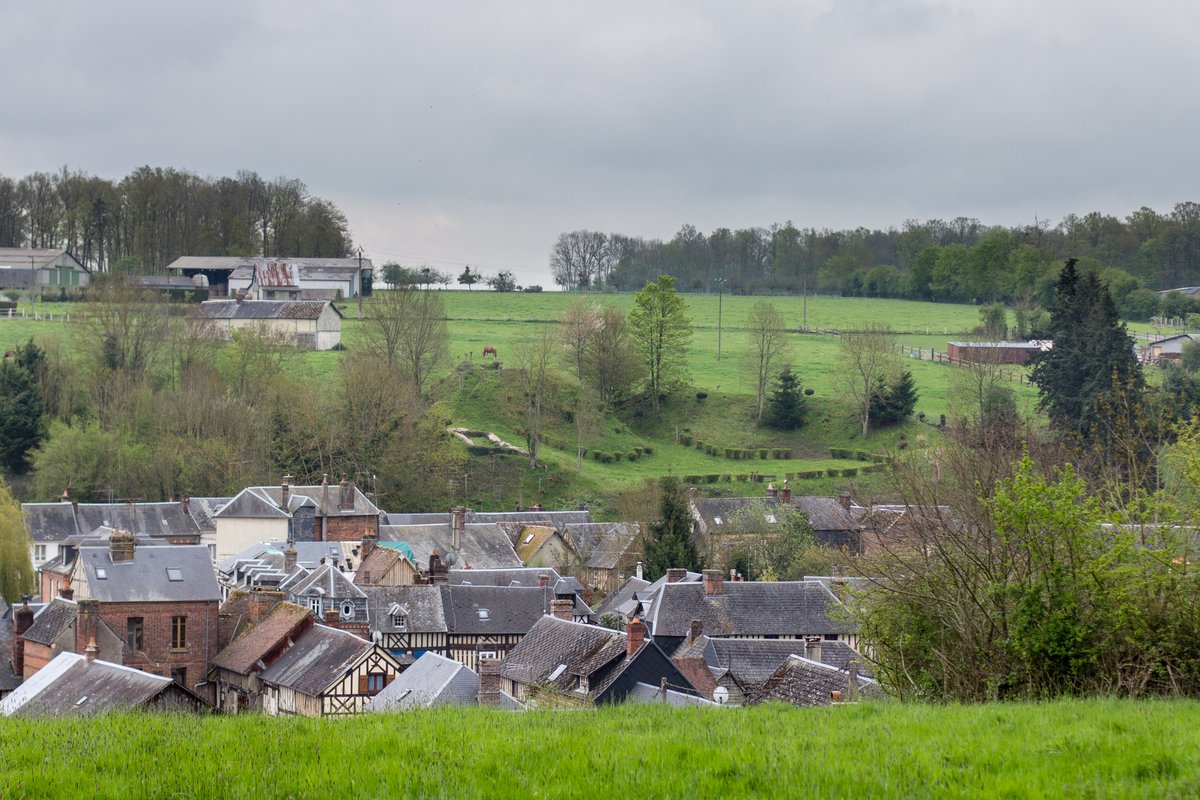
What happens to the souls that the world simply chooses to forget? This thought became a focus for Abbé Paul Buguet when he was appointed curate of La Chapelle-Montligeon and moved there on August 1, 1878. Following the sudden death of his brother in 1876 and the subsequent deaths of his nieces from grief, the priest began to reflect on the fate of the souls of the deceased. He eventually founded the « Œuvre expiatory pour la délivrance des âmes du purgatoire » in 1884.
To provide for the temporal needs of his parishioners, Buguet initially founded a jersey factory, a lace workshop, and a leather goods business between 1878 and 1884. These projects, while achieving some initial success, failed more or less quickly due to technical changes of the era. However, he also sought to address spiritual needs, realizing that large families were often quickly forgetting their deceased relatives. He eventually succeeded in linking his two goals by founding a printing house to produce tracts and images for his new association, which rapidly gained international renown.
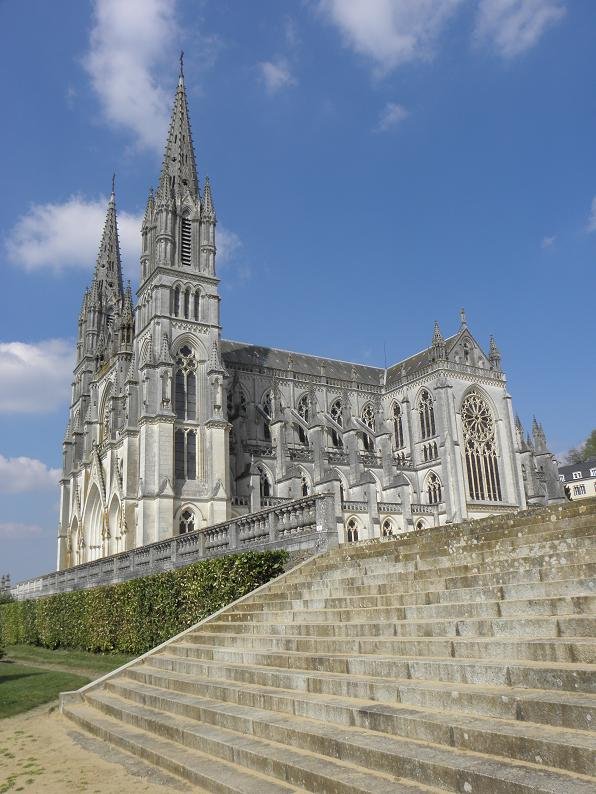
By 1895, the association was granted the title of Archiconfrérie Prima-Primaria, making it the mother of all associations dedicated to the souls in purgatory. A secretariat was established in Rome under the protection of Cardinal Lucido Maria Parocchi, and offices for the deceased were celebrated daily at the basilica Santa Maria in Montesanto. To accommodate the growing flow of pilgrims, Buguet oversaw the construction of a large basilica between 1894 and 1911, designed by Maître Tessier.
The basilica is a vast building that gathers numerous works of art, including stained glass, mosaics, and statues. Its stained glass windows, which equip every window, are renowned for forming a panorama of glass art from 1917 to 1971 and focusing exclusively on the themes of Eschatology and the Communion of Saints. The church was consecrated in 1928 and received the title of minor basilica the following day. Today, it remains an important sanctuary and a monument listed in the inventory of Historic Monuments.
Sources: Wikipedia, OpenStreetMap, Wikidata, Wikimedia Commons
Written by Nicolo Ciampini
Discuss this with the author and others
No comments yet. Be the first to start the conversation.