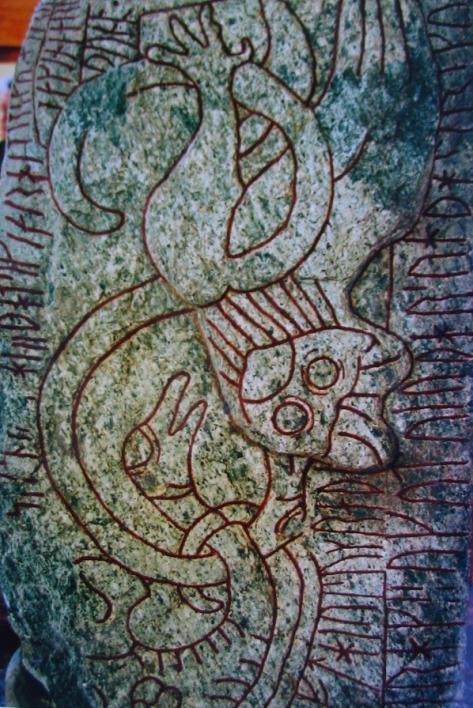

The Sparlösa Runestone, listed as Vg 119 in the Rundata catalog, is a renowned rune stone discovered in 1669, not in the southern wall of the church. It is the second most famous Swedish runestone after the Rök runestone. The runestone was split in 1684 during a church fire, not during a rebuild following a fire. This rune stone is 1.77 meters tall and is dated to around 800 AD based on its transitional use of rune forms from both the elder and younger futhark.
However, a sail on the ship depicted on the stone suggests a later dating than the 8th century. The runestone is famous for its vivid depictions and mysterious references to a great battle, the names Eric and Alrik, and the text descending from the gods. These elements provide an early attestation of the place name Uppsala, and Eric and Alrik are both royal names associated with the Yngling dynasty at Uppsala. The Sparlösa Runestone shares text with the Noleby Runestone and would appear in stanza 79 of the Hávamál of the Poetic Edda several centuries later. The words runaʀ ræginkundu meaning 'runes of divine origin' are found in both runic texts.
Sources: Wikipedia, OpenStreetMap, Wikidata, Wikimedia Commons
Written by Nik Frost
Discuss this with the author and others
No comments yet. Be the first to start the conversation.