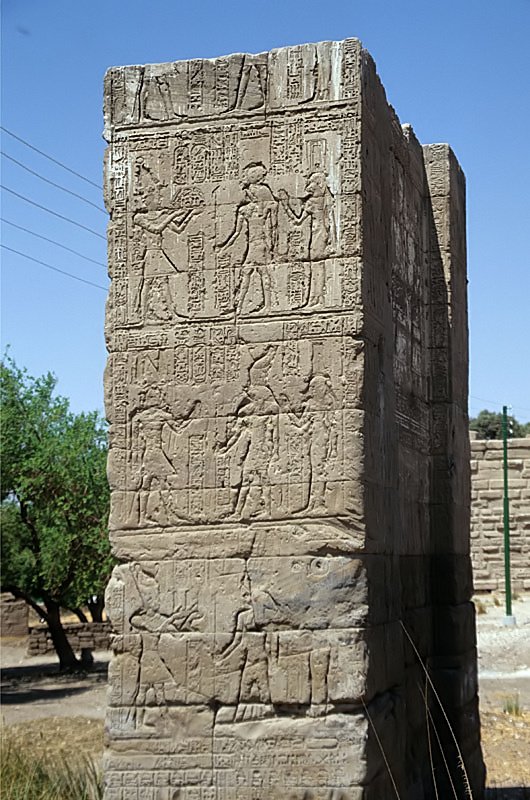

Dedicated to the goddess Isis, this temple was unique in this area as it was not associated with the Theban Triad, and its construction began around the early 1st century CE.
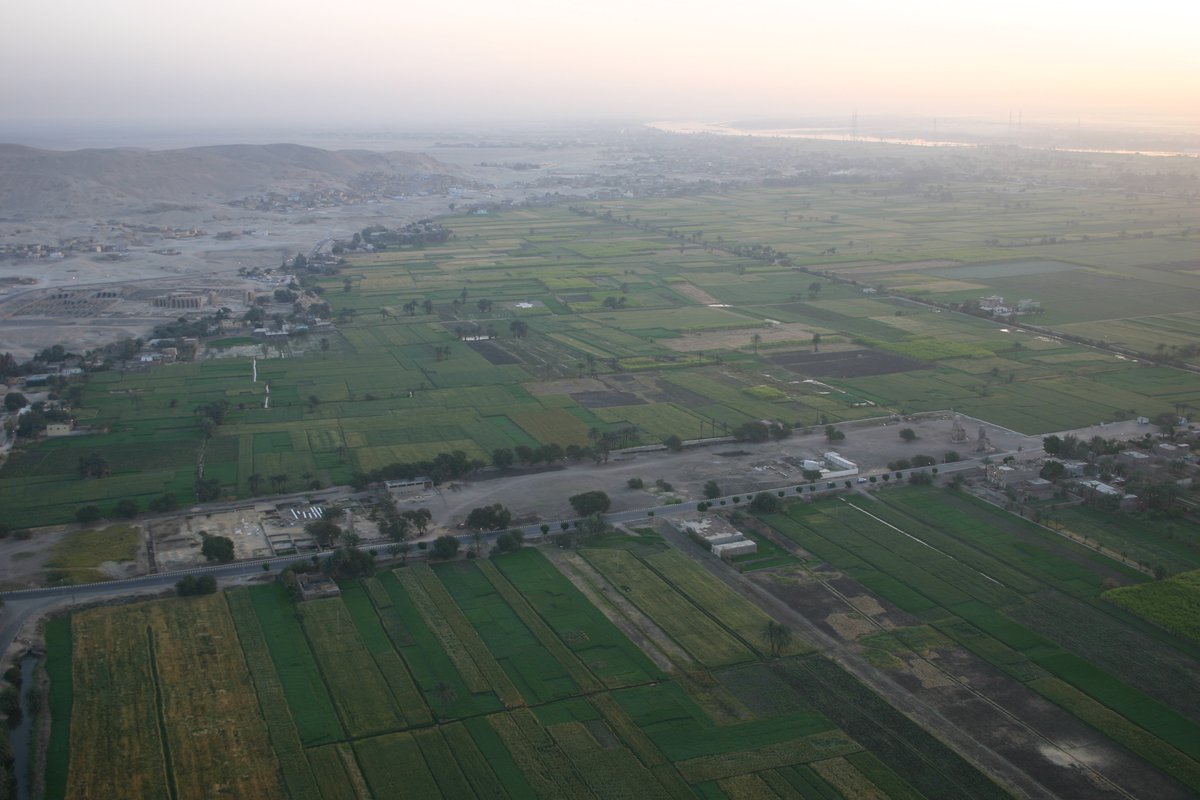
The temple was built during the Greco-Roman period and is located on the west bank of the Nile, near Malkata and Medinet Habu, with its entrance facing south. While its outer walls are not lavishly decorated, its reliefs on the inside are well-preserved. The temple is surrounded by a corridor from which side chapels and a wabet - a place of cleansing - open; also the stairs lead to the roof from this corridor. The propylon, located 60 meters east from the temple, is lavishly decorated on all sides.
Although the temple is one of the few remaining Graeco-Roman-era religious buildings in this area, it is the only one not associated with the Theban Triad. The temple's reliefs are similar to the ones at Dendera and Philae, and the walls of the temple and pylon feature cartouches of the Roman emperors Hadrian, Antoninus Pius, Galba, Otho, Vespasian, and the dictator Julius Caesar.
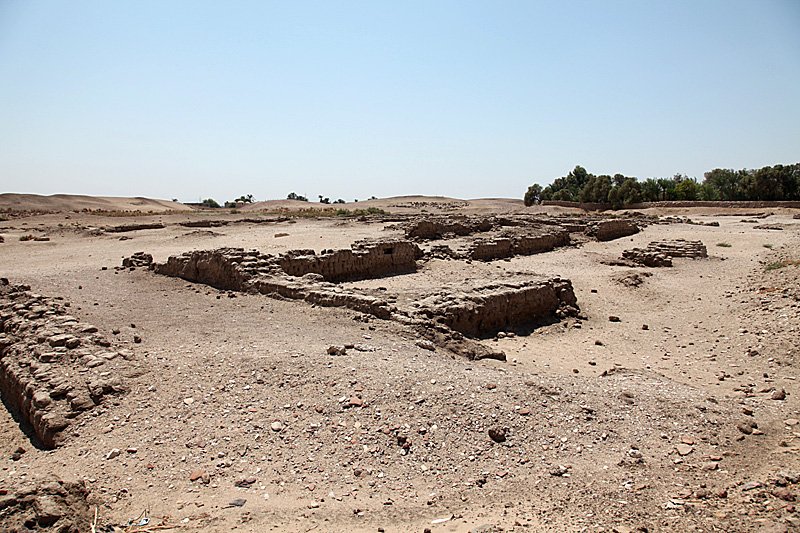
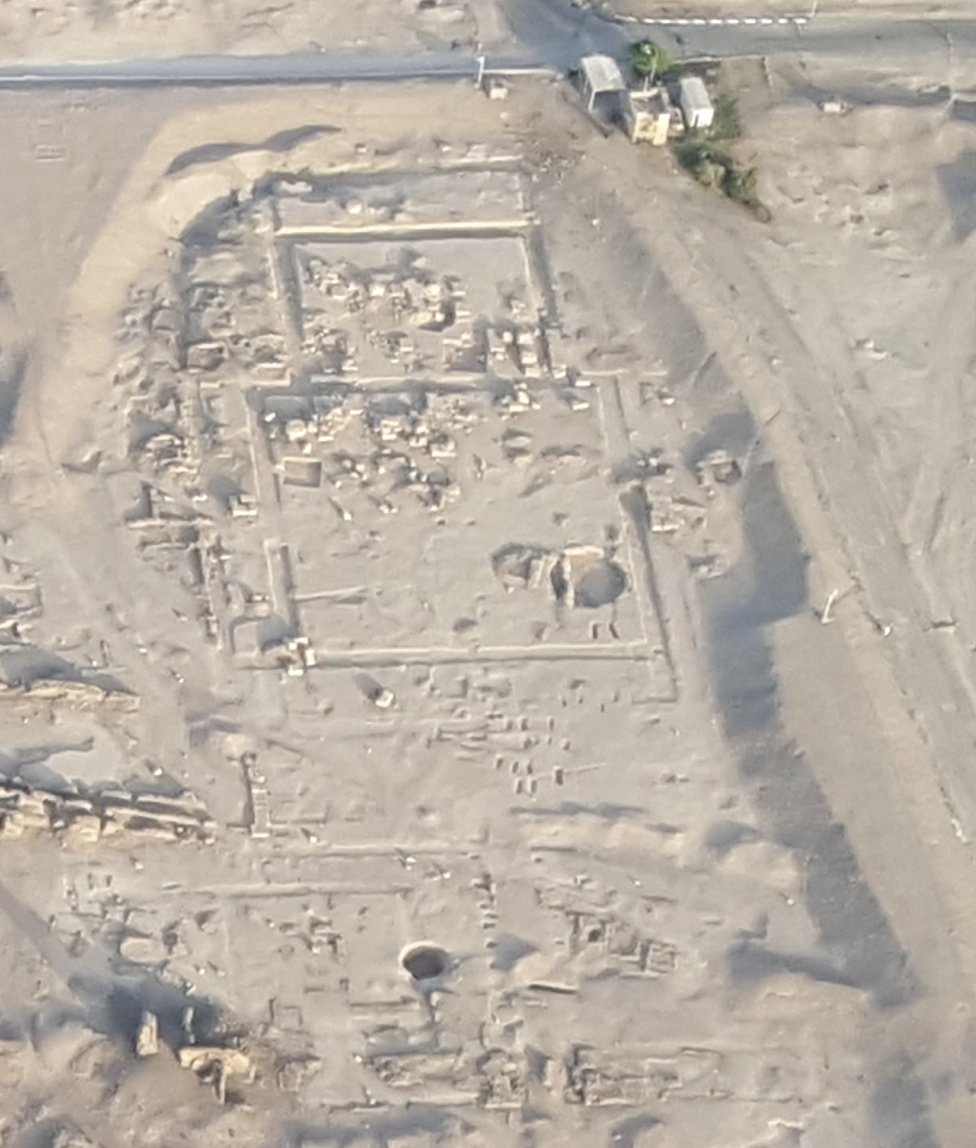
Archaeologists examined the temple in the mid-19th century, and again between 1971 and 1979, when archaeologists from the Waseda University of Japan cleared the enclosure wall and the enclosed precinct from debris, and excavated the temple's well. Thirty-two strata of fillings were detected in the well, up to the point of 4 meters under ground level, where water made further excavation impossible. Remains found in the well prove that the well and the temple itself were already abandoned and used as a trash deposit by the Coptic era.
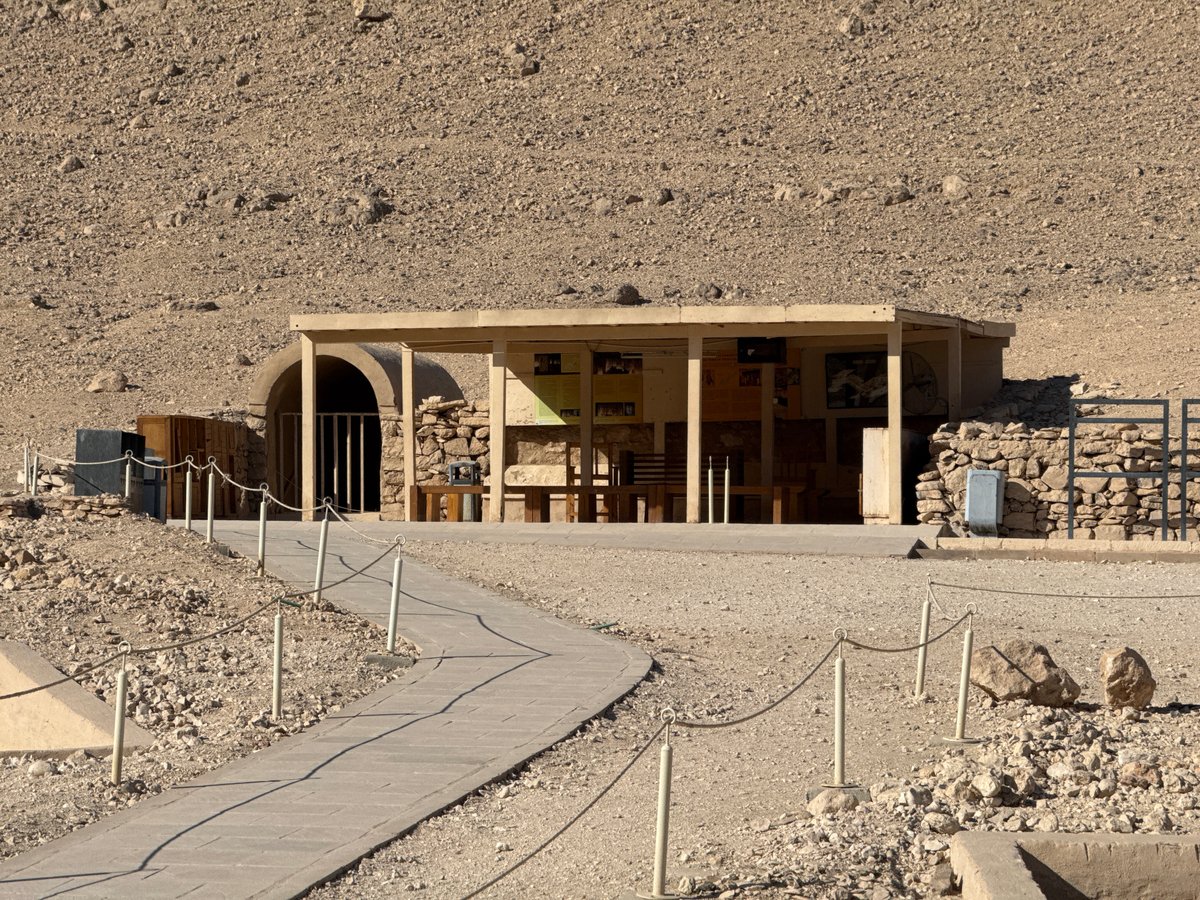
Today, what remains of the temple is its small main building, the ruins of the propylon, the brick enclosure wall, and the well. The temple precinct had an area of 78x58 metres, while the temple itself is much smaller, with an area of 13x16 m.
Sources: Wikipedia, OpenStreetMap, Wikidata, Wikimedia Commons
Written by Mutabor
Discuss this with the author and others
No comments yet. Be the first to start the conversation.