

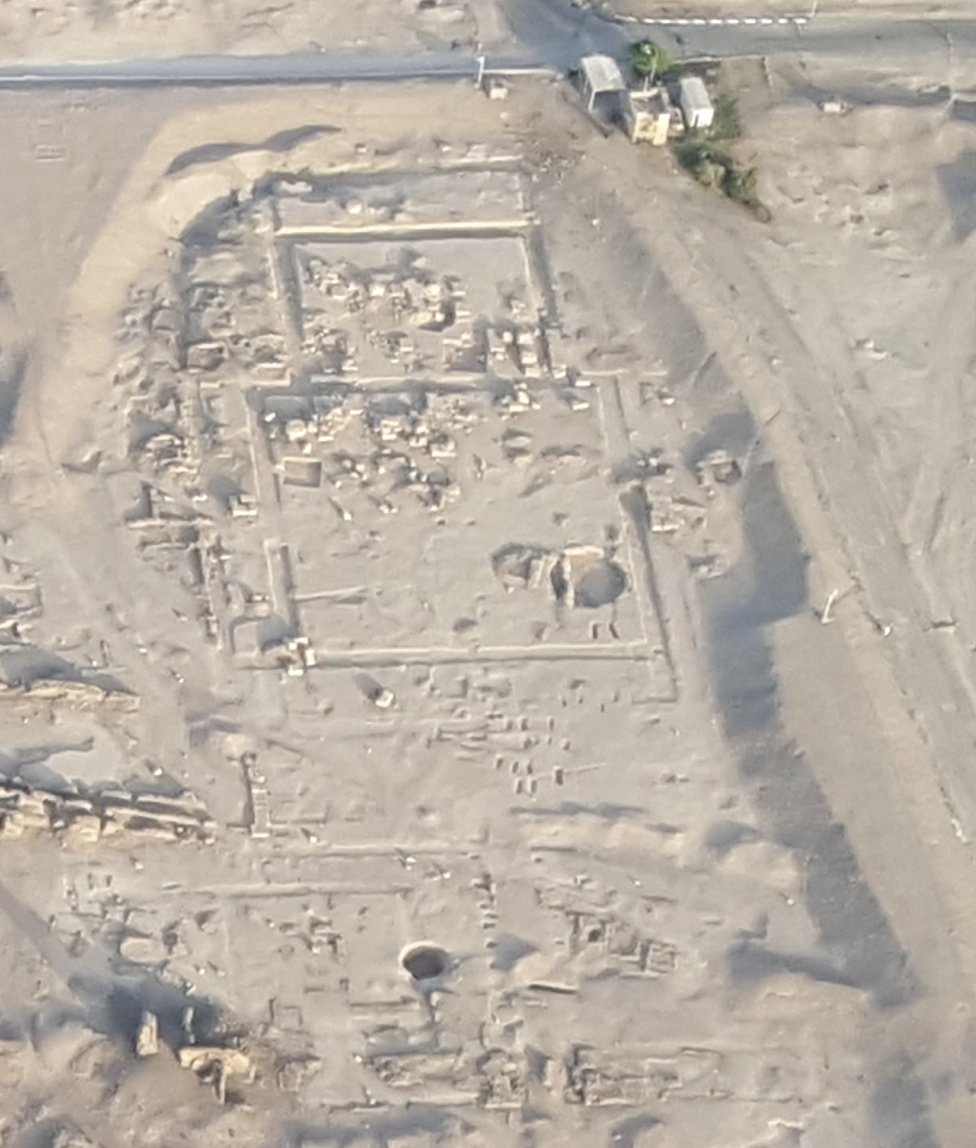
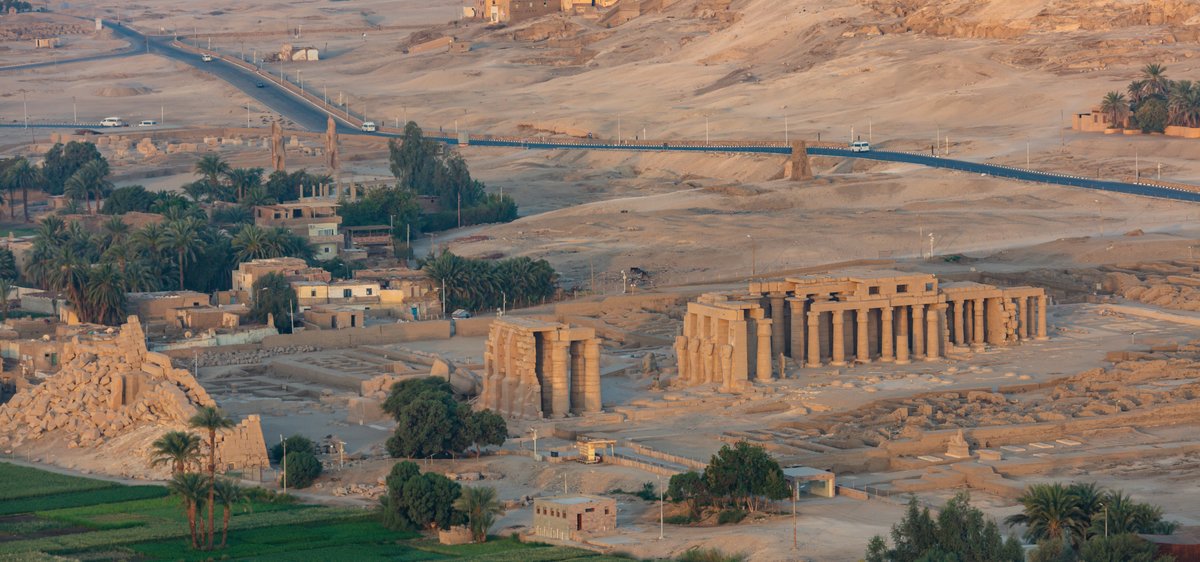
Located on the western shore of the Nile, in front of the city of Thebes (modern Luxor), lies the archaeological site of Birket Habou. Created during the reign of Pharaoh Amenhotep III, the lake was dug near the southern end of the Theban necropolis. It served as a port for the royal palace-city of Malqata, connecting it to the river. The construction required the excavation of more than ten million cubic meters of earth, which were piled along the banks into mounds called kôms. These mounds were part of a deliberate landscaping project to regularize the desert plateau.
Birket Habou served both practical and ceremonial roles. Due to its disproportionate size, it likely had a ritual significance, as crossing the lake by the royal couple held important meaning. The lake may also have been used during the jubilee festivals of Amenhotep III. Its location was likely chosen due to its proximity to the Temple of Amon at Medinet Habu, which held a major religious role at the time.
Although the site was abandoned during the reign of Horemheb, the lake did not dry up completely because it was located in a flood zone. It was refilled regularly by the floods of the Nile, eventually transforming into a marsh. By the Ptolemaic period, Medinet Habu had become a sacred orchard for the god Thoth, and it is hypothesized that ibises proliferated in the marsh of Birket Habou.
Sources: Wikipedia, OpenStreetMap, Wikidata, Wikimedia Commons
Written by Mutabor
Discuss this with the author and others
No comments yet. Be the first to start the conversation.