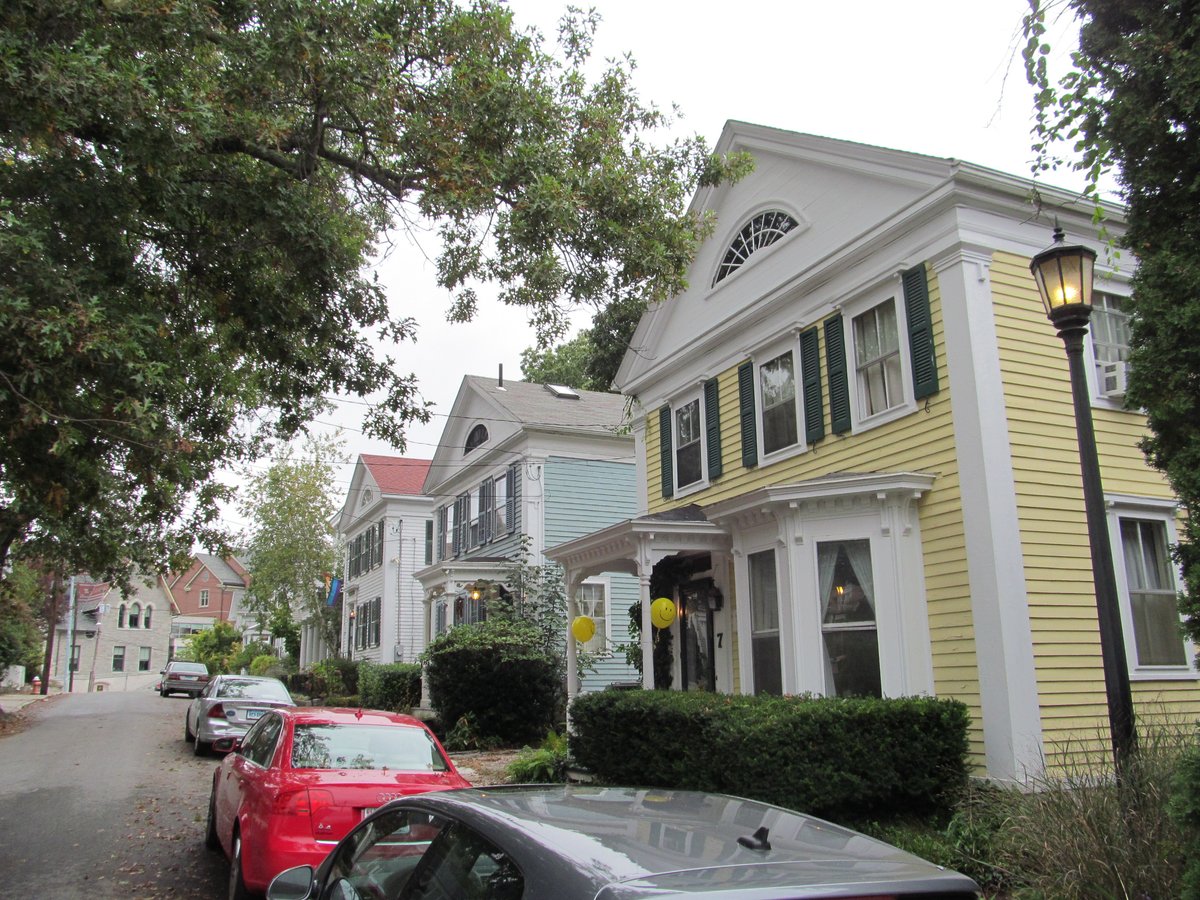

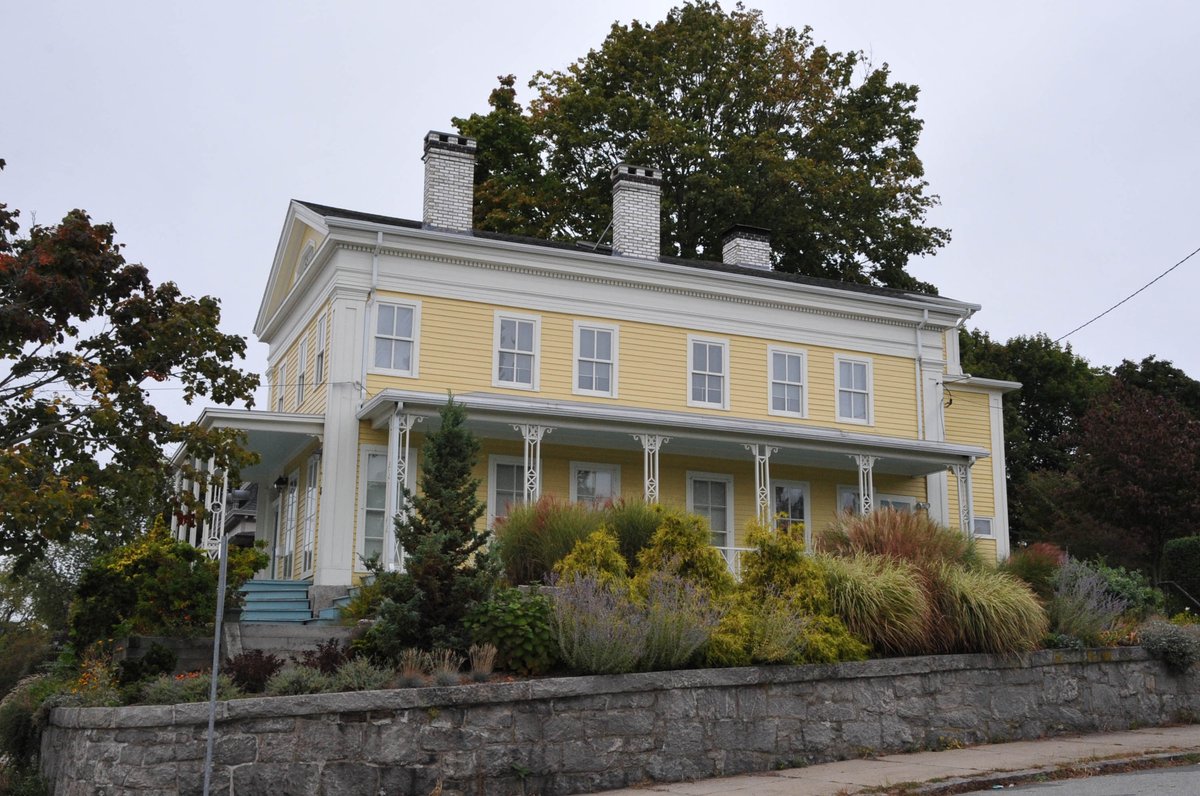
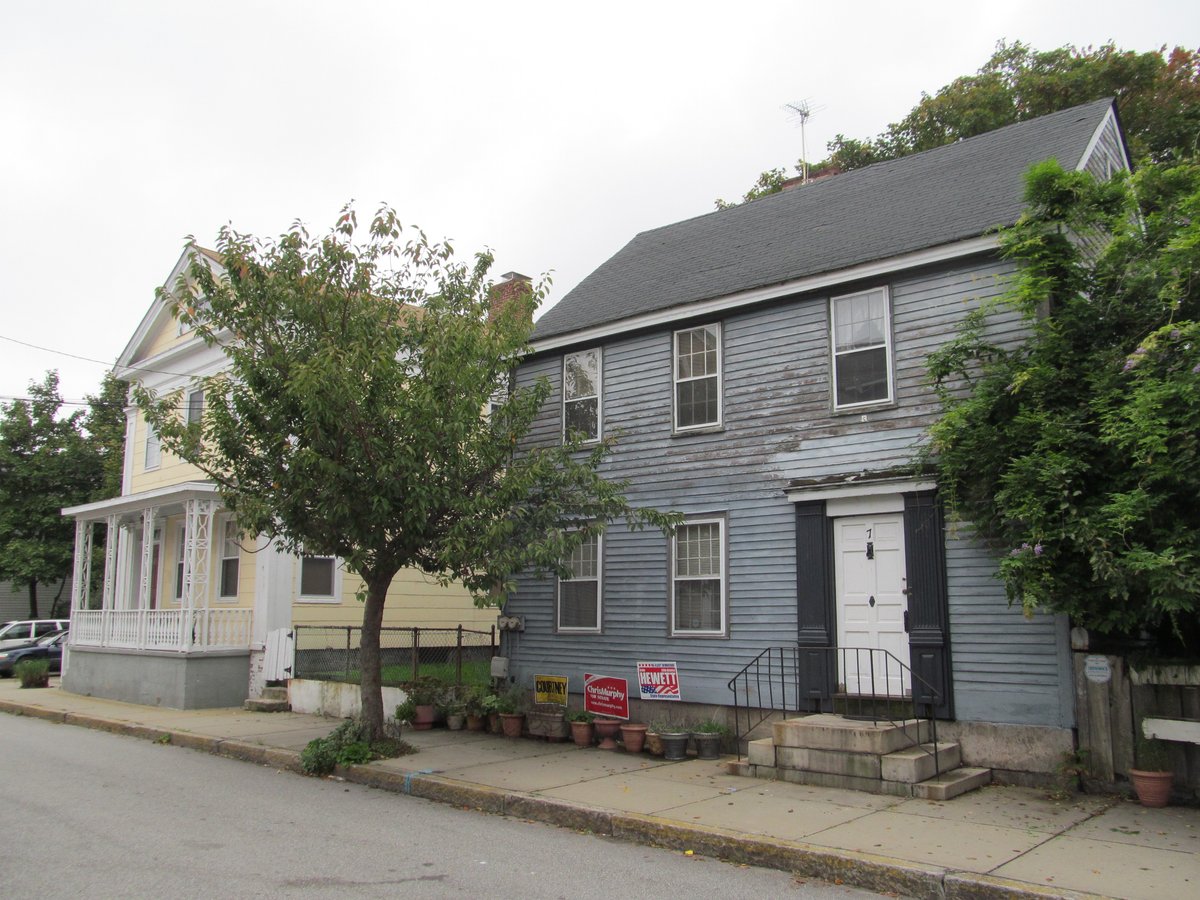
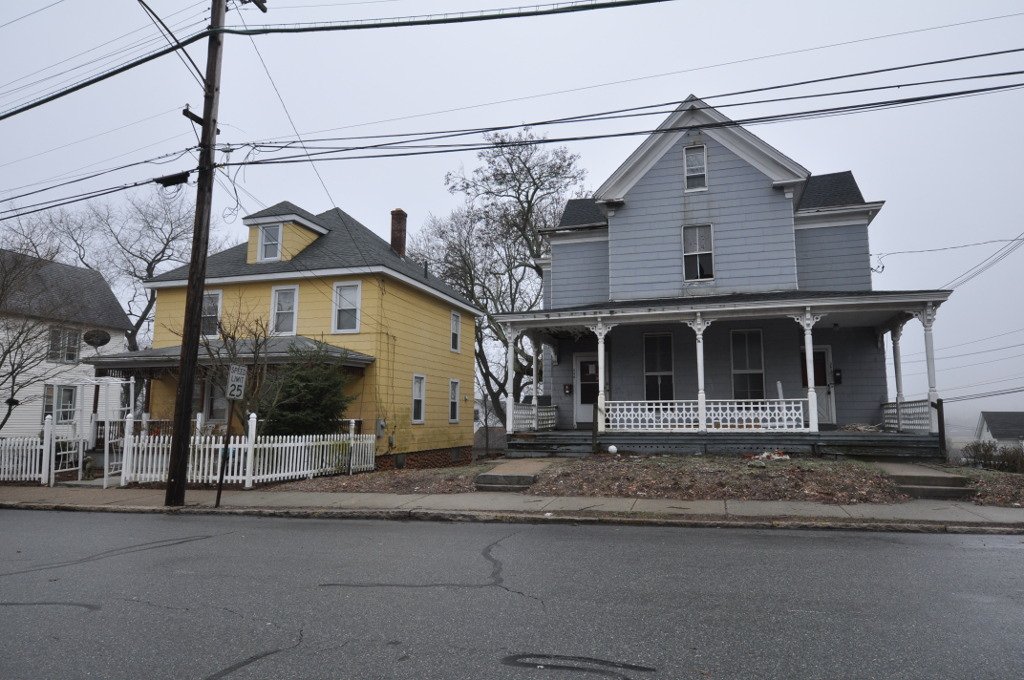
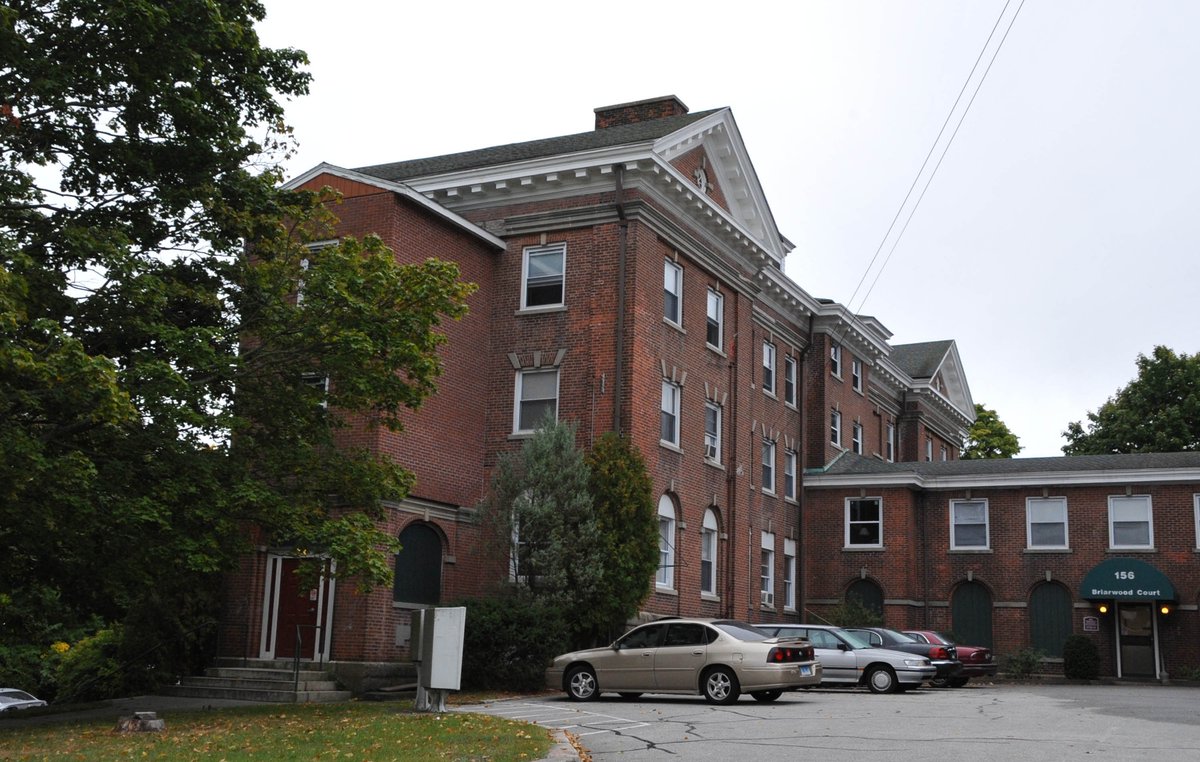
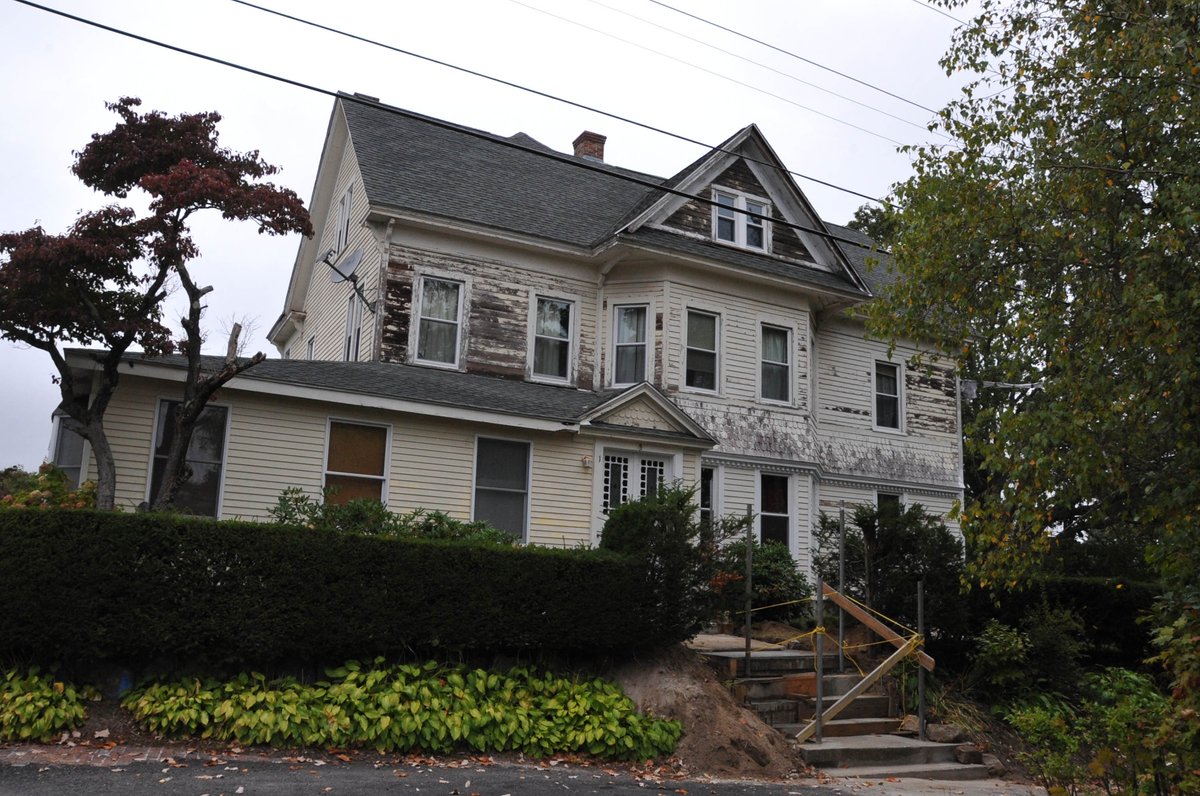
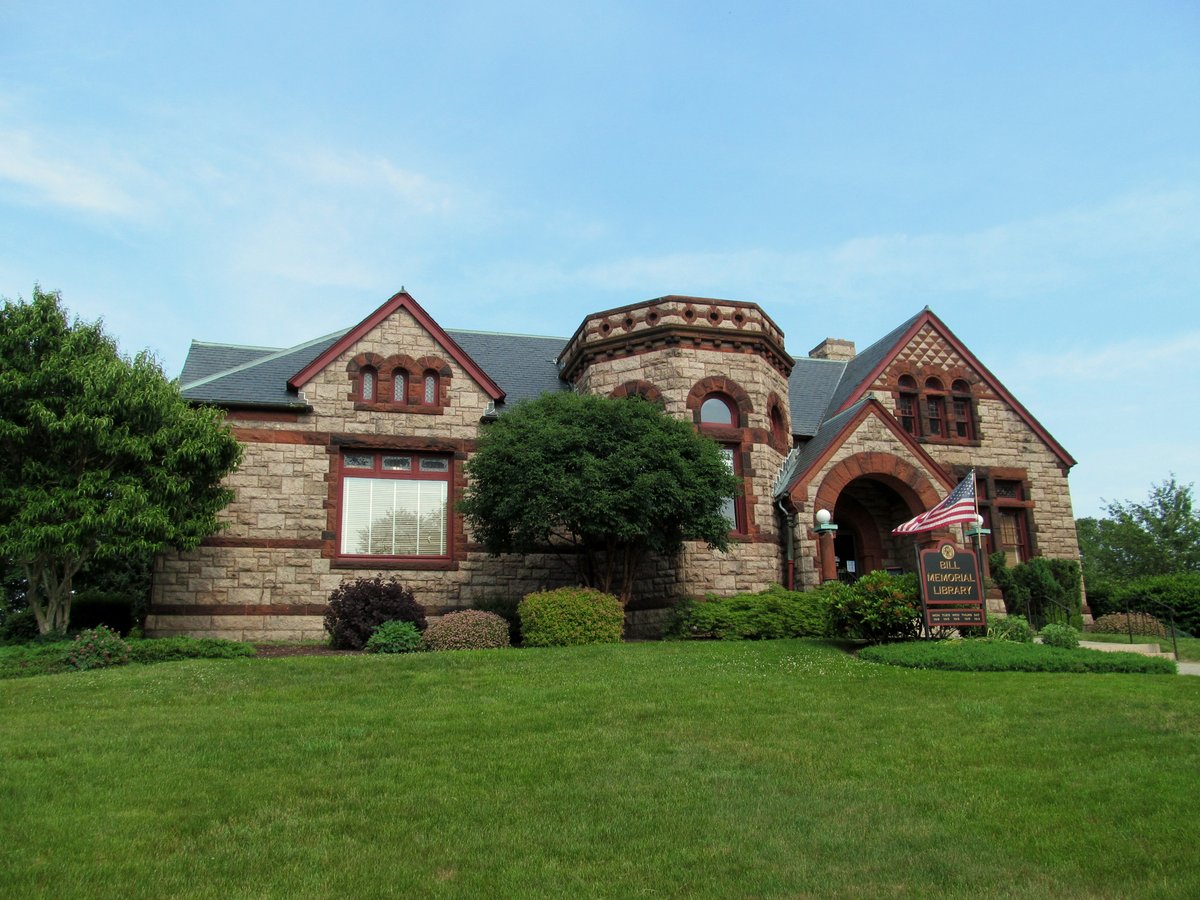
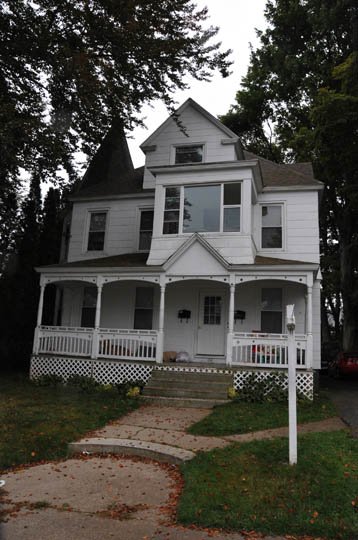
Once a humble farmstead owned by the Hallam family, a 5.5-acre land northwest of New London's central business district was transformed into a historic district in the 1830s. Two real estate developers, Hezekiah Goddard and Sabin Smith, saw an opportunity and bought the land. The dense development and modest scale of the houses that followed reflected the objective: to provide middle-class housing occasioned by New London's economic success as a whaling center. Fifteen out of 24 houses in the Prospect Street Historic District are Greek Revival, with four houses in the Italianate style, one in the Gothic Revival style, and one early Federal building.
The Greek Revival style houses on Prospect Street are generally two-and-a-half stories tall, but the ones on Huntington Street are taller, as their basements are exposed due to being built into the side of a hill. One house at 17 Prospect Street is notable for its four-column temple front, with details copied from a guide published by Minard Lafever. The neighborhood, bound by Bulkeley Place, Hempstead Street, Federal Street, and Huntington Street, was listed on the National Register of Historic Places on July 31, 1986.
Sources: Wikipedia, OpenStreetMap, Wikidata, Wikimedia Commons
Written by Friendly Jane
Discuss this with the author and others
No comments yet. Be the first to start the conversation.