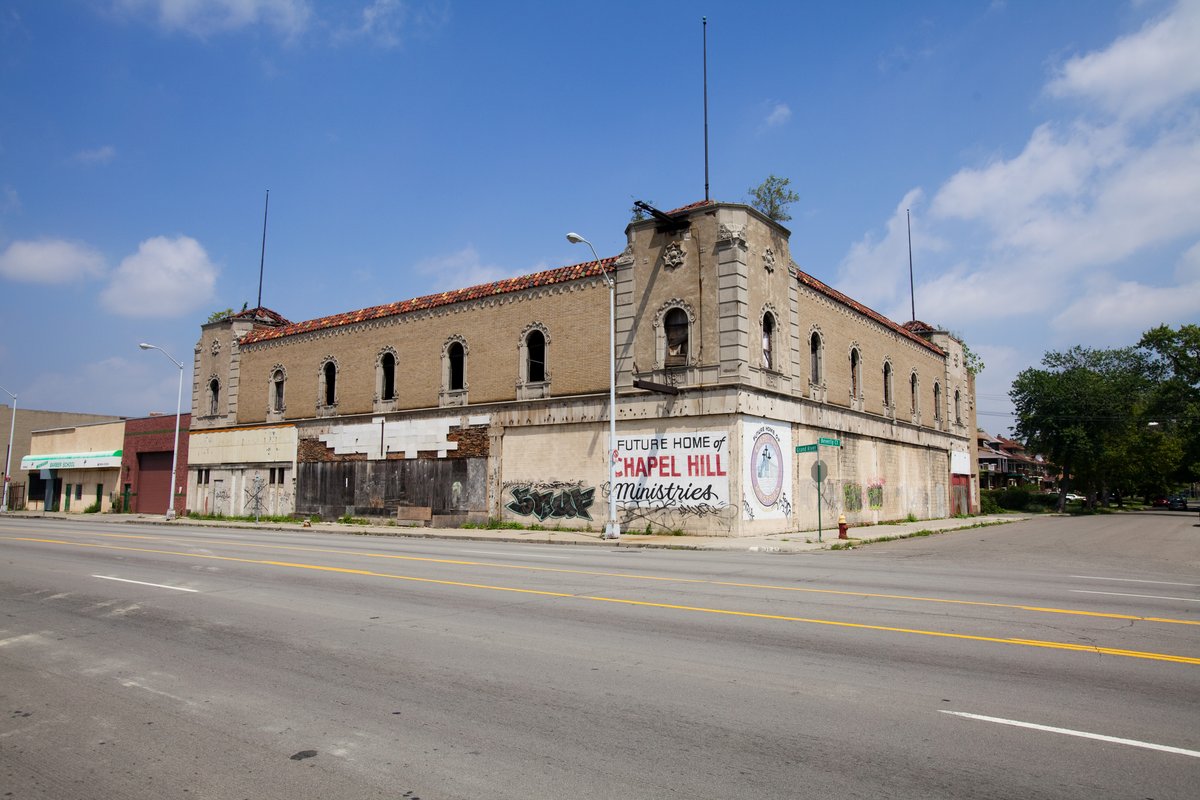
In 1966, Russ Gibb acquired the Grande Ballroom, a building designed by architect Charles N. Agree in 1928. Originally a multi-purpose building with retail on the first floor and a large dance hall upstairs, the venue was famous for its hardwood dance floor. Gibb, inspired by San Francisco's Fillmore Theater, envisioned a space for psychedelic music and a resource for local teenagers.
The venue became a hub for local and international acts, including the Amboy Dukes, the MC5, and the Alice Cooper Group. It hosted national and international acts such as Led Zeppelin, Janis Joplin, and Pink Floyd. The MC5, The Thyme, and The Stooges served as house bands, assuring weekly performances. Performances were often advertised by the distinctive psychedelic handbills of Gary Grimshaw and Carl Lundgren.
Known as the 'hippie capitalist center of Detroit', the ballroom's countercultural experience was documented by photographer Leni Sinclair. After Gibb closed the venue as a rock space in 1972, the building fell into a state of extreme disrepair. In 2012, the documentary film 'Louder Than Love: The Grande Ballroom Story' was released, and the venue was added to the National Register of Historic Places in December 2018.
Sources: Wikipedia, OpenStreetMap, Wikidata, Wikimedia Commons

Written by No Other
Discuss this with the author and others
No comments yet. Be the first to start the conversation.