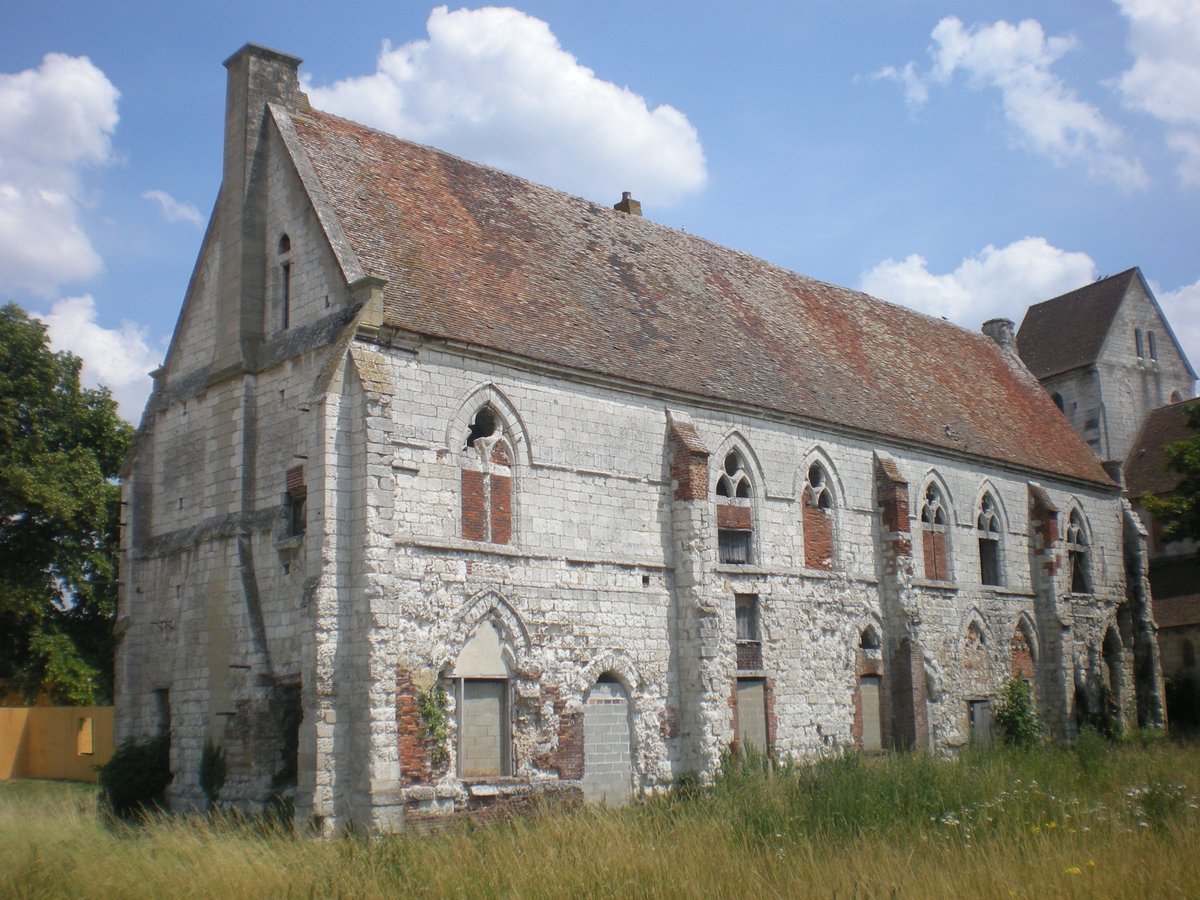

Maladrerie Saint-Lazare de Voisinlieu, hidden in the French countryside, may seem unassuming, but its history covers centuries of power struggles, privilege, and mystery. This leper house, operational until the 18th century, is the only surviving example of eleven medieval hospitals built in Beauvais diocese. What makes this site so unique is its double life: in one consistent, it was a religious institution providing care and shelter to lepers, and, on the other hand, it was one of the principal landowners in Beauvais, thanks to numerous donations and legacies.
It was used as a storage place for agricultural equipment during the French Revolution and later served as a military cantonment during World War I. The hospital's foundations can be traced back to the 12th century, with the first known act regarding Maladrerie Saint-Lazare in Beauvais being a donation of a house from a Beauvais bourgeois to the Church Saint-Lazare in 1131. As the critical point for understanding the site's origins, this date shows that the bourgeoisie donated houses, lands, and other properties to maintain the hospital's running.
The institution quickly acquired privileges such as exemptions from taxes and the right for the master to exercise justice on his lands. The administration of the hospital was often a point of contention. The Master of Maladriere Saint-Lazare, who was responsible for the management of the facility, was a powerful figure in medieval society - his position was sometimes viewed as a royal charge and sometimes as a religious dignity. This enigma often led to power struggles involving church authorities, municipalities, and royalties trying to hold the master position.
The Master of the leper house was generally a canon elected by the chapter of the cathedral. The patients of the hospital, who entered willingly, were usually from all social classes: nobles, clergy, bourgeoisie, laborers, and domestic staff. Once they were declared lepers by the competent authorities, they were integrated into the community of the hospital, where they received food, housing, and care. The exact nature of the malady was not known at the time, but symptoms such as disfiguring skin lesions, hair loss, and even severe neurological manifestations were common.
The hospital was closed in the 18th century and eventually sold as national property during the French Revolution. The buildings were then used for agricultural purposes until the end of the 20th century. In the 19th century, the site became a place of interest for tourists and architectural specialists, with Dr. Eugène Woillez publishing a book about Maladrerie Saint-Lazare in 1862, which led to its first classification as a 'Monument Historique.
The site was declassified as a 'Monument Historique' in 1888 due to lack of restoration work. However, the hospital was spared significant damage during World War II, and restoration work was started on the site in the 1970s and 80s. Today, visitors can explore the remnants of the hospital, which is now a cultural and touristic center open all year round.
Sources: Wikipedia, OpenStreetMap, Wikidata, Wikimedia Commons
Written by Nicolo Ciampini
Discuss this with the author and others
No comments yet. Be the first to start the conversation.