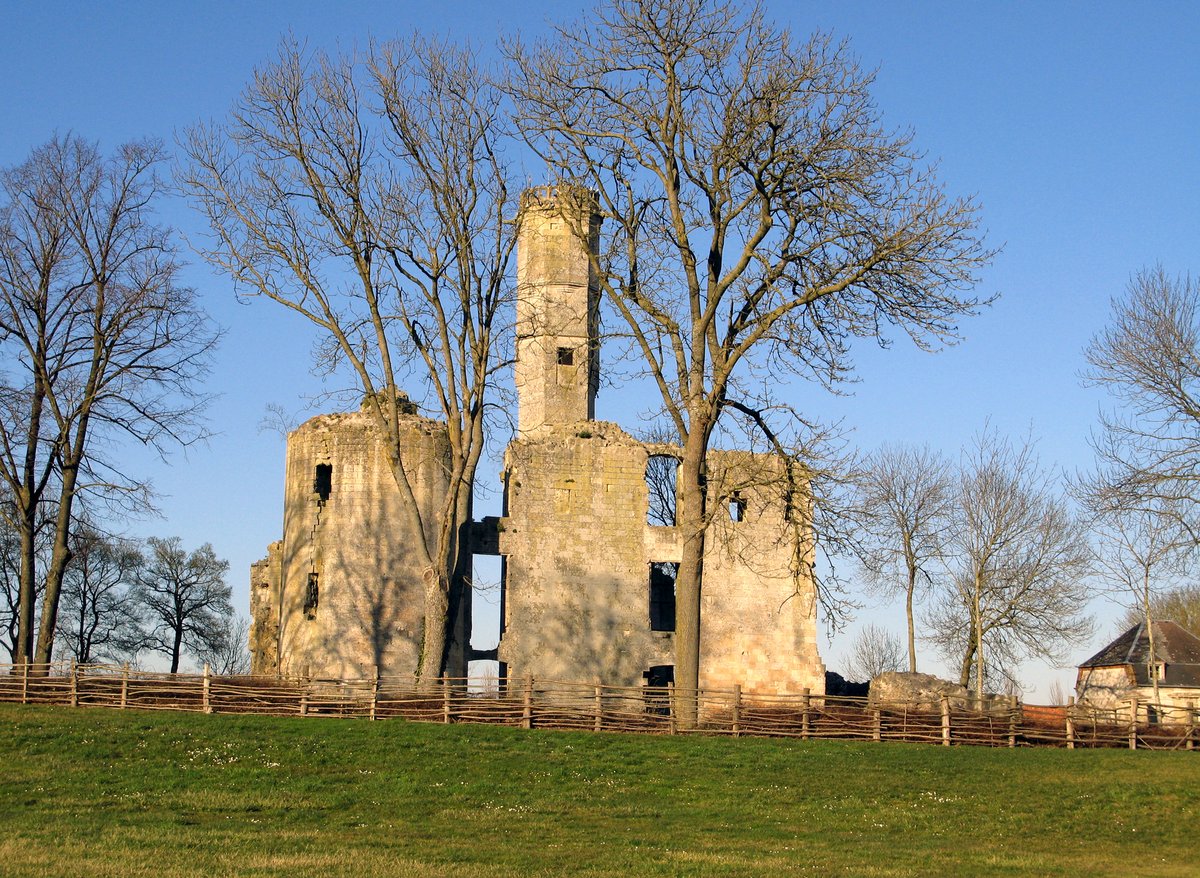

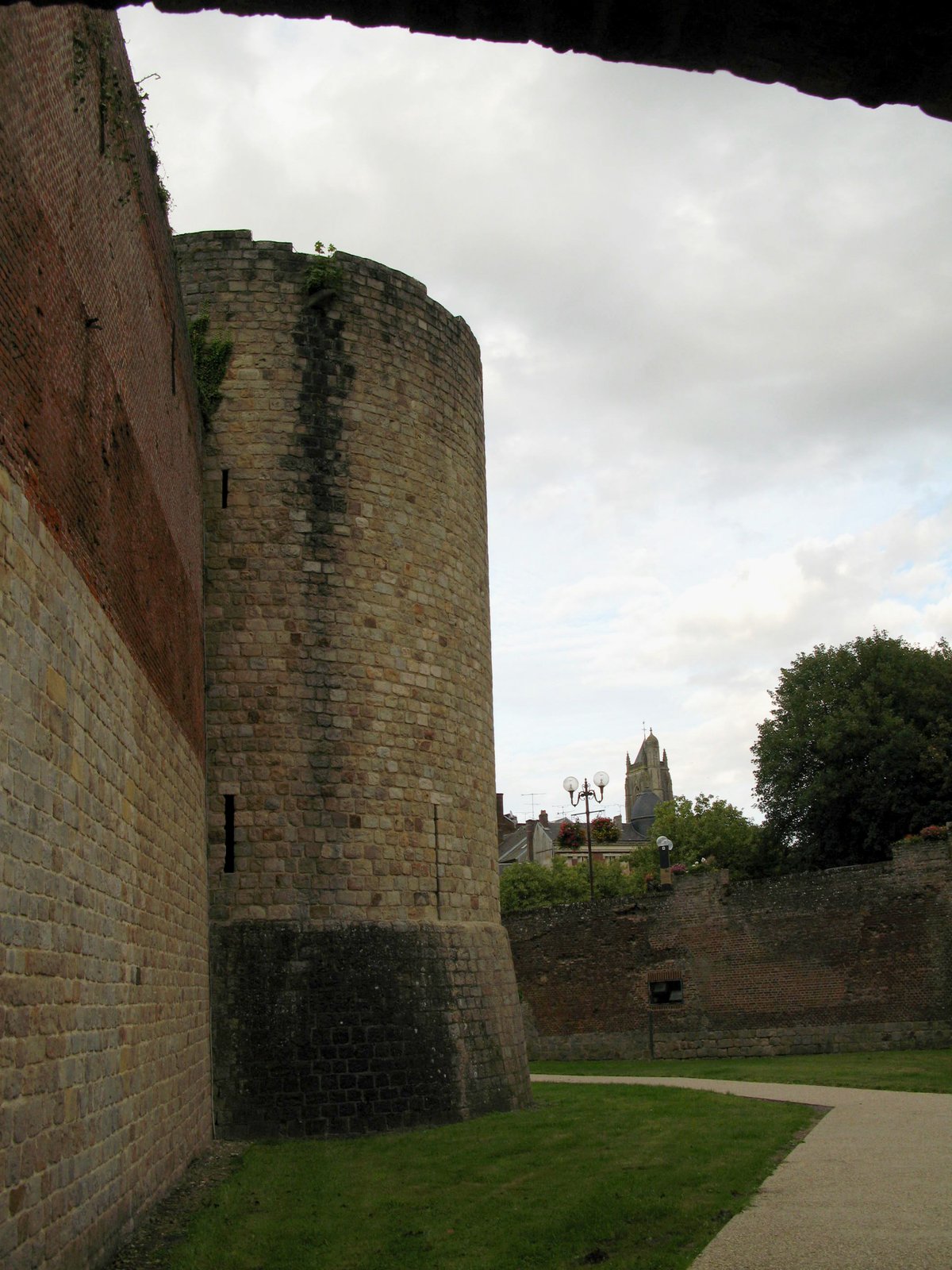
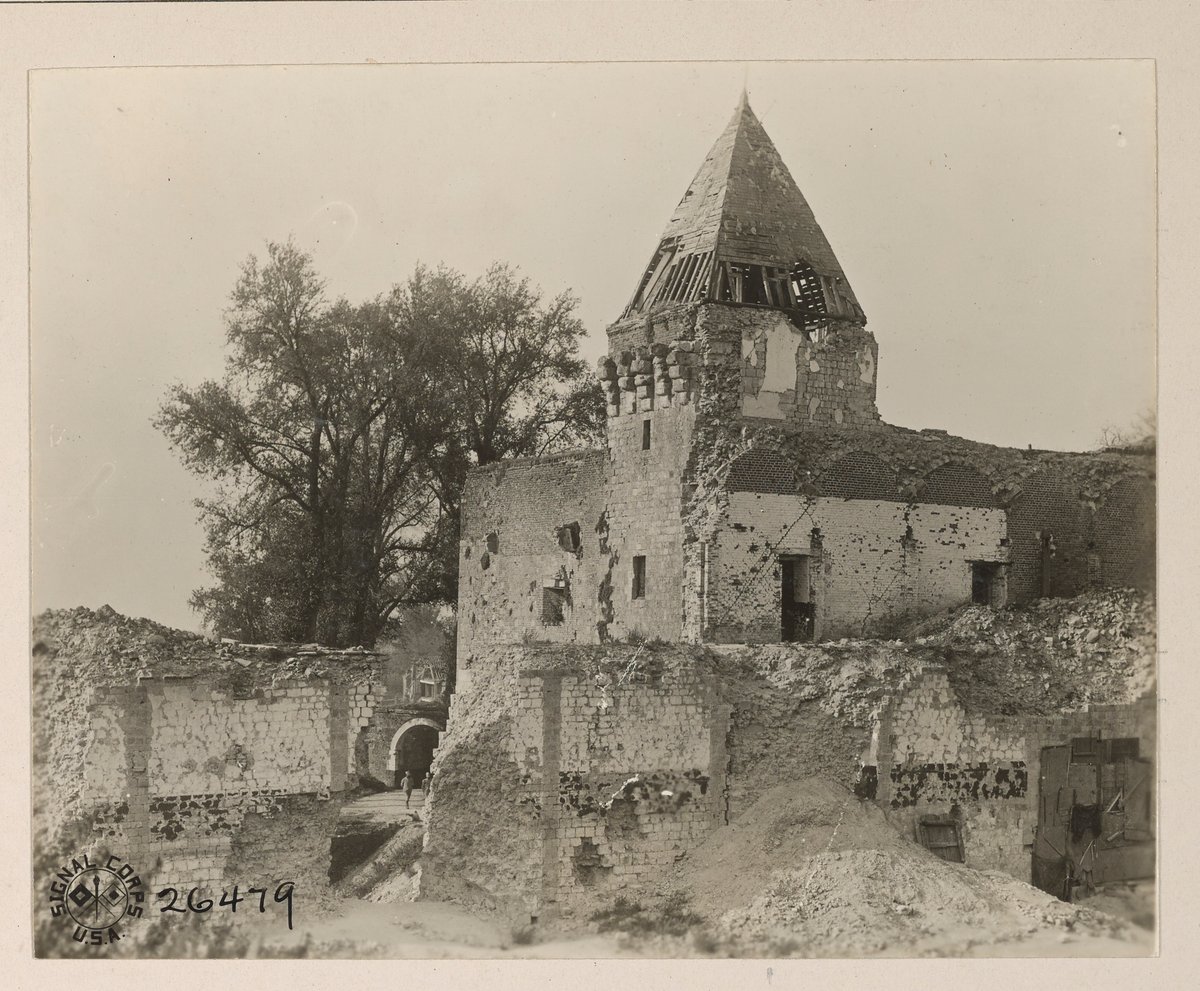
The château de Folleville sits in the Somme department, with its ruins dominating the valley of the Noye. While some traces of a previous building may date to a quadrangular donjon, the first clear evidence of a castle's presence dates to the 14th century, following the destruction of a feudal castle during the Jacquerie of 1358. The site was rebuilt during the 14th and 15th centuries and was fiercely contested during the period of the war.
In 1440, the capitaine anglais John Talbot captured the castle using field artillery that breached its ramparts. Later, in 1477, Louis XI stayed at the château and rewarded Raoul de Lannoy for his bravery at the siege of Quesnoy. Charles VIII also visited in 1492, naming Raoul de Lannoy as the bailli of Amiens. The castle was later taken by the Ligue in 1589, though Henri IV won a battle there against the Spanish that was not decisive.
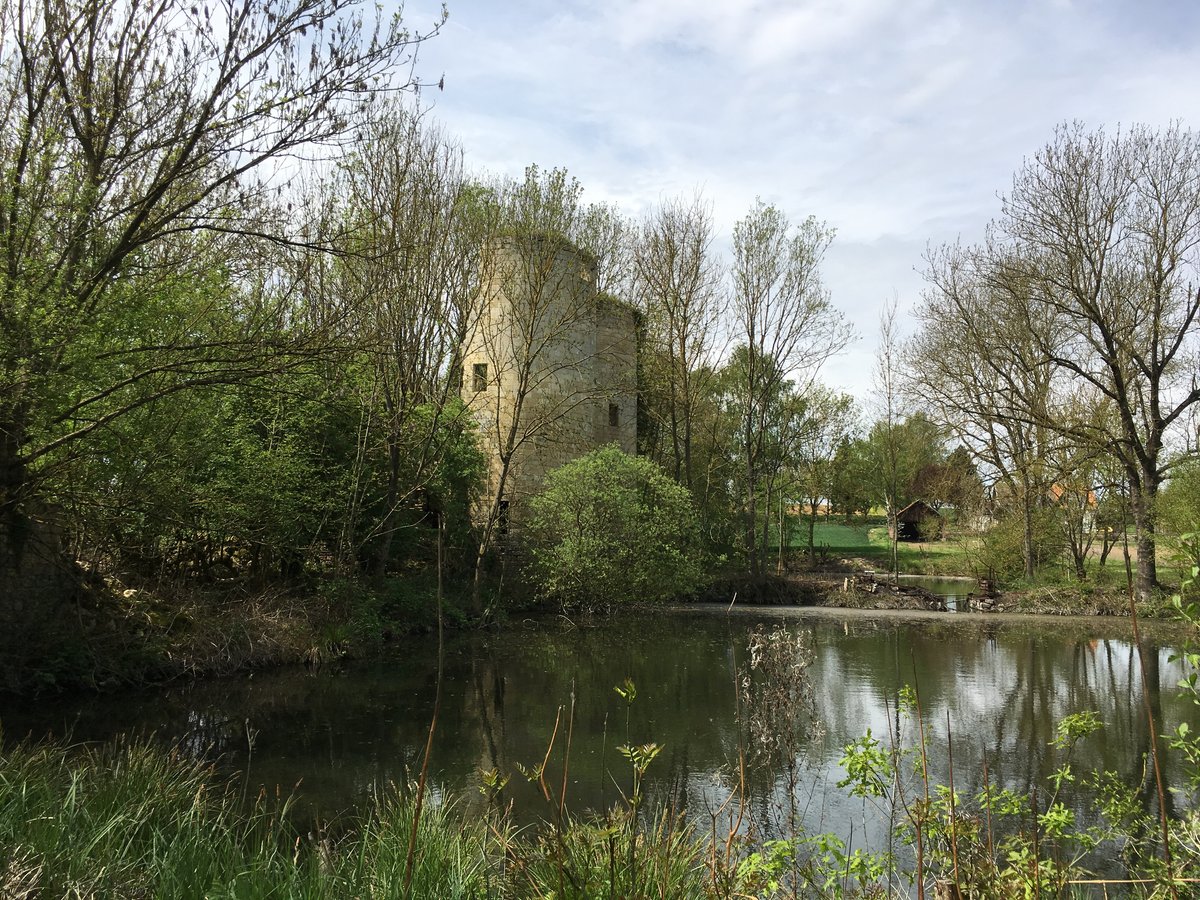
The castle once featured a rectangular main building with round towers at each corner and a watchtower on the north facade. Today, the watchtower remains as the principal vestige, along with some walls and two other towers. The site is now protected as a historic monument and hosts an annual medieval festival organized by the association Le Site de Folleville.
Sources: Wikipedia, OpenStreetMap, Wikidata, Wikimedia Commons
Written by Nicolo Ciampini
Discuss this with the author and others
No comments yet. Be the first to start the conversation.