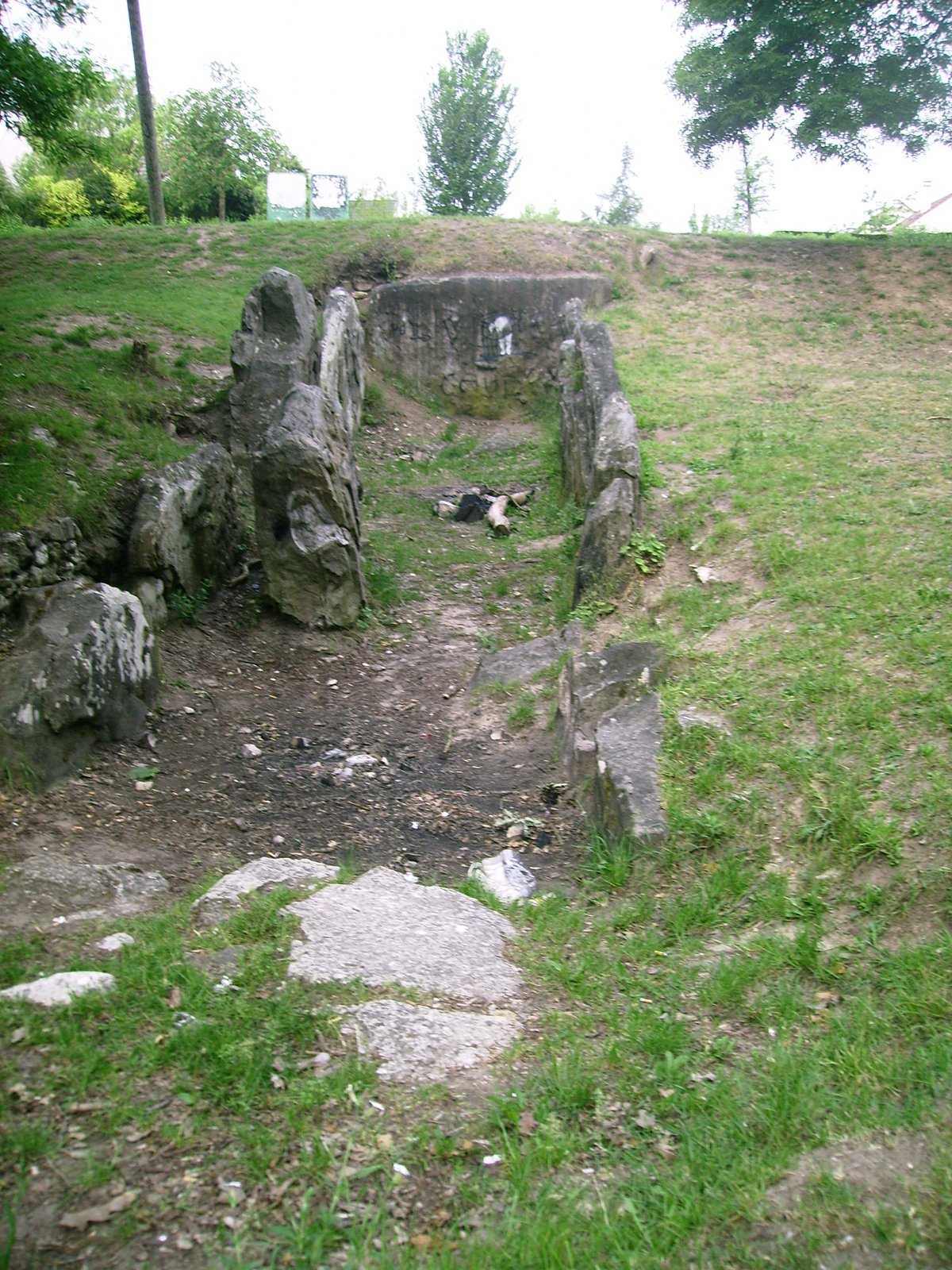

Why do we call this the Cimetière des Anglais? Because of a bit of historical naming. The site has been known by this name due to an occupation, though no English cemetery actually existed there. The site actually dates back to roughly 3300 BC. Was it really a druidic altar for human sacrifice? Some suggest that the name Carneaux might come from words for flesh, evoking the idea of altars used by druids for sacrifices. The monument was used for about 1,000 years.
It is a massive stone gallery built at 85 meters above the Oise river. The entrance faces the valley, and the chamber is packed with huge slabs of sandstone, some weighing up to 5 tons. Two stones were likely chosen for their decorative appearance and were brought from the Hautil massif. It was likely buried under sand for centuries before erosion left it exposed to the world. It is a heavy, silent piece of history that survived both the passage of time and pillagé.
When the vicomte Amédée de Caix de Saint-Aymour dug into it in 1867, he found a collection of bodies and stone tools. We now know about a hundred people were buried here, and if you count the missing pieces, it could be as many as 400 over a thousand years of use. They lived long lives - some reached their sixties - and died of old age, though one person even had a skull with a trepanation mark. Most of their belongings, like a woman's necklace of 300 beads, are now in a museum.
Sources: Wikipedia, OpenStreetMap, Wikidata, Wikimedia Commons



Written by Nicolo Ciampini
Discuss this with the author and others
No comments yet. Be the first to start the conversation.