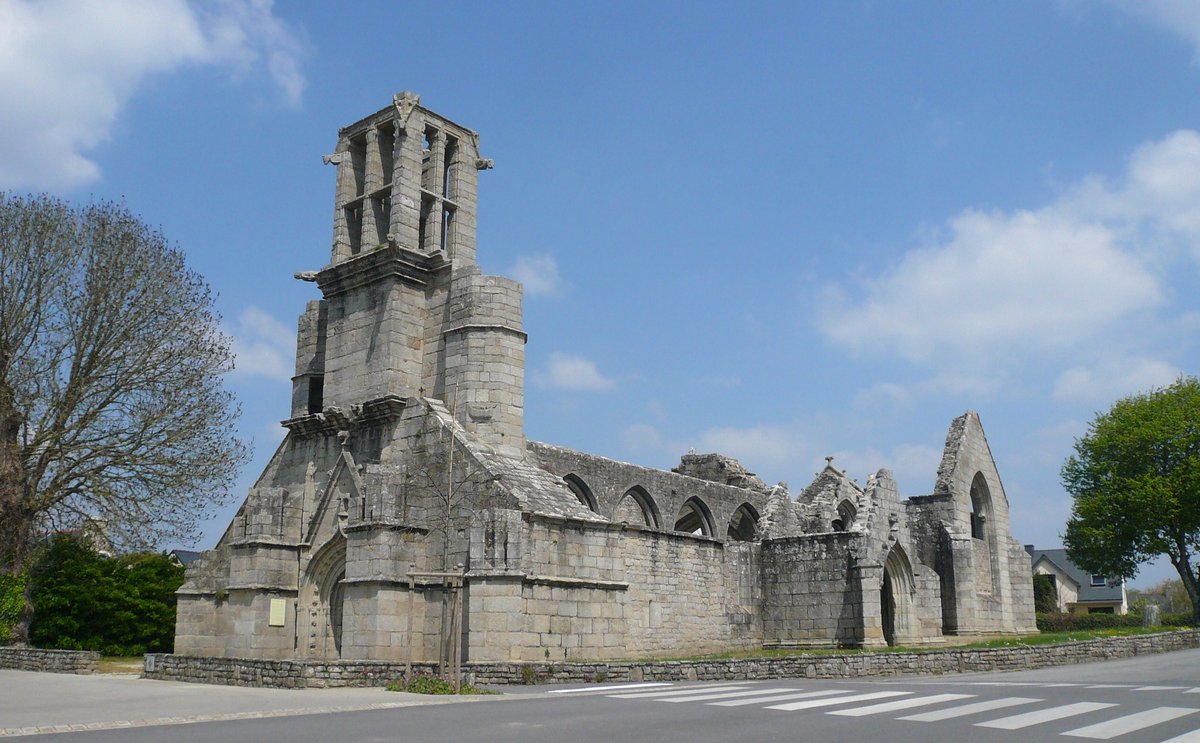

In the heart of Pont-l’Abbé, France, no ordinary church waits for pilgrims. This one boasts a rich and mysterious history, shrouded in the foggy past before finding a new life as a monument historique. Dedicated to Saint Jacob, St-Jacques de Lambour began as a tréviale church in the 16th century, a place of spiritual solace for the people of Lambour, a quarter of Pont-l’Abbé. Over the next centuries, its design underwent several transformations, coming to reflect the School of Pont-Croix, a style characterized by decorated pillars and arches.
Eventually, upon the arrival of the 16th century, the church was rebuilt, the clocher, a square structure flanked by hexagonal towers, an addition that would leave a lasting impression on the landscape. Yet, the tale of St-Jacques de Lambour does not end here. Caught in the crossfire of the rebellion of the Bonnets Rouges, royal troops decapitated the clocher as a sign of retaliation. In the meantime, the church was classified as a monument historique, granted protection under law in 1896, and a site classé in 1934.
Today, St-Jacques de Lambour stands as a monument historique, navigating the delicately balancing act between the passage of time and the need for preservation. Despite being in ruins, the church does not sit dormant. Every year, during the Pardon of St-Jacques, held on the last Sunday of July, open doors welcome visitors, the clanging of a bell rippling through its once resplendent arches, harkening back to a time when St-Jacques de Lambour stood tall.
Perhaps, as you wander through its hallowed halls, you might just bear witness to the secrets this ancient church holds within its crumbling stone walls.
Sources: Wikipedia, OpenStreetMap, Wikidata, Wikimedia Commons
Written by Nicolo Ciampini
Discuss this with the author and others
No comments yet. Be the first to start the conversation.