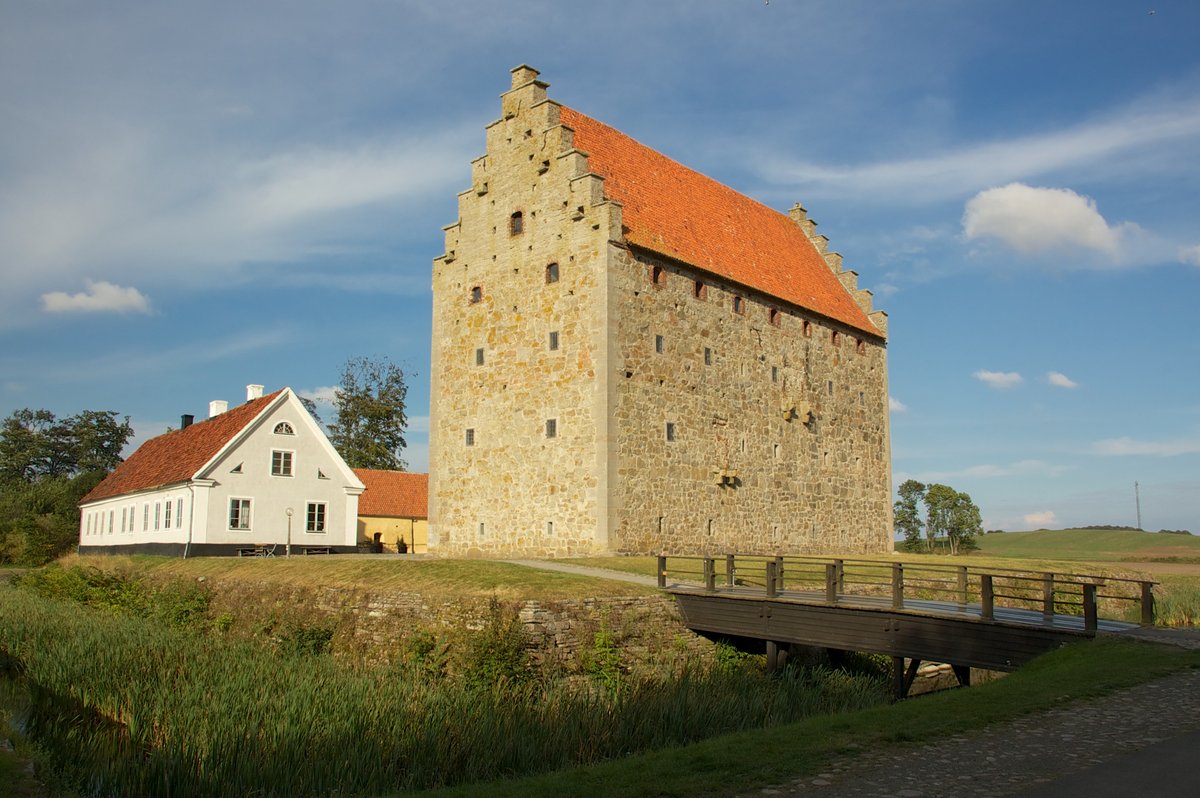

The stone walls of Glimmingehus, erected between 1499 and 1506, whisper stories of Scandinavia's past. Commissioned by the Danish knight Jens Holgersen Ulfstand, the castle marks the height of refined living in a time where knighthood still held sway. This stone fortress was built with defensive arrangements that still surprise - parapets, false doors, dead-end corridors, and 'murder-holes' that housed boiling potions, all masterminded by stone-cutter-mason and architect Adam van Düren.
The lower part of the castle's stone walls measures a formidable 2.4 meters thick, with the upper part narrowing to 1.8 meters. But beneath its intimidating exterior, the knight's family enjoyed a life of luxury, evidenced by artifacts found during archaeological excavations, such as luxurious goods imported from Venice, the Rhine district, and Spain. However, wealth did not save Glimmingehus for long; it was ultimately converted to store grain, and an order from King Charles XI to demolish the castle during the Scanian War went unfulfilled.
The castle was donated to the Swedish state in 1924, and today it stands as a testament to a bygone age. Visitors can embark on guided tours, sample regional cuisine in its restaurant, or learn more about the castle's history in the museum. In the warmer months, the castle comes alive with the sounds of its Bizarre stories and terrifying tales events, and rumor has it that it is haunted by many a restless spirit. Visit and uncover the history that lies within Glimmingehus' walls.
Sources: Wikipedia, OpenStreetMap, Wikidata, Wikimedia Commons
Written by Nik Frost
Discuss this with the author and others
No comments yet. Be the first to start the conversation.