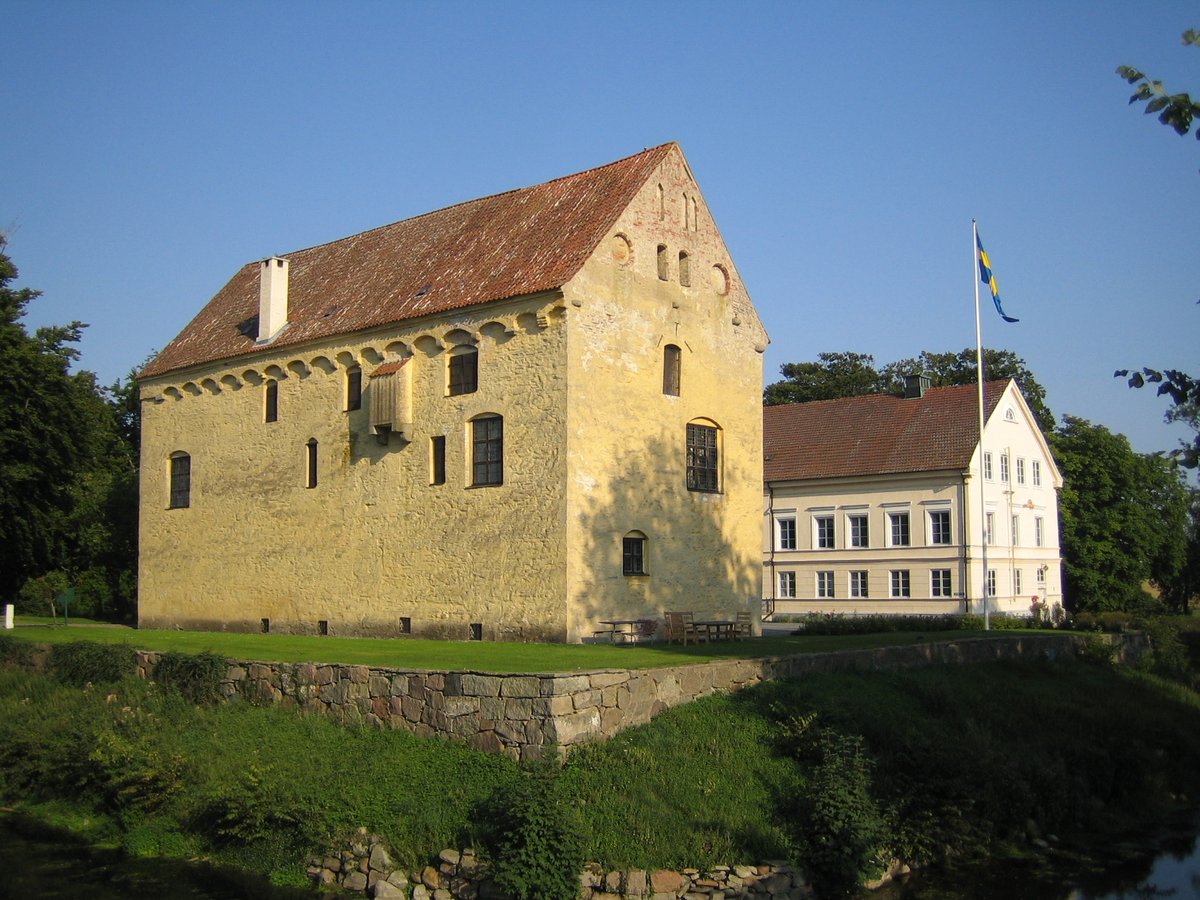

Bollerup Castle, located in Tomelilla Municipality, Scania, in southern Sweden, is a fascinating example of a late medieval fortress. First built in the 12th century, the castle was originally built as a tall keep or tower house. During the Middle Ages, Bollerup was an important estate in the hands of influential noble families. The castle complex was probably extended with a moat and other defensive works. The castle received its present-day form around 1460.
Bollerup Church, located adjacent to the castle, is further evidence of the early importance of the site. During an uprising in 1525, the castle was burnt. It was later restored, but a period of decline had inevitably begun for the castle. The castle is mentioned as being without roof and proper floors a hundred and fifty years later. Later, it was converted into a granary and used as such until the mid-20th century, when a restoration was carried out.
Today, the castle is part of an upper secondary school specialized in natural resource uses. The castle's façade on the southern side originally supported battlements with room for archers. The castle retains a medieval protruding dansker and traces of several external staircases. The façade is decorated with typical Brick Gothic blind arches. Internally, the castle is characterized by late Gothic and early Renaissance influences. Several large, vaulted rooms supported by granite pillars and decorated with faded frescos have been restored. Opposite the old castle building is a wing of similar length, built in neoclassical style around 1850.
Sources: Wikipedia, OpenStreetMap, Wikidata, Wikimedia Commons
Written by Nik Frost
Discuss this with the author and others
No comments yet. Be the first to start the conversation.