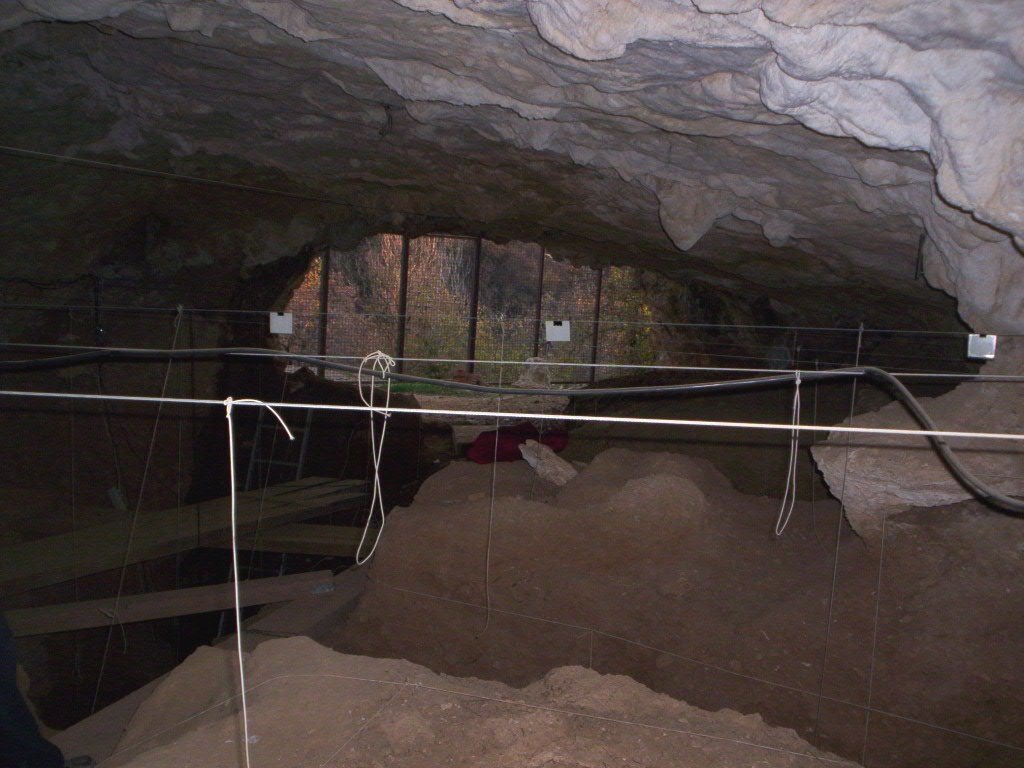

A lower canine tooth and a parietal bone were discovered in the Cova de les Toixoneres in 2016. Archaeologists believe these remains belonged to a Neandertal child between seven and nine years old, whom they named "el nen de Moià."
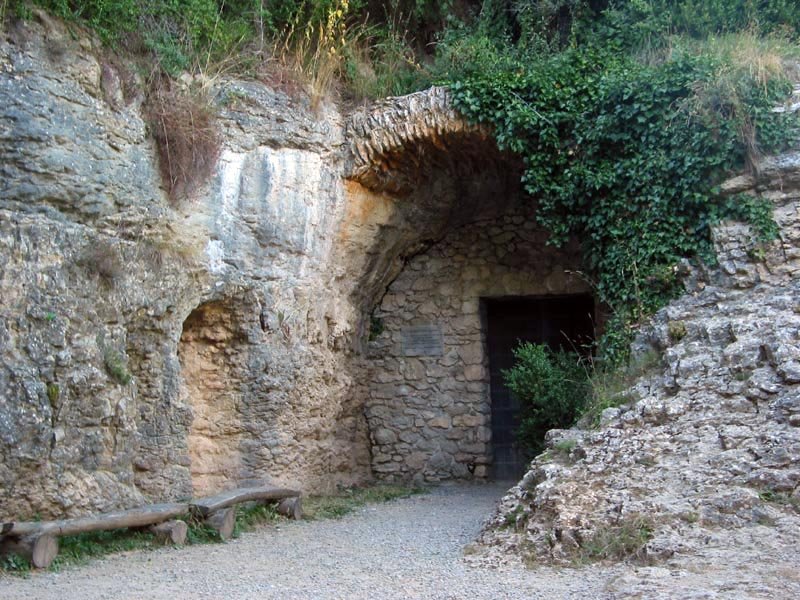
The cave is a karst formation in Moià. It served as a shelter for various predators, notably hyenas, whose presence is marked by large quantities of bones and fossilized droppings. However, the archaeological record shows that Neandertals also occupied the space, primarily around the entrance, where evidence of their activity remains today.
The site contains lithic materials predominant in flint and quartz, used for Levallois and discoid techniques to obtain points, scrapers, and denticulates. Other raw materials include sandstone, limestone, or cornian slate. While early campaigns found almost no human remains inside the cave, the discovery of a hearth in the interior modified previous hypotheses regarding the site's usage.
The cave shows a duality of use where large carnivores like bears hibernated in winter while hyenas and other smaller predators established dens during other seasons. These cycles were occasionally interrupted by small groups of nomadic Neandertals. To better understand this, researchers are conducting experimental studies in the Parque de la Naturaleza de Cabárzeno, reproducing the camp layouts found in the Cova de les Teixoneres to see how carnivores moved the tools and bones left behind.
Sources: Wikipedia, OpenStreetMap, Wikidata, Wikimedia Commons
Written by Nik Frost
Discuss this with the author and others
No comments yet. Be the first to start the conversation.