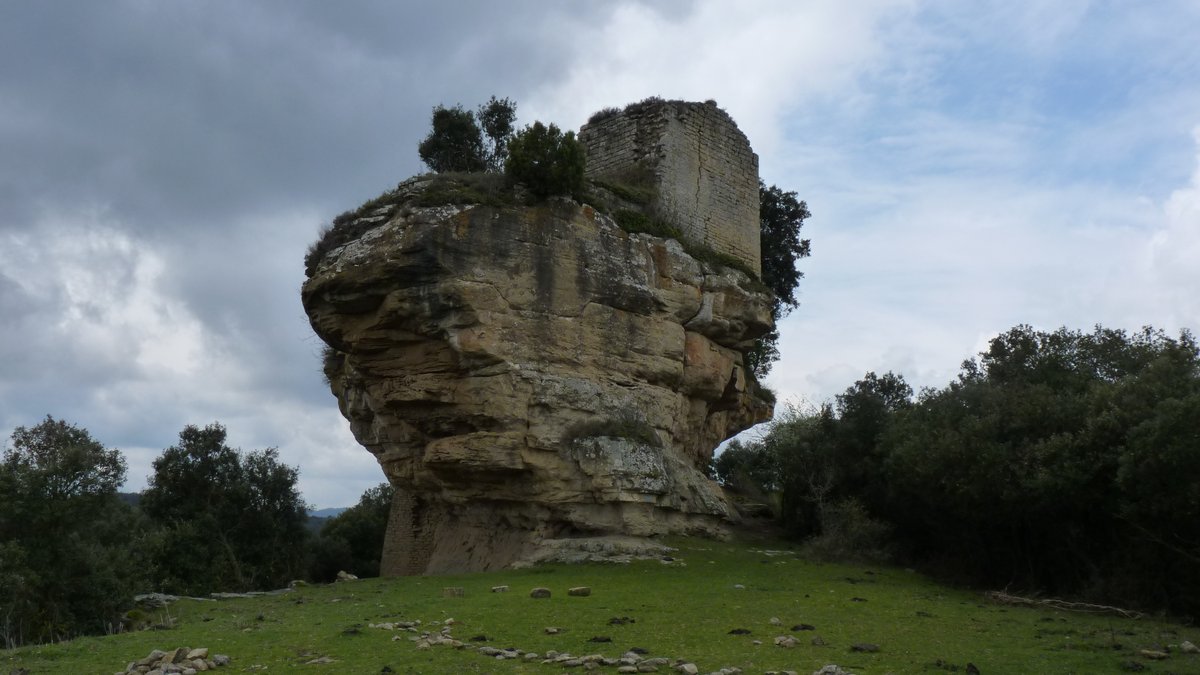

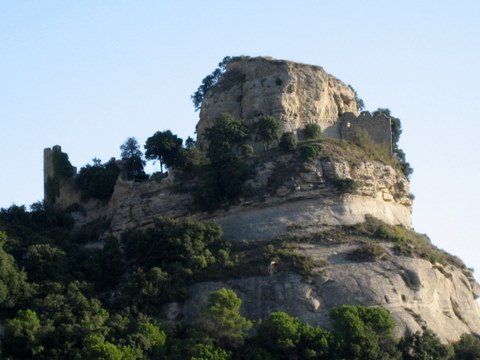
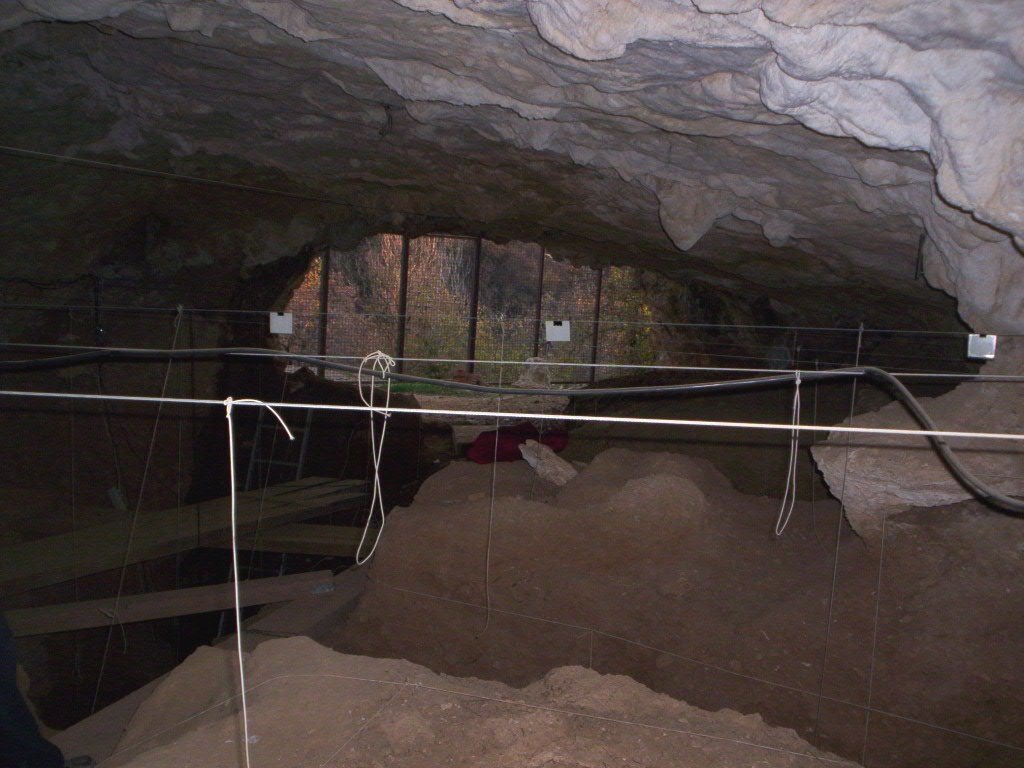
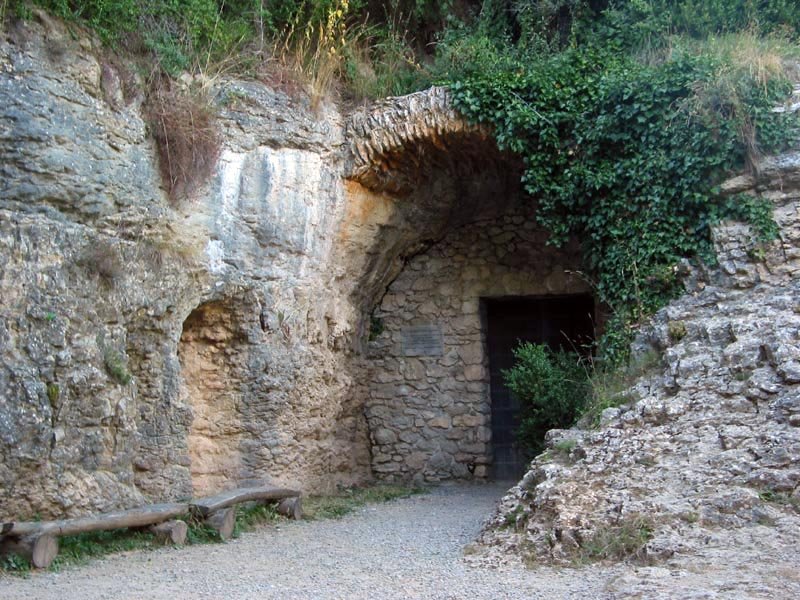
The local people identify this site as Castell de la Popa because of the distinct shape of the natural rock foundation. It sits atop a stone platform approximately 100 metres long and 7 metres wide, guarding the riera de Castellcir valley. The structure is an elongated fortress with the main body facing west and the chapel facing east.
Historical documents indicate the location was in use by 1014, though its existence is known even earlier as Castell de Tenes. For generations, it functioned as a crucial defensive anchor for the region. The Castellcir dynasty appeared in the early 11th century, with Gerard de Castellcir being the most well-known member. In 1070, a series of possessions in Castellterçol and Castellcir were returned to the monastery of Sant Benet de Bages after Gerard had fraudulently appropriated them.
In 1294, the castle was assaulted by the soldiers of King Jaume el Just, who demolished the master tower. This occurred during a period of constant conflict between Roger de Castellcir and the church of Vic. By 1337, the Castellcir family entered into a settled conflict with their neighbors, the Centelles family. This dispute was partially caused by the actions of Gilabert de Castellcir against Eimeric de Centelles and his family.
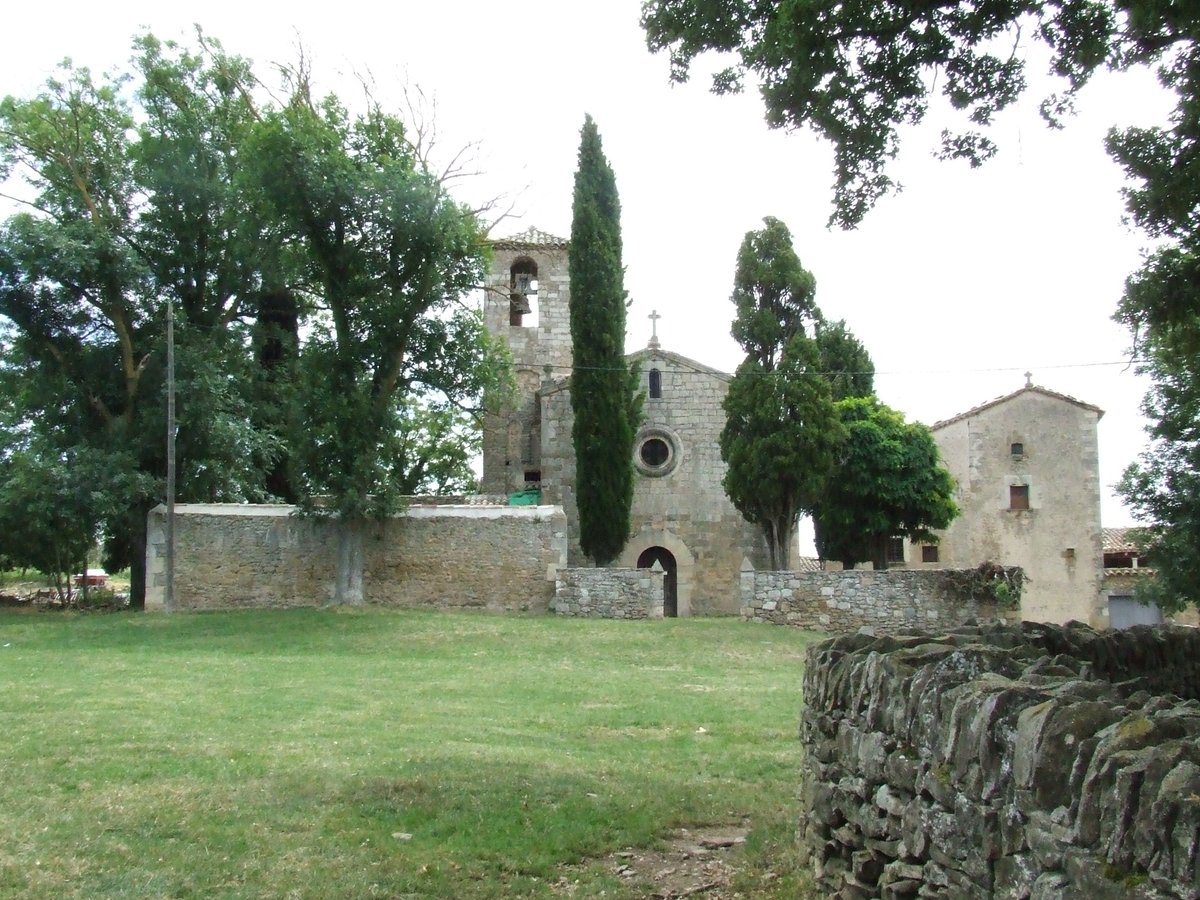
These ruins now stand as a protected site of national importance, featuring fragmented walls, the remains of the main building, and the Capella de Sant Martí de la Roca. Visitors can explore the history of the site by walking the Camí del Castell, a trail that moves northeast from the old village center of Castellcir towards the valley.
Sources: Wikipedia, OpenStreetMap, Wikidata, Wikimedia Commons
Written by Nik Frost
Discuss this with the author and others
No comments yet. Be the first to start the conversation.