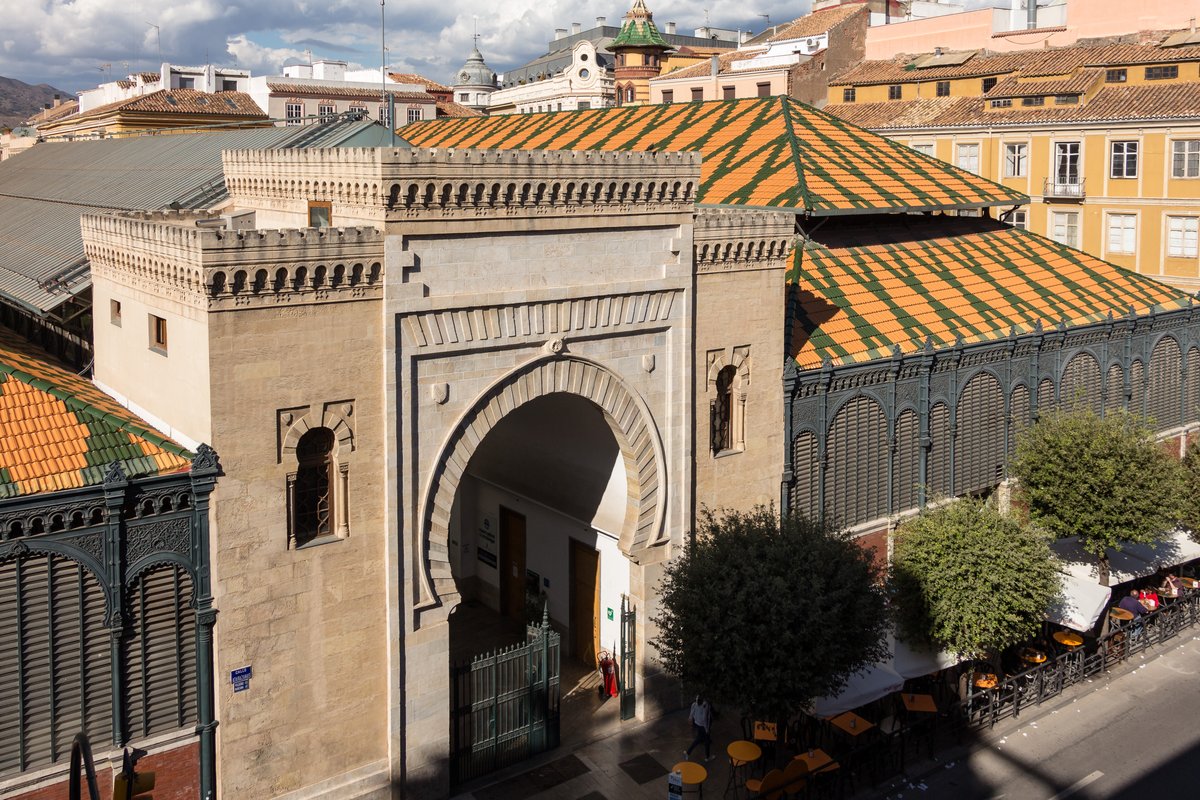

The current Mercado de Atarazanas is a 19th century iron structure built on the site of a shipyard of Nazarí origin. The building's name comes from the word 'atarazana', referring to the old shipyard that occupied the plot.
Architect Joaquín de Rucoba designed the market between 1876 and 1879. He incorporated a marble gate from the old shipyard, moving it 25 meters forward from its original location to suit the new layout. The market features an iron skeleton made largely from iron from the Fundición de San Antonio in Seville, the same foundry that built the bridge of Isabel II, also known as the bridge of Triana.
The building is an example of architectural eclecticism, featuring a neo-Arabic style with Nazarí and Califal elements. The iron decorations are shaped like ataurique, and the stalls are decorated with tondos representing fish, cornucopias, and human faces. The market also contains a monumental horseshoe and pointed arch that dates back to the reign of Mohamed V (1354-1391).
Between 2008 and 2010, the market underwent a renovation to improve the facilities, renovate the stalls, and replace the roofs with translucent ones similar to the originals from before the 1966 reform. This restoration also included the restoration of the 108 stained-glass panels from 1973 that represent different monuments of the city.
Sources: Wikipedia, OpenStreetMap, Wikidata, Wikimedia Commons



Written by Nicolo Ciampini
Discuss this with the author and others
No comments yet. Be the first to start the conversation.