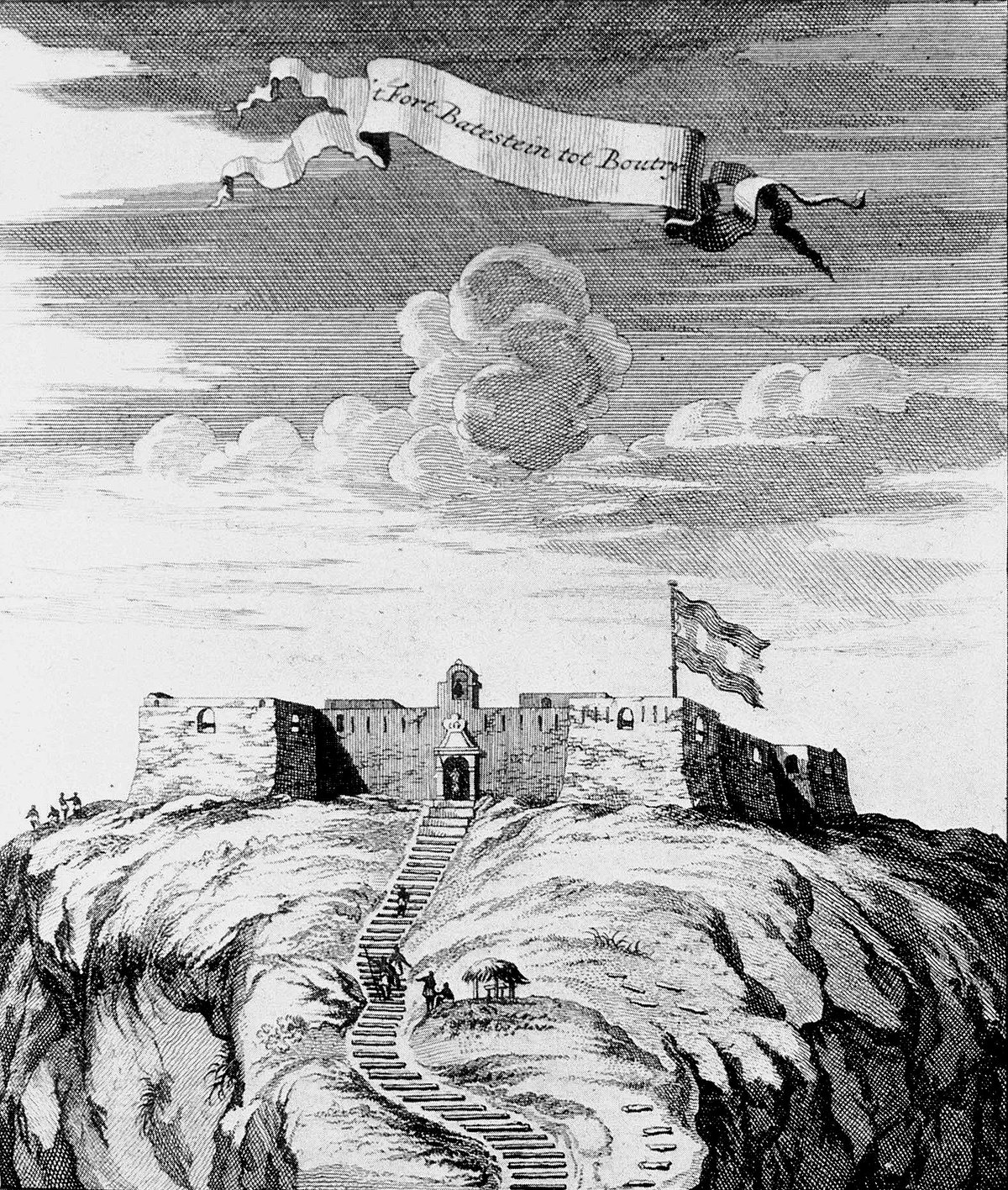

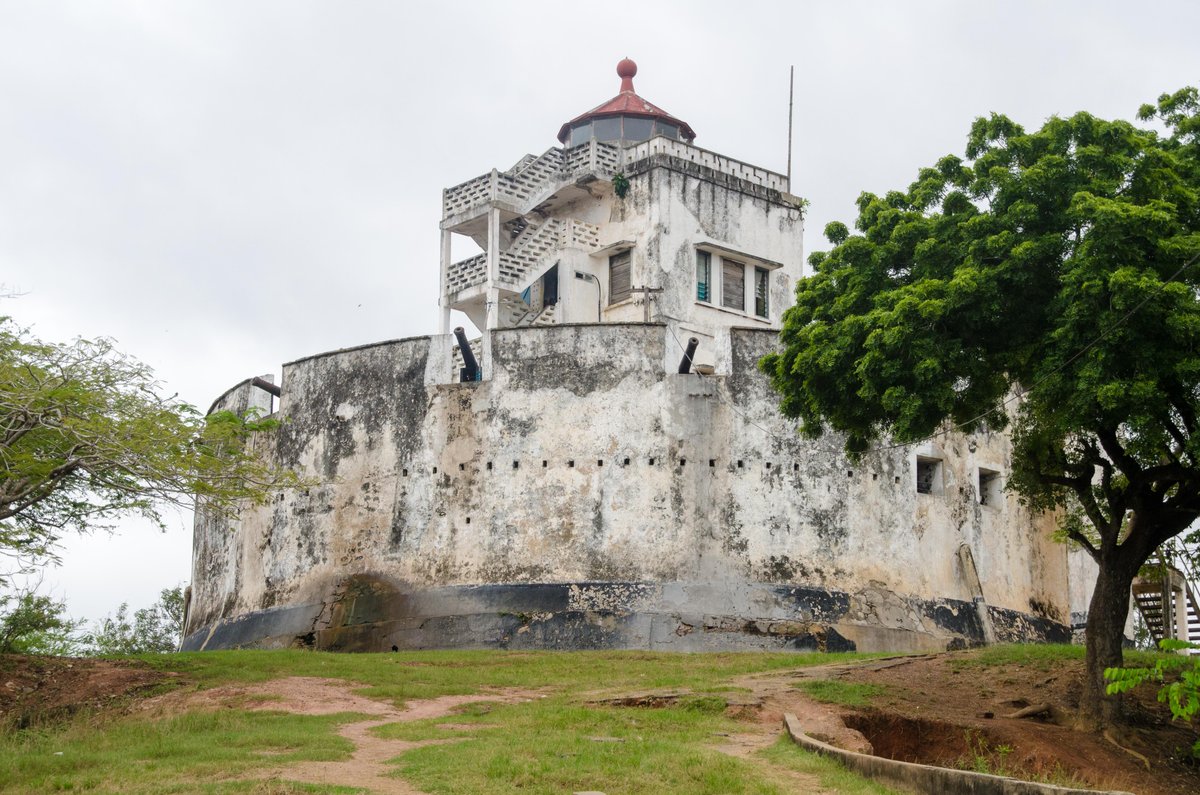
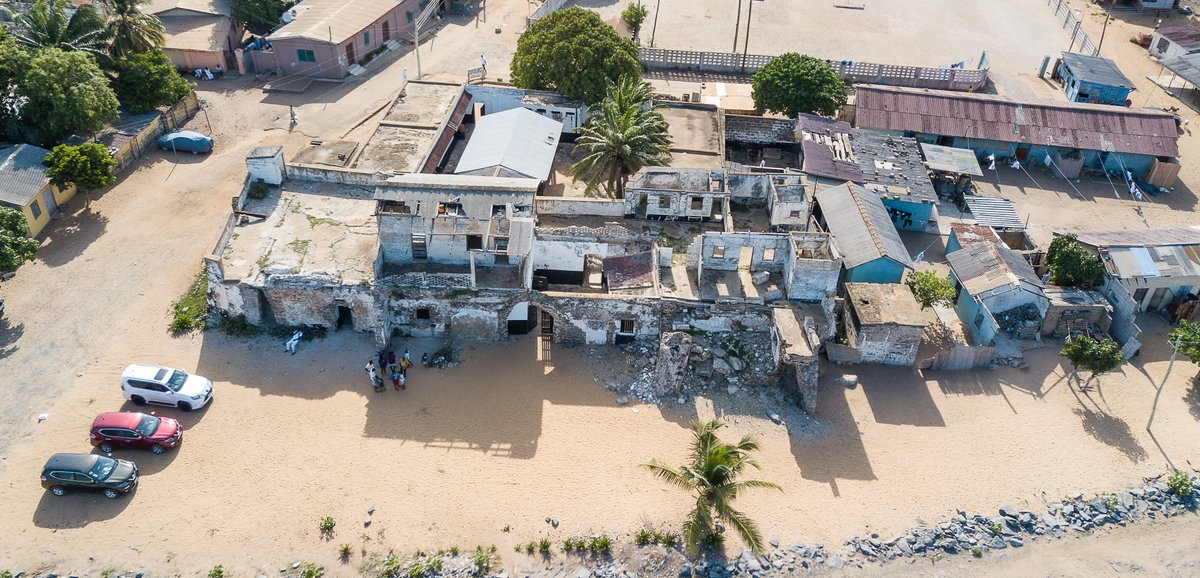
Back in 1656, the Dutch established Fort Batenstein on the Gold Coast. The name Batenstein literally translates to "profit fort," which historian Albert van Dantzig sees as evidence of a cynical sense of humour on the part of the directors of the Dutch West India Company. The fort was built to crush the attempts of the Swedish Africa Company to establish trading posts. This included responding to a trading lodge founded by Hendrik Carloff in 1650, which was attacked at the instigation of the Dutch in 1652. The fort was completed in 1656 on a hill overlooking Butre bay.
During the 18th century, a sawmill was constructed at Fort Batenstein to provide wood for ships in need of repair. The fort did not become a major military focal point until 1837, when the Dutch-Ahanta War made it the centerpiece of Dutch military effort on the Coast. Following the war, the Dutch attempted to establish a gold mine near Butre, though the venture failed to produce any gold.
In 1979, the fort was designated a World Heritage Site because of its historical importance in European trade and exploitation in West Africa. After the Dutch sold their possessions on the Gold Coast to the United Kingdom in 1872, the people of Butre protested the change of ownership. In 1873, Butre was shelled by the British in retaliation for an attack on the British trading post of Dixcove.
Sources: Wikipedia, OpenStreetMap, Wikidata, Wikimedia Commons
Written by Friendly Jane
Discuss this with the author and others
No comments yet. Be the first to start the conversation.