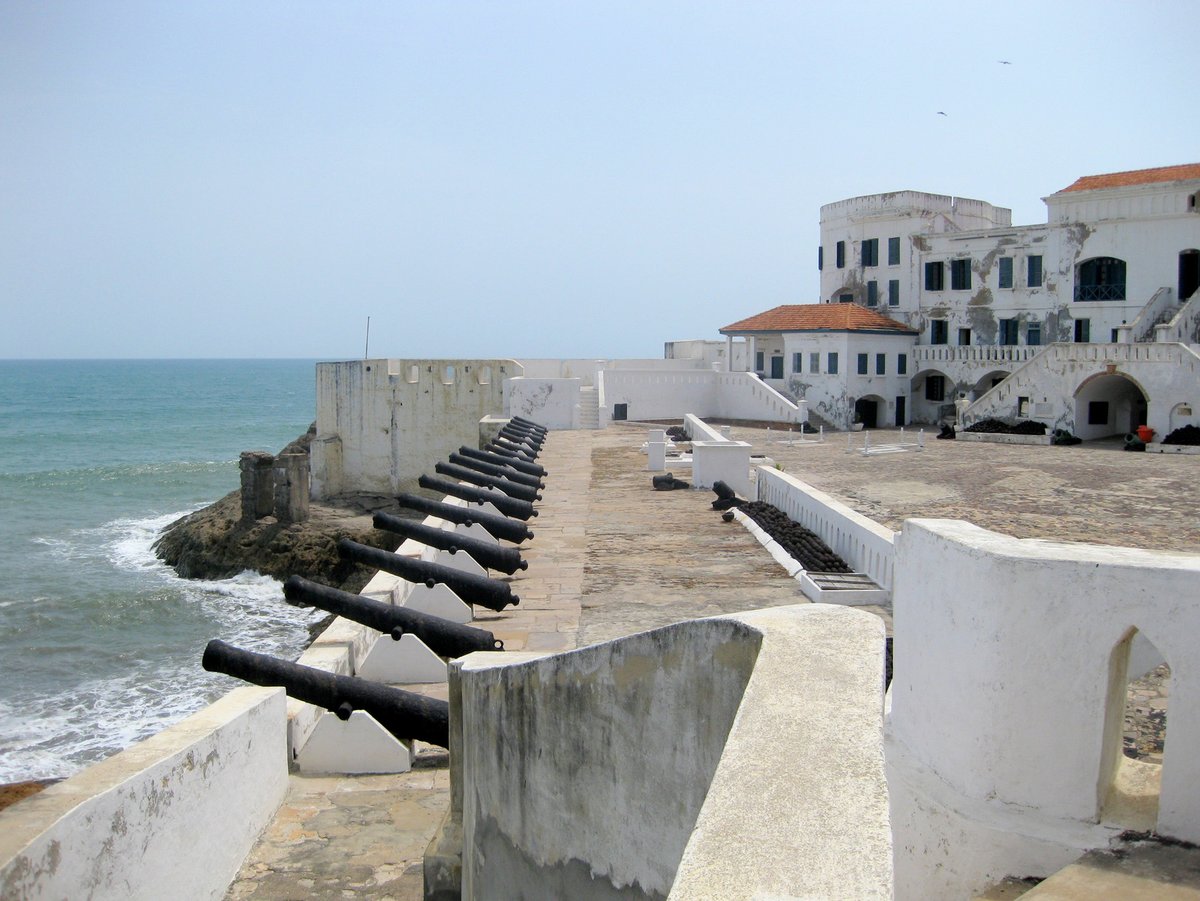

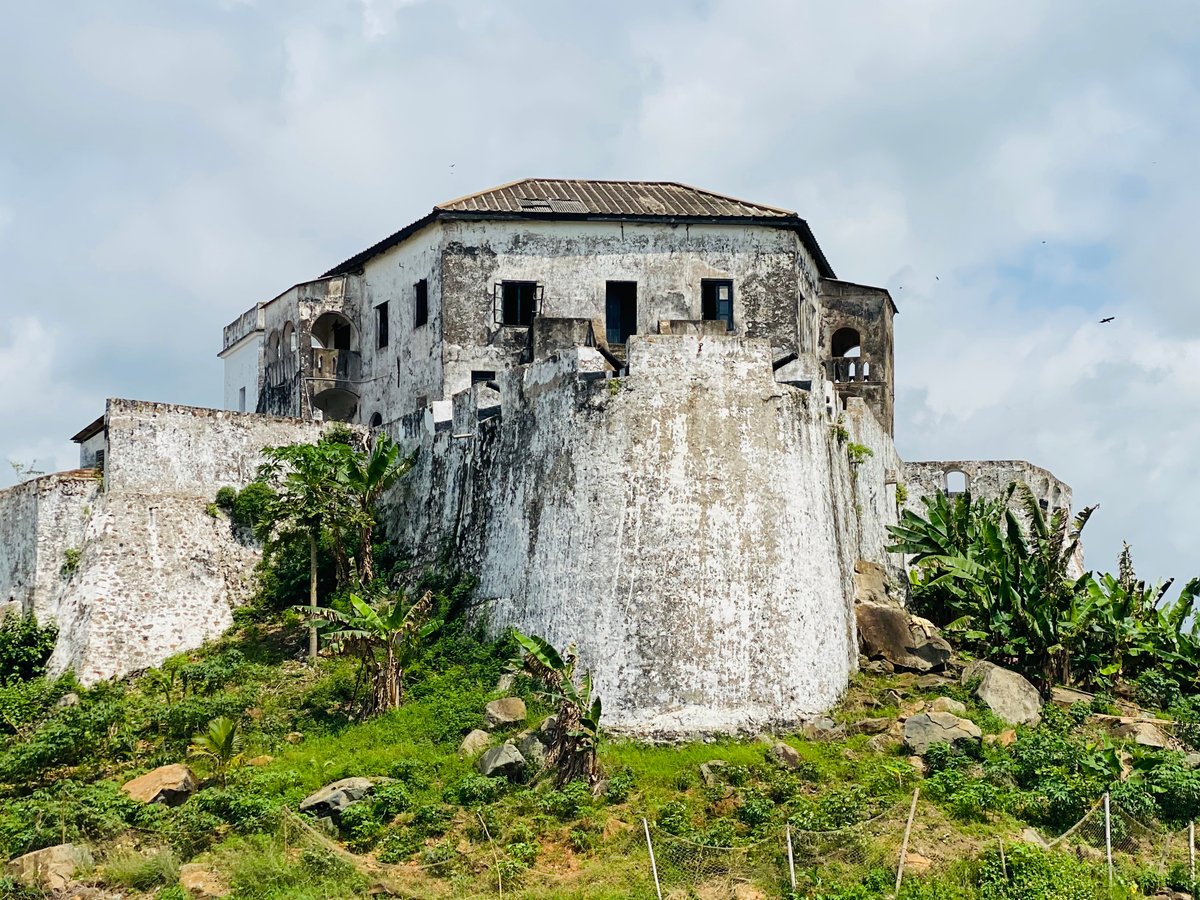
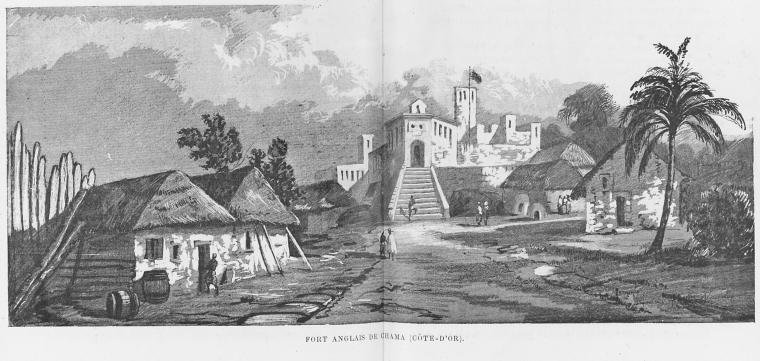
Located in the Central Region of Ghana, Cape Coast Castle was originally established in 1555 as a Portuguese trading post named Cabo Corso. In 1653, a timber fort was constructed by the Swedish Africa Company and named Carolusborg. The site became a center for the trade of gold and timber, but by the 18th century, its dungeons were used in the Atlantic slave trade. It served as a primary market where local Africans traded gold, mahogany, and enslaved captives for items such as silk, spices, and sugar.
The fort was a site of intense competition between European nations, leading to it changing hands multiple times. In 1672, the Royal African Company was granted a legal monopoly on trade along the western coast of Africa. To accommodate the slave trade, large underground dungeons were added, which could hold as many as a thousand enslaved people awaiting export. These dungeons stood in stark contrast to the luxurious administrative quarters above, where European occupants lived.
Cape Coast Castle is now included on the UNESCO World Heritage List for its testimony to the Atlantic gold and slave trades. During its history, it also served as a site for judicial actions; for example, in 1689, the pirate Duncan Mackintosh was hanged at the castle. It remains a significant historical landmark of the commercial history of the Gold Coast.
Sources: Wikipedia, OpenStreetMap, Wikidata, Wikimedia Commons

Written by Mutabor
Discuss this with the author and others
No comments yet. Be the first to start the conversation.