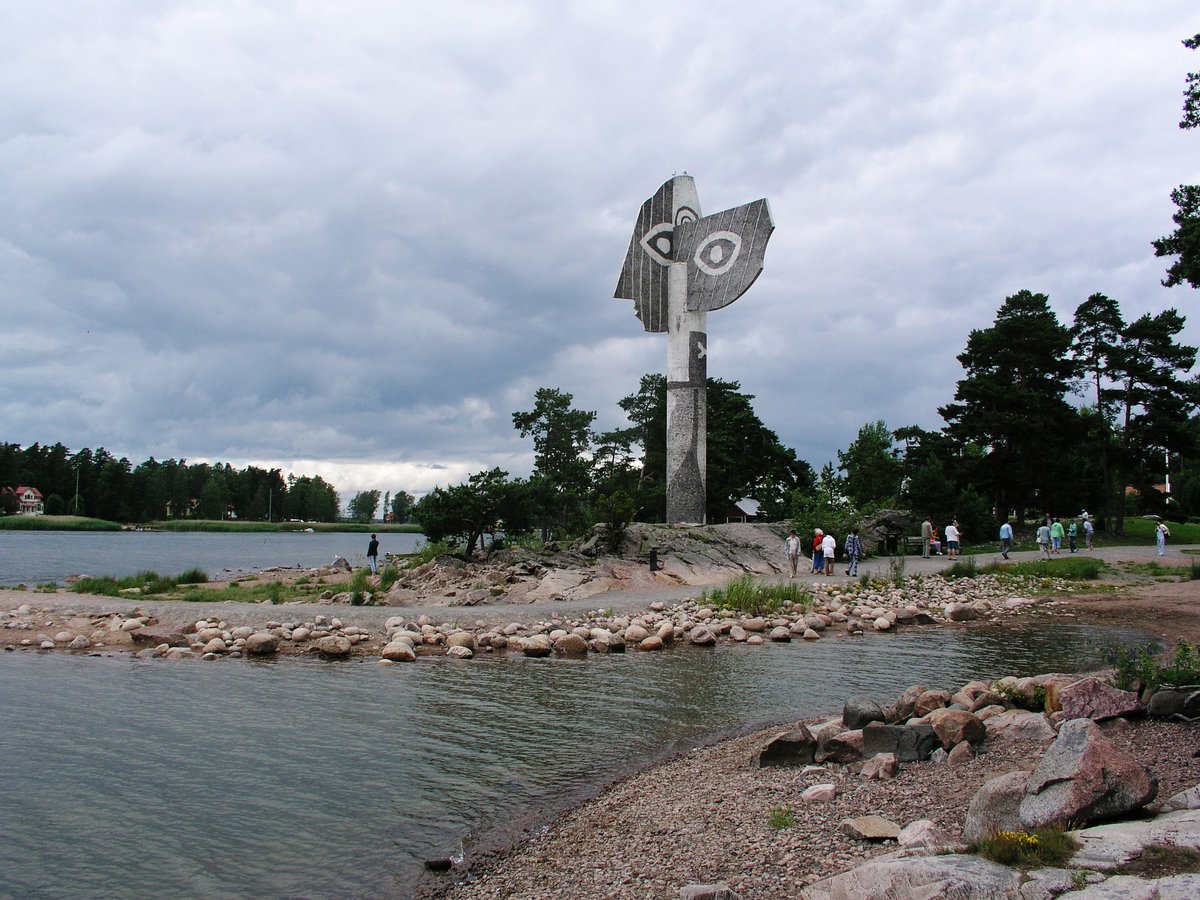

Picasso's Statue, towering at 15 metres tall, is the first large-scale concrete sculpture by Pablo Picasso, and the largest in the world to date. It is situated in Kristinehamn’s archipelago, specifically at Vålösundet, about 7 kilometres from the city center. The statue was unveiled on Midsummer’s Eve in 1965. The larger slab, which depicts Jacqueline’s profile, stands at six metres high, four metres wide, and weighs four tons. The statue was created by the Norwegian artist Carl Nesjar, who developed the bas-relief technique with risting in natural concrete in collaboration with the architect Erling Viksjø during the 1950s.
Discussions about sculpture projects in concrete with the upscaling of maquettes that Picasso had already made since the 1950s began around this time. Nesjar had consulted with officials in his home community in Norway, but Larviks community was not interested. Bengt Olson and Carl Nesjar crossed paths by chance outside Paris in France in 1964, where both were residing. Bengt Olson had previously seen a maquette of a Picasso sculpture in cardboard from the series Les dames de Mougins in a book with a photography reportage from Picasso’s atelier in 1958.
Sources: Wikipedia, OpenStreetMap, Wikidata, Wikimedia Commons
Written by Nik Frost
Discuss this with the author and others
No comments yet. Be the first to start the conversation.