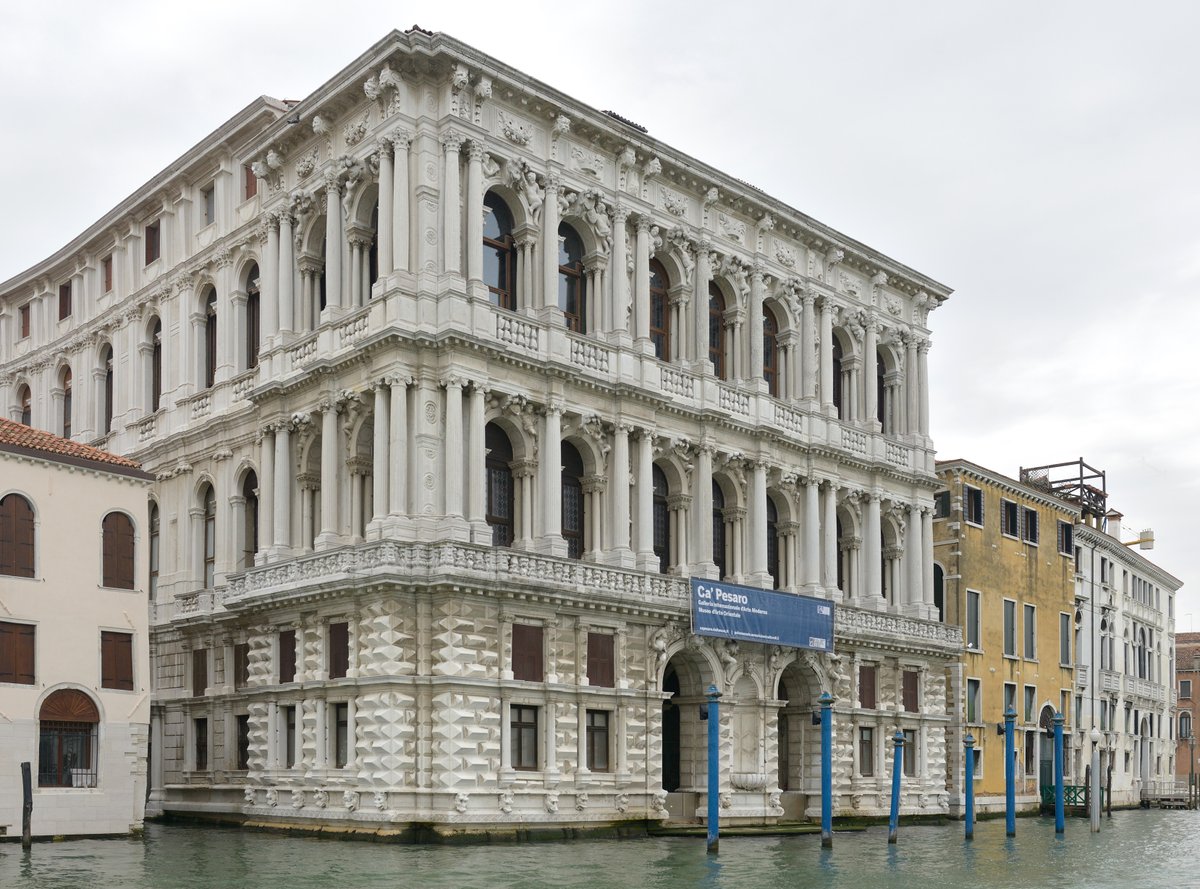

The Museo d'arte orientale in Venice houses one of the major collections of Japanese art from the Edo period in Europe. The collection belongs to Prince Enrico of Bourbon, who spent about nine months in Japan between 1887 and 1889 traveling with his wife, Adelgonda di Braganza. During this time, he acquired over thirty thousand works. Upon his return to Venice, he initially placed the collection in Palazzo Vendramin Calergi before it eventually passed to the Italian government as war reparations.
In 1925, a convention was signed to house the collection in Ca' Pesaro. Eugenio (Nino) Barbantini was tasked with the challenge of setting up the museum within a historic Venetian residence featuring stucco and frescoes. Over three years, he moved the collection from Palazzo Vendramin Calergi and designed the museum, serving as Director until 1950. The museum officially opened on May 3, 1928, showcasing Japanese art from the Edo period, along with sections dedicated to China and Indonesia.
Visitors can still recognize the layout designed by Barbantini, which includes rooms dedicated to lacquerware. Two specific rooms showcase objects made with the makie technique, a gold lacquer used for wedding trousseaus of wealthy merchants and feudal lords. The collection also features feudal parade armor, musical instruments, and textiles. While the museum is currently in Ca' Pesaro, work began in 2017 to relocate the collection to the former church of San Gregorio.
Sources: Wikipedia, OpenStreetMap, Wikidata, Wikimedia Commons


Written by Nicolo Ciampini
Discuss this with the author and others
No comments yet. Be the first to start the conversation.