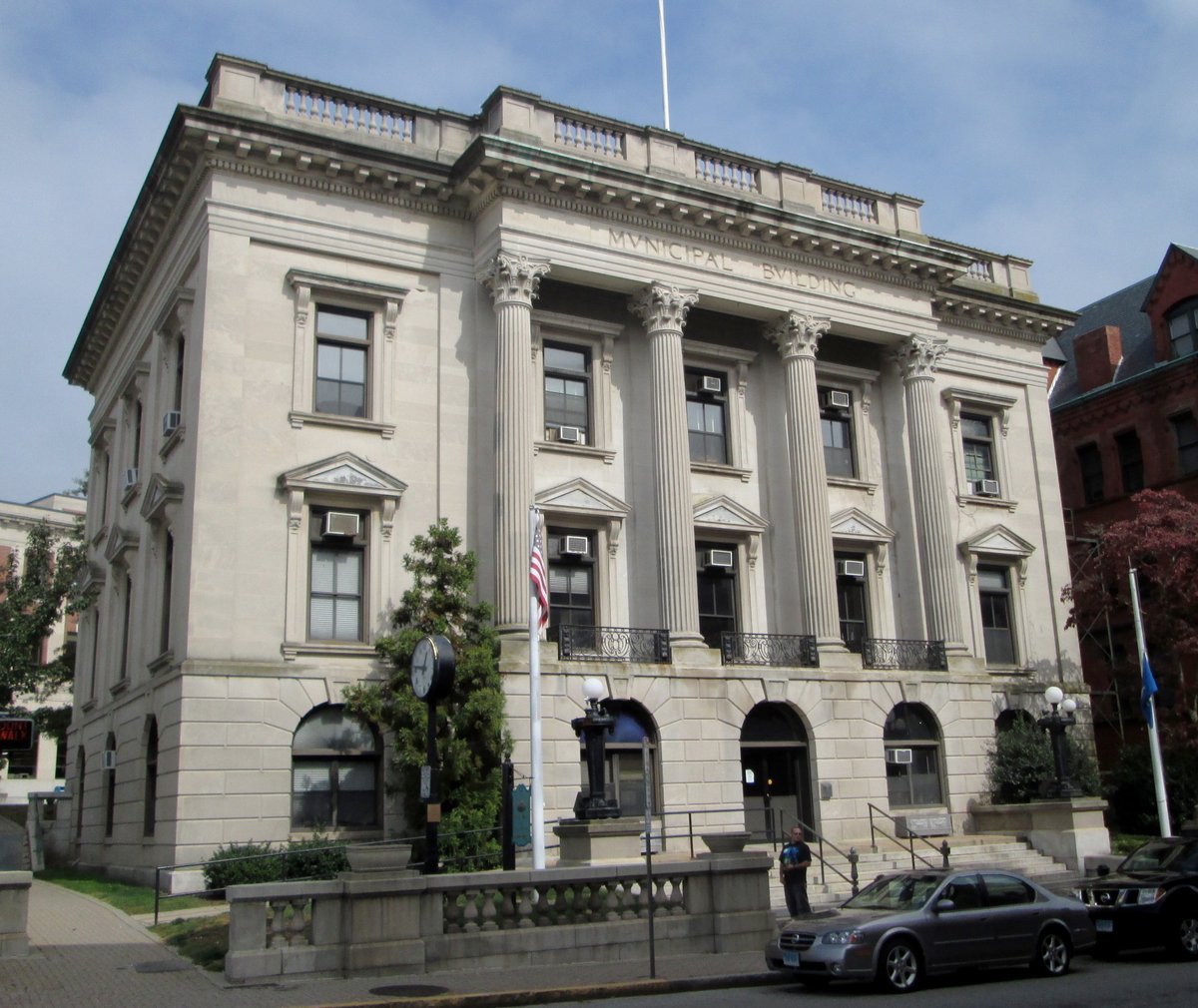

The Downtown New London Historic District, familiarly known as the Waterfront Historic District, is a vibrant, bustling area located in the heart of Connecticut's New London. Spanning 78 acres with 222 contributing buildings, it's an embodiment of a city weather-beaten by the tides of history and reborn through the passage of time. And who better than a seasoned globetrotter to guide you through this intriguing maze? So, along with some local flair and Coastalese slang, buckle up for a whimsical odyssey straight into New London's rollicking waterside neighborhood. 🍻
The district earned its place on the National Register of Historic Places in 1979, with an expansion in 1988 that added 18 acres and 33 buildings to its already rich landscape. At its very heart lies Bank Street, one of the city’s oldest sections, once dominated by the stirring echoes of fishing wharves and swashbuckling tall ships. It’s said that British forces, under the infamous command of Benedict Arnold, mercilessly razed much of the city in 1781, but New London fought back and found ways to adapt and thrive once more.
Bank Street’s history began on a bank, as if placed there by Poseidon himself, for it’s cool and comforting tales of whaling ships, merchant vessels, and the sailors who ventured upon their decks. Today, it stands as the location of some 18th-century structures, including the Shaw Mansion, built in 1753 and serving as Connecticut Navy Headquarters during the American Revolution. Nigh across the street stands Bukeley House, built in 1796, and was once owned by someone who served with John Paul Jones.
The district’s charm reaches beyond its marvelous maritime past, with a selection of 19th-century buildings, such as the grand New London Customhouse, built in 1833 and serving as the oldest such continuously operating building in the United States. State Street runs east-west through the district from Huntington Street to Water Street and is lined with 19th-century buildings. Notable exceptions include the 1787 New London County Courthouse at the head of State Street, which was separately designated to the NRHP and is not part of the district.
State Street is also the location of a number of other historic structures, such as Leopold Eidlitz's First Church of Christ (Congregational), the 1856 First Baptist Church, Eidlitz's Romanesque Revival Harris Place, Lyric Hall, Ewing & Chappell's 1905 Thames Club, James Sweeney's Beaux-Arts New London City Hall, the 1930 Greek Revival bank building, Lena Building, and The New London Public Library.
Sources: Wikipedia, OpenStreetMap, Wikidata, Wikimedia Commons
Written by Friendly Jane
Discuss this with the author and others
No comments yet. Be the first to start the conversation.