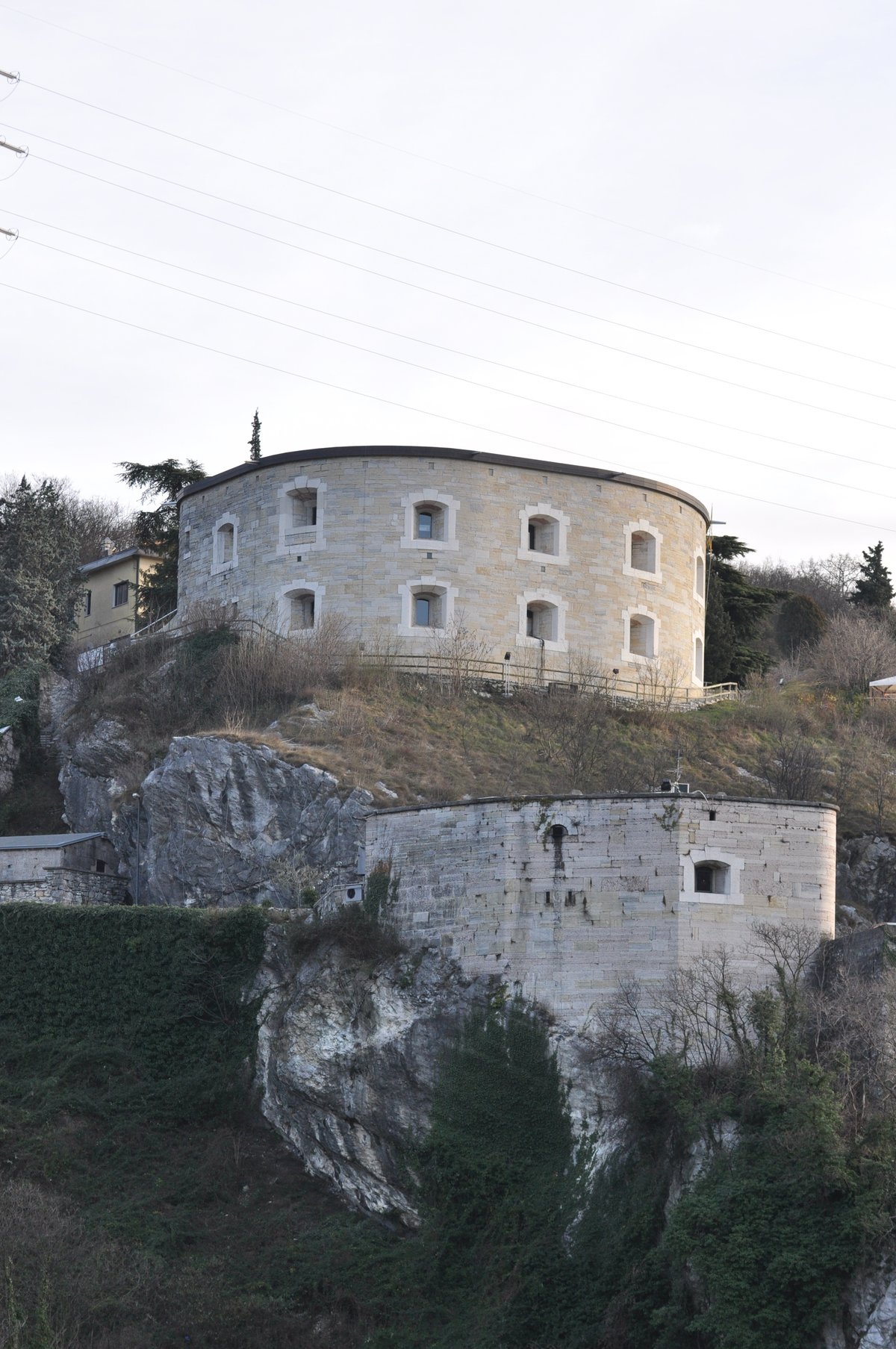

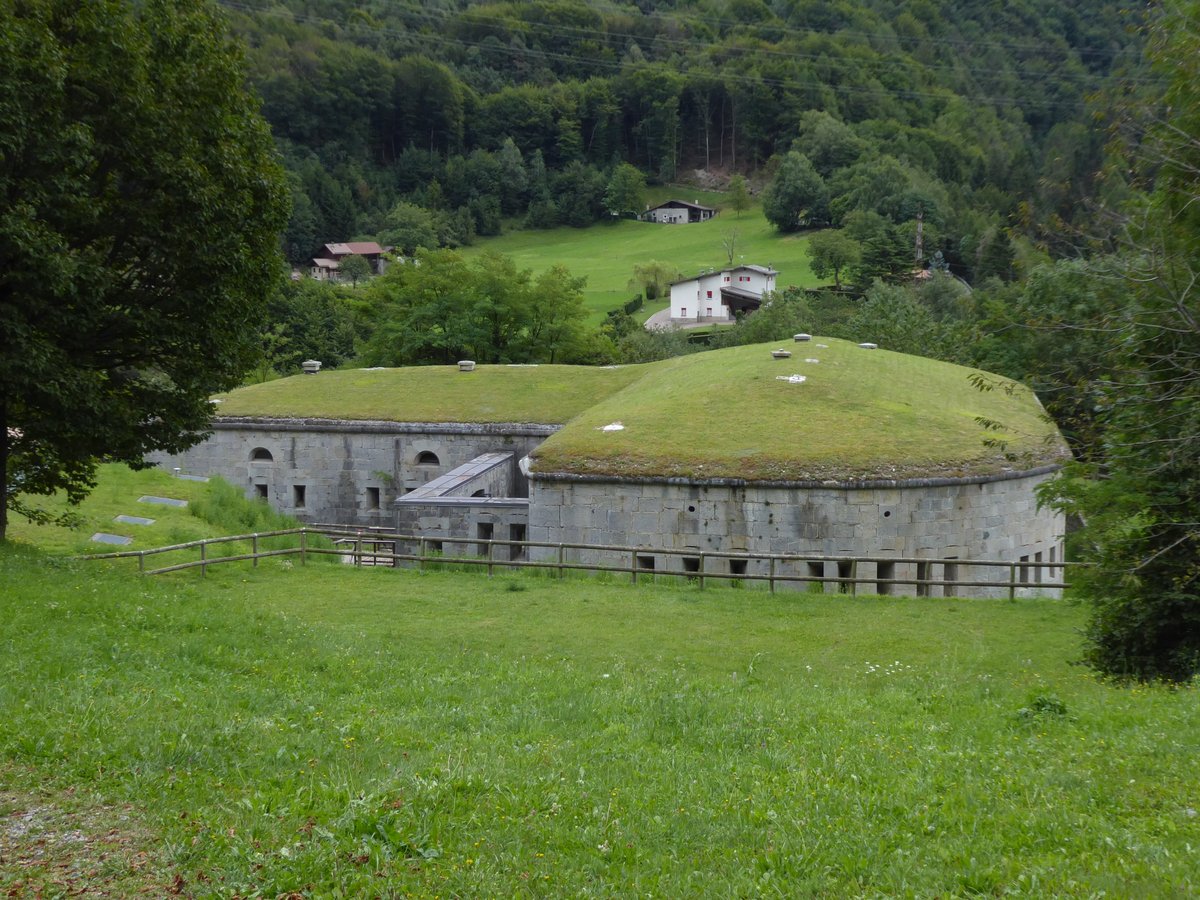
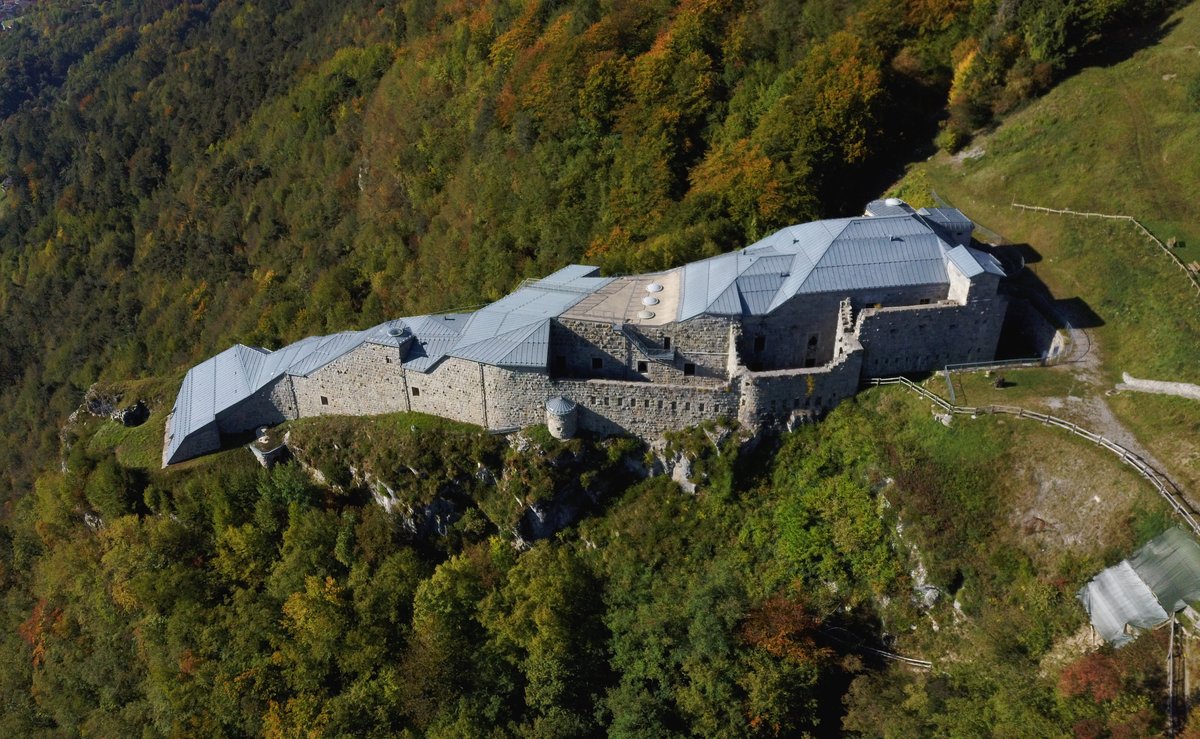
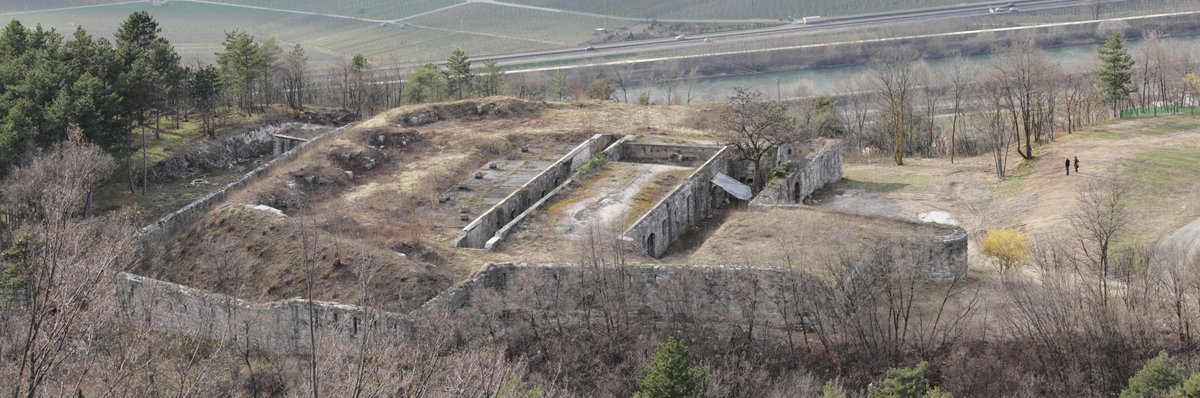
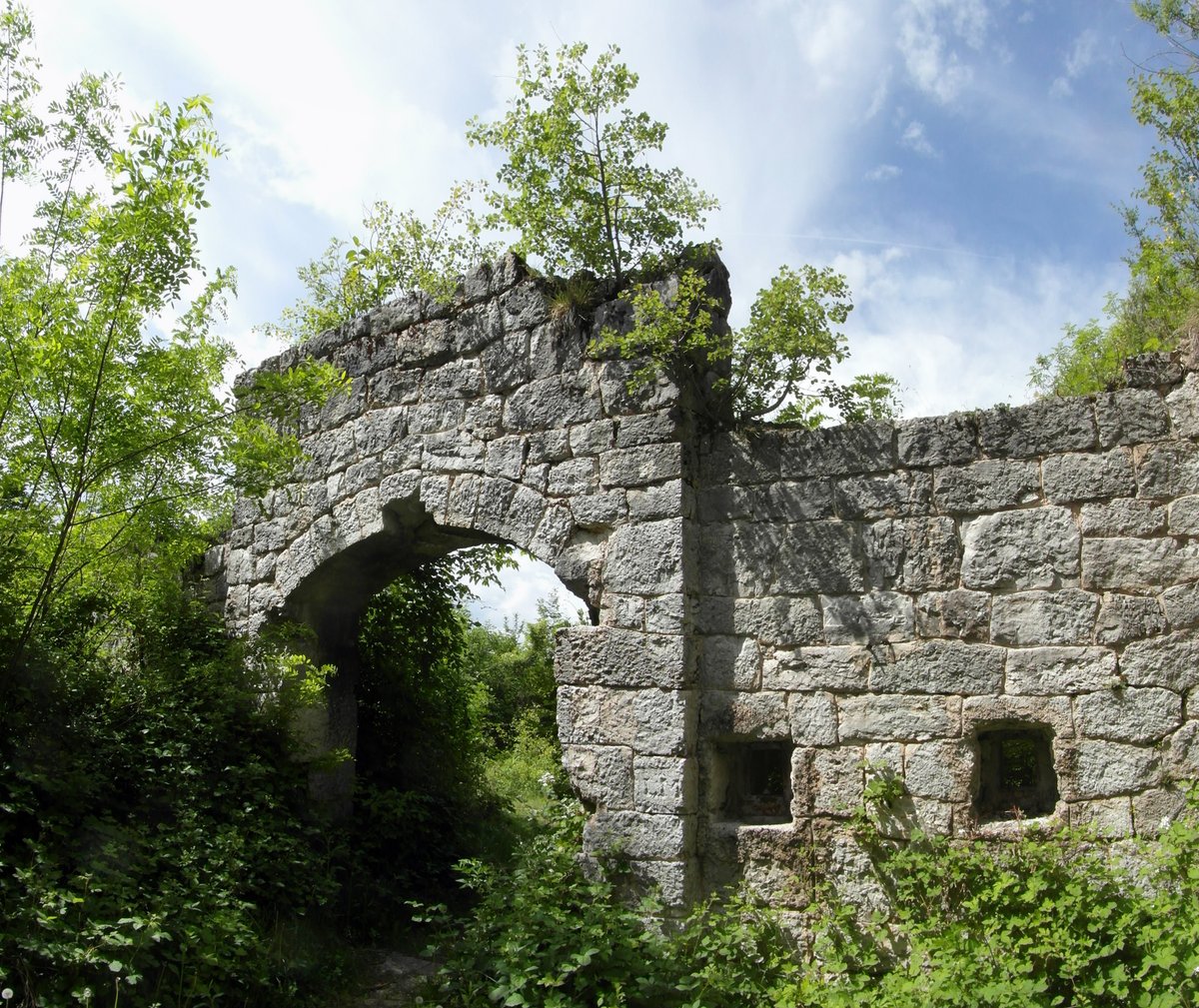
Forte Nago, located in Nago–Torbole, Italy, was an Austro-Hungarian fortification constructed from 1860 to protect the local pass. It had two tiers: a lower structure at road level, known as 'Strassensperre' (road block) in German, built from chiseled limestone and housing two 10cm guns, and a larger upper fortification with a view over the pass.
While the higher structure could watch the road from farther up, the lower structure at the roadside was blind to anything not almost on top of it. The lower structure could physically cut off the road using a large iron door. The upper fortification was heavily armed with six M63 10 cm guns, four M73 12 cm guns, and one M61 15cm gun.
From 1881 to 1900, it was supported by the 'Sagron' Battery on Monte Baldo, just to the south. The garrison consisted of five officers and 148 enlisted men. At the start of hostilities with Italy in May 1915, Nago's guns were removed and placed in a cave battery nearby.
Sources: Wikipedia, OpenStreetMap, Wikidata, Wikimedia Commons
Written by Nicolo Ciampini
Discuss this with the author and others
No comments yet. Be the first to start the conversation.