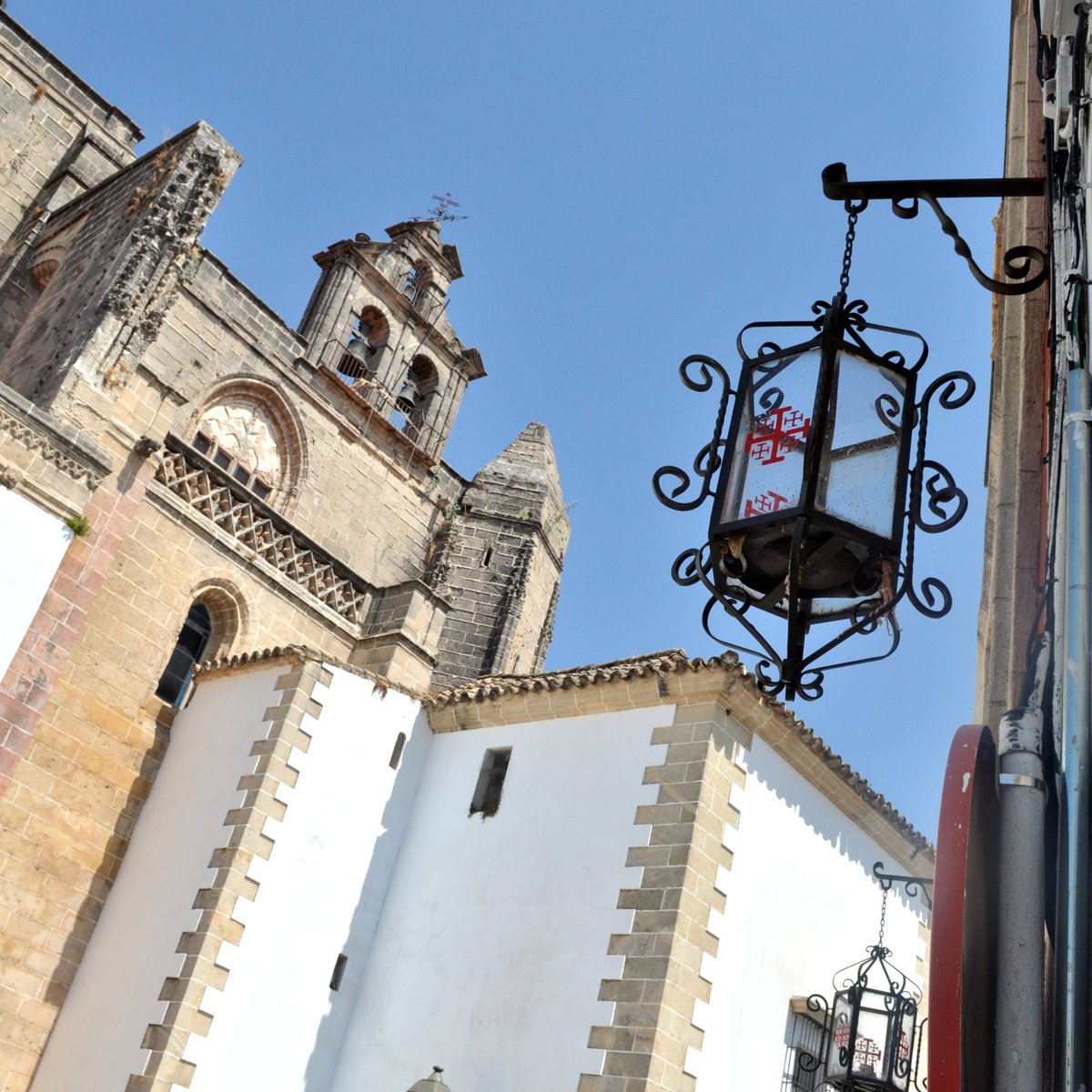

The Iglesia de San Mateo, situated in historic Jerez de la Frontera, is a Gothic church built in the 14th-15th century transition, with Renaissance and Baroque additions. The church, which is an asset of cultural interest since 2000, remains a subject of dispute for centuries as no agreement has ever been reached on the exact date and parties responsible for its construction. The records provide two possible dates, 1251 and 1376, but the mystery remains.
Restoration efforts in the 21st century have not fully resolved the issue, as historical records are inconsistent or incomplete. San Mateo Church is located in the western part of the historic Muslim-origin casco of Jerez de la Frontera. Originally one of the six parishes established in the city after the Reconquista (1264), the church offers some Romanesque elements despite being primarily Gothic. The church's exterior is marked by a single nave with five tracts, with the tracery vaults featuring tercelets in the three final tracts and star-shaped vaults with rich decorations in the other two.
The lateral chapels offer a variety of vaults, such as the half-dome covered by oval decorations in the Renaissance style in the chapel of the Cristo de las Penas, and the chapel of the Virgen de la Cabeza with a 12-piece dome on drums. The chapel of the Cristo de las Penas also boasts a portal in a semicircular arch flanked by Doric columns that rest on pedestals with rampant lions on the exterior and griffins on the interior. The reja (reja) that closes this chapel, also with decorative Renaissance motifs, dates from 1594 as indicated by the central cartouche in the frieze.
There are two exterior portals, with the one on the epistle side in the Mudéjar style, although it is greatly transformed. The primary façade, which is currently obscured, is the most interesting and primitive. It has a pointed arch with a gable flanked by two buttresses, reminiscent of Gothic church portals in Seville Cathedral. The main door was taped as a result of the Lisbon earthquake and is now used as the main entrance, while a temporary chapel called San Mateo chico (Little St.
Matthew) was built for Sunday Mass in the Palacio de San Blas with direct access to Calle San Ildefenso while the temple was being repaired.
Sources: Wikipedia, OpenStreetMap, Wikidata, Wikimedia Commons
Written by Nicolo Ciampini
Discuss this with the author and others
No comments yet. Be the first to start the conversation.