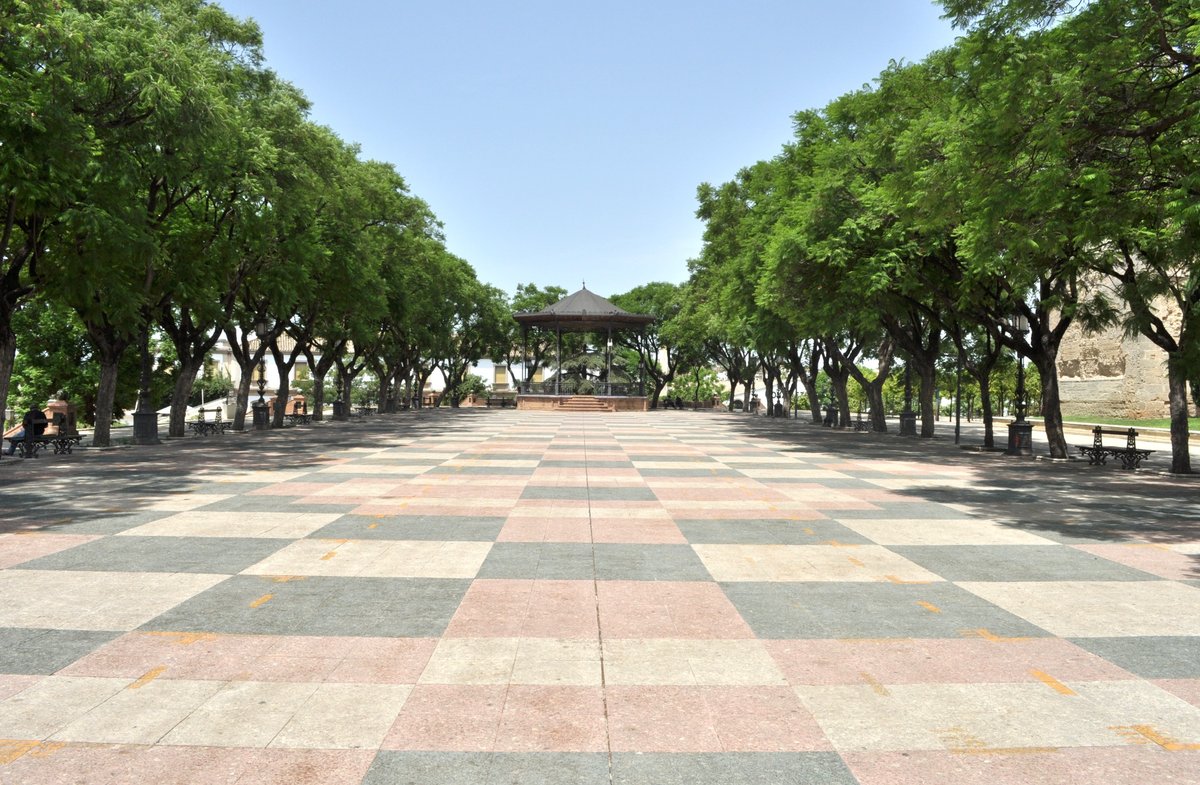

The site was chosen for its open space and wide perspectives. In 1787, José de Eguiluz, the city's Corregidor, expressed a will for schools, roads, and walks according to the spirit of the era. Land next to the Alcázar walls was ceded, and in a short period starting in 1788, a vacant corner was turned into the city's first public leisure space.
Until the 1960s, the Alameda Vieja was a place of meeting and fun, especially on summer evenings, because its height allowed it to enjoy cool breezes from the bay. People could enjoy concerts, drinks, and tapas while children used various attractions, including the Cine Eslava.
Walk the main path today and you'll see a bandstand made of iron - one of the few examples of iron architecture in the city. The entrance is flanked by two columns with sculptures of the goddesses Fortuna and Ceres. Ceres, the goddess of agriculture, has a special relationship with the origin of the city's name, which changed from Ceret to Jerez. Further along is an Andalusi-inspired esplanade with orange trees and traditional stone paths.
The space remains a hub for local culture, hosting the Rastro de Jerez, the Fiestas de la Vendimia, and various concerts and cultural activities. From the esplanade, one can observe a view of the rear of the 18th-century Cathedral of Jerez.
Sources: Wikipedia, OpenStreetMap, Wikidata, Wikimedia Commons
Written by Nicolo Ciampini
Discuss this with the author and others
No comments yet. Be the first to start the conversation.