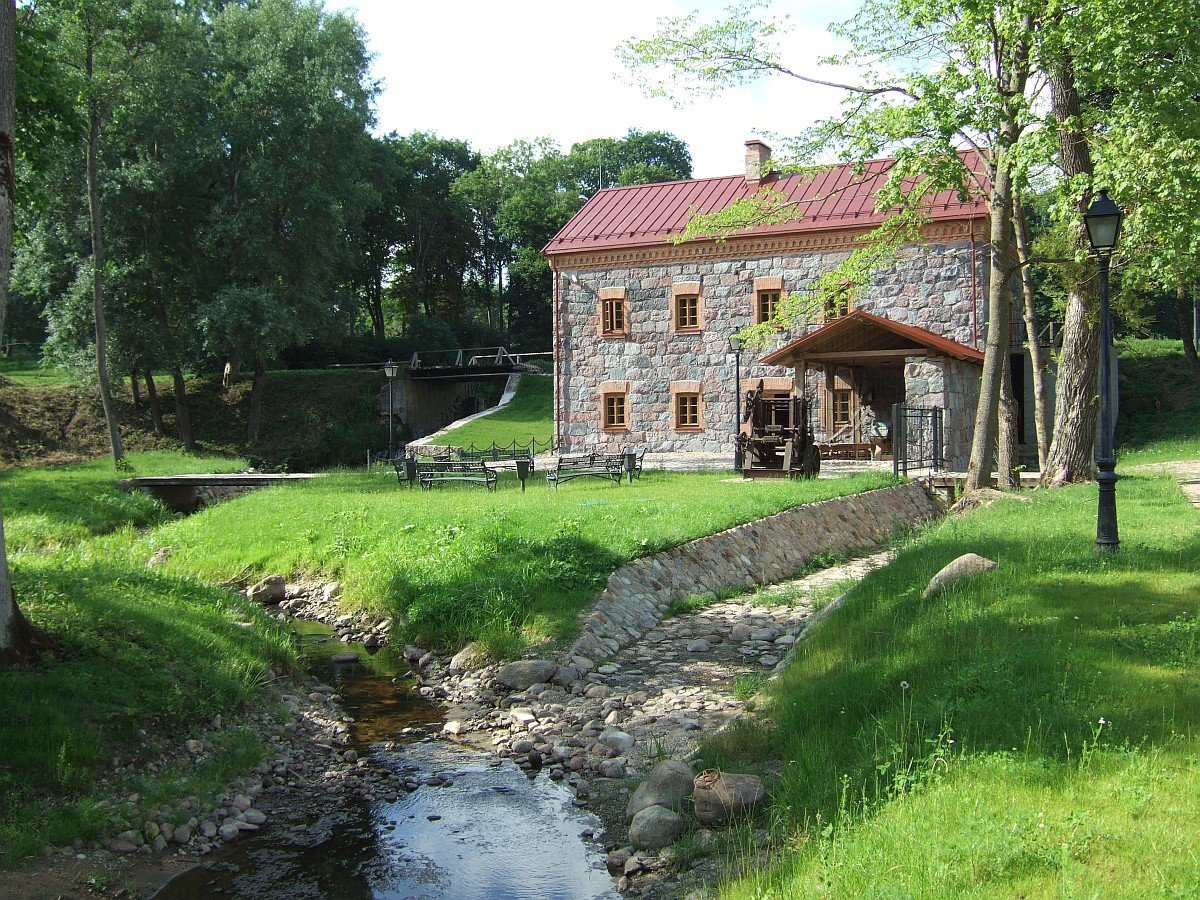

Liubavas Manor sits along the Žalesa River in the northern part of Vilnius as a sprawling collection of eleven buildings. The site features a 1902 watermill that replaced a previous version mentioned since 1727, as well as an 18th-century Baroque architectural ensemble. This ensemble includes an orangery and an officine, which served as a treasure house.
The estate was ruled by the Goštautas family of the Grand Duchy of Lithuania from the beginning of the 15th century until the middle of the 16th century. It was then transferred to the family of the Grand Duke of Lithuania. In 1546, the treasury book of Grand Duke Sigismund Augustus describes the Liubavas ponds undergoing repairs. Later, the manor was ruled by Mikołaj "the Red" Radziwiłł, Golejewski, Kryszpin Kirszensztejn, Tyszkiewicz, and Ślizień.
In the 19th century, Liubavas Manor was home to the famous Lithuanian sculptor Rafał Ślizień (1804–1881). He was buried with his wife in an underground chapel-mausoleum in Liubavas. During the 16th and 17th centuries, the manor territories reached the lakes Siesartis and Kirneilis near Moletai.
Visitors today can walk the stone paved road from Bireliai to the manor. The site has undergone extensive restoration, including the 18th-century ensemble in 2016 and the manor house bridge in 2018. The Liubavas Manor Watermill Museum was awarded the European Union Prize for Cultural Heritage in 2012. The Museum of History, Cultural and Technical Heritage is open on weekends from 15 April to 15 October.
Sources: Wikipedia, OpenStreetMap, Wikidata, Wikimedia Commons





Written by Nicolo Ciampini
Discuss this with the author and others
No comments yet. Be the first to start the conversation.