

Before World War II, Vilnius was an important center of Jewish scholarship and cultural life. During the Polish rule from 1920 to 1939, the population of Vilnius was 200,000 people, including 55,000 Jews. On September 19, 1939, Soviet troops entered Lithuania. Soon after, about 15,000 Jewish refugees arrived in Vilnius from Poland. A few weeks later, Soviet power handed Vilnius over to the Lithuanians. In July 1940, Vilnius, like the rest of Lithuania, became part of the Soviet Union. From September 1939 to June 1941, 6,500 Jewish refugees left Vilnius for the USA, Palestine, the Far East, etc.
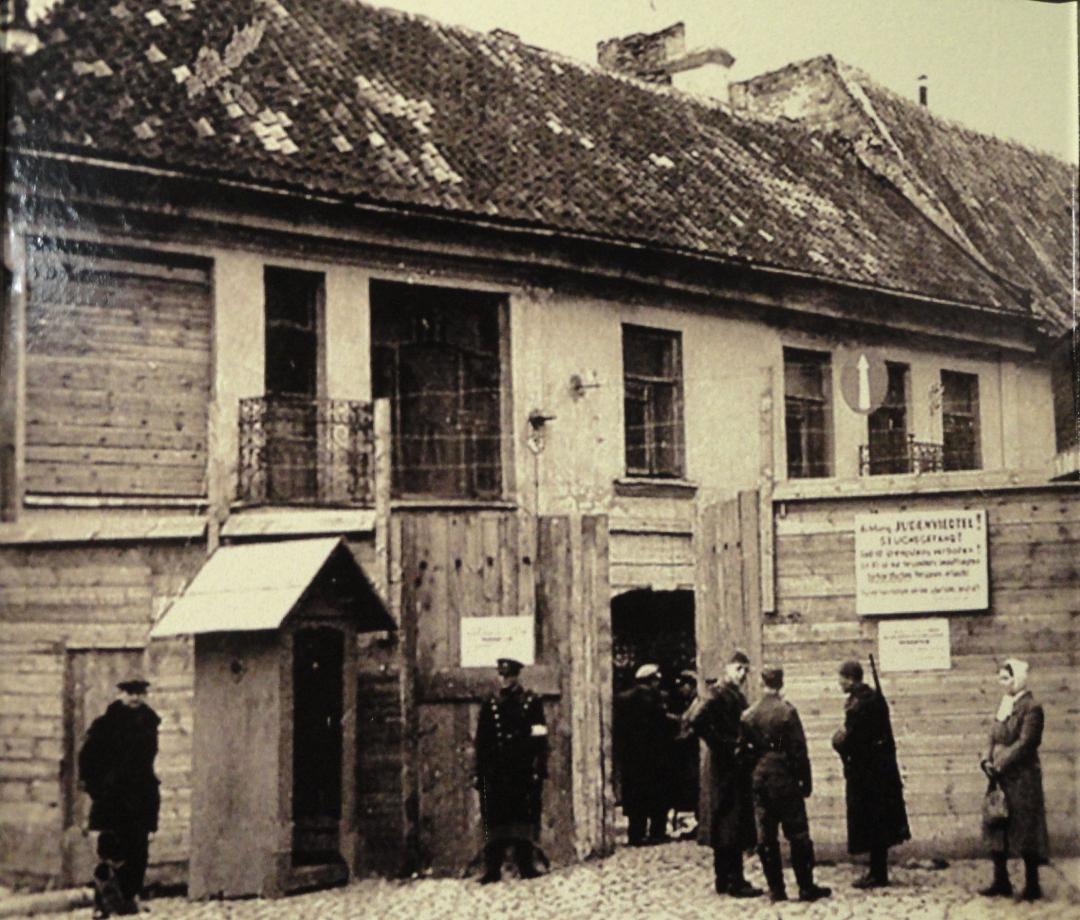
On June 24, 1941, the Germans occupied Vilnius. A few days later, German and Lithuanian authorities began implementing measures against the Jews. On July 4, the Germans ordered the establishment of Jewish self-government (Judenrat). In one day, on July 5, 1941, 5,000 Jewish men were arrested by the Einsatzgruppen and Lithuanian collaborators and shot in the Ponary forest on the outskirts of Vilnius. In early September, two ghettos were established, each with its own Jewish self-government (Judenrat) and Jewish police.
At that time, there were 14,000 Jewish homes in Vilnius. Many were evicted from their homes and relocated to an area in the Old Town that could accommodate about 15-20 thousand people, while there were about 50,000 Jews in Vilnius at that time. Locals profited from the Jews, notes Dickmann; their homes were occupied, and their property was plundered.
One vivid example is the story of "General Vėtra" Jonas Noreika, who until autumn 2018 was considered a "fighter for independence" in Lithuania. His granddaughter Silvia Foti revealed that during World War II, her grandfather moved the family into a "suddenly liberated house" that had previously belonged to Jews.
Over the following months, thousands of Jews were killed in Ponary in a series of actions (forced deportations). By the end of 1941, the smaller ghetto was liquidated, and 33,500 Jews were killed. The remaining 3,500 people either escaped or hid outside the ghettos.

Throughout 1942, no major actions took place, and the Jews managed to create a rich social life within the ghetto. They organized schools and social aid institutions, established healthcare systems, and cultural life. The Judenrat was headed by Jacob Gens, who believed that the Germans would not harm the ghetto if it remained profitable; therefore, the ghetto council provided work for as many Jews as possible. The United Partisan Organization, OPO (Fareynegte Partizaner Organizatsye, FPO), was also founded during the calm year of 1942. The underground fighters distributed leaflets with the words: "We will not go like sheep to the slaughter!" Its author, poet Abba Kovner, survived and later testified at the trial of Nazi criminal Adolf Eichmann.
The situation fundamentally changed in the spring of 1943. Nearby smaller ghettos and camps were liquidated, and mass killings resumed. Serious disagreements arose between the OPO and the Judenrat, as Gens believed that the underground activities of the OPO endangered the rest of the ghetto population. In July, under threat of the entire ghetto’s liquidation, the Germans demanded the arrest of Itzhak Wittenberg, the leader of the OPO. Hoping to prevent further bloodshed, Wittenberg voluntarily surrendered. Nevertheless, the ghetto was doomed to destruction.

In August and September 1943, mass deportations began—thousands of men, women, and children were sent to concentration camps in Estonia. During the deportations, the OPO called on the ghetto population to revolt, but the Jews did not respond. Members of the OPO began attacking the Germans independently. Gens, believing that an armed uprising would lead to the liquidation of the ghetto, proposed to hand over the required number of Jews for deportation. This caused serious disagreements. On September 14, Gens himself was shot by the Gestapo.
The final liquidation of the Vilnius ghetto took place on September 23-24, 1943. More than 4,000 children, women, and elderly were deported to Sobibor; 3,700 Jews were sent to camps in Estonia and Latvia; hundreds of children, women, and elderly were shot in Ponary (read here: https://reveal.world/story/massovye-ubijstva-v-ponarah-paneryaj-bolee-5000-chelovek). About 2,500 Jews remained in labor camps in Vilnius. Approximately 1,000 Jews hid within the ghetto, but most were captured in the following months. Several hundred OPO members joined the partisans. Eighty Jews were held by the Germans in the Ponary forest, forced to exhume mass graves and burn bodies to eliminate evidence of mass murders. Ten days before Vilnius was liberated, Jews from local labor camps were shot in Ponary. 150-200 people managed to survive.
Vilnius was liberated on July 13, 1944. Of the pre-war Jewish population of the city, only 2,000-3,000 people survived.
Sources:
https://www.yadvashem.org/ru/holocaust/lexicon/vilnius.html
https://lt.baltnews.com/vilnius_news/20180926/1018388731/lithuania-vilnius-getto-istoriya.html


Written by Jermaine
Discuss this with the author and others
No comments yet. Be the first to start the conversation.