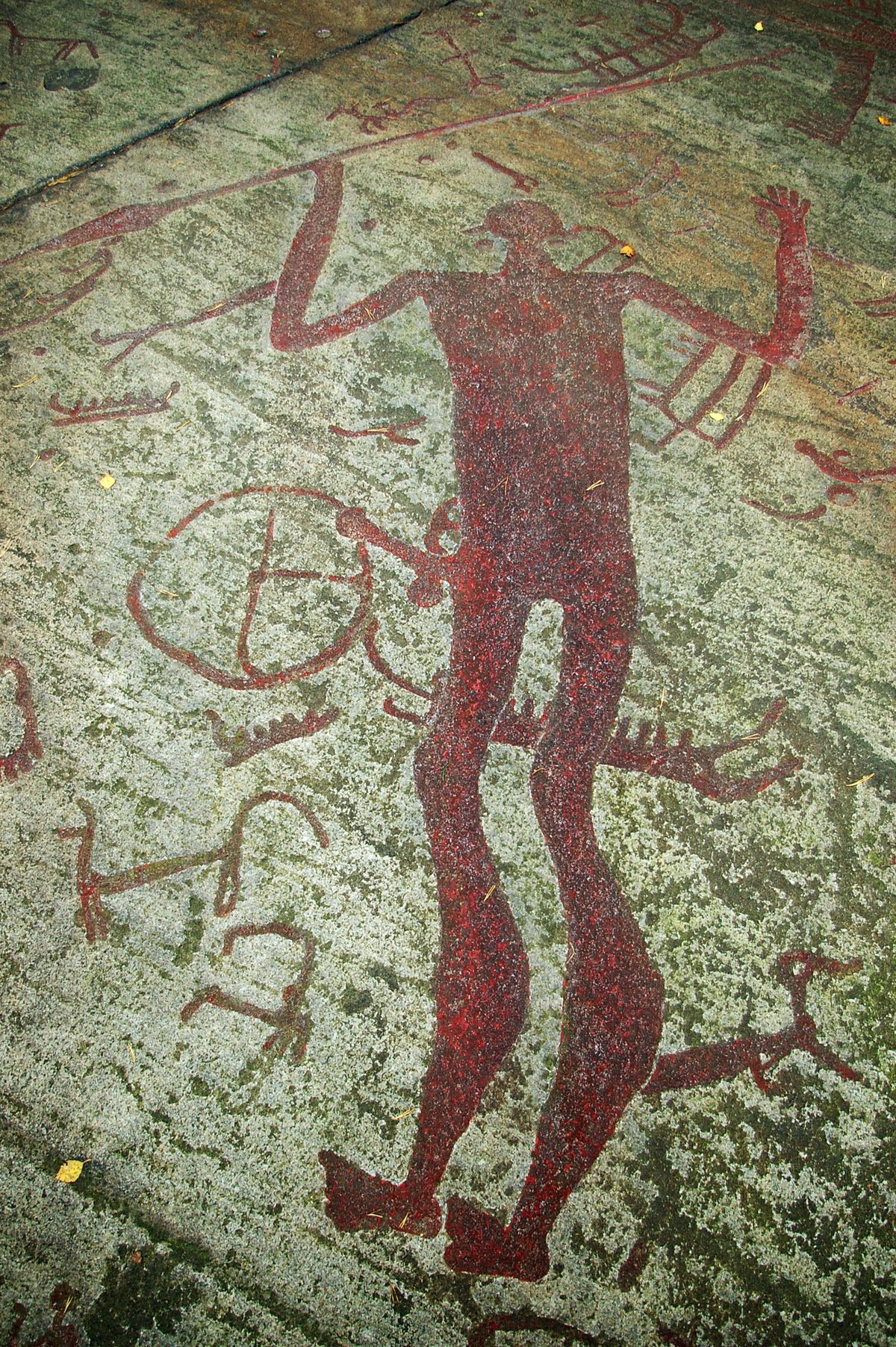

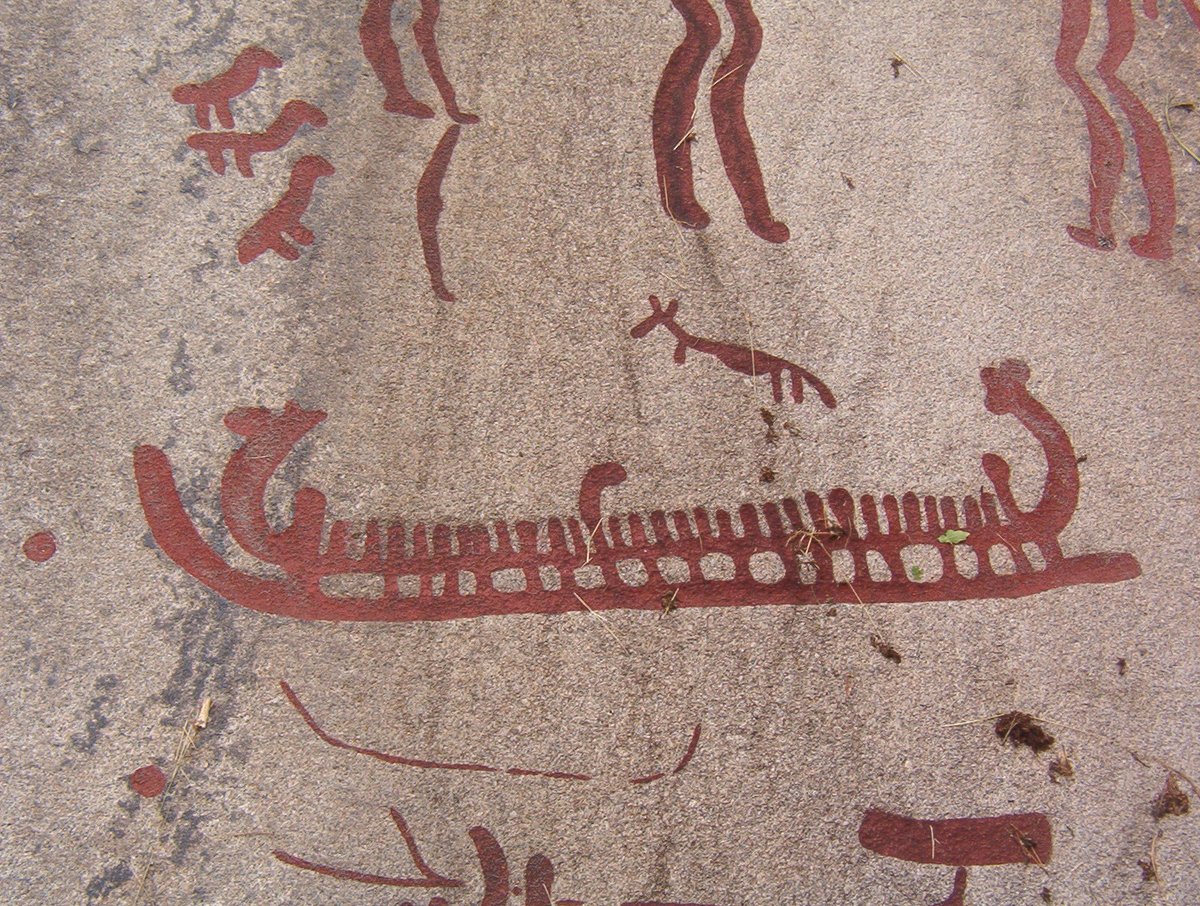
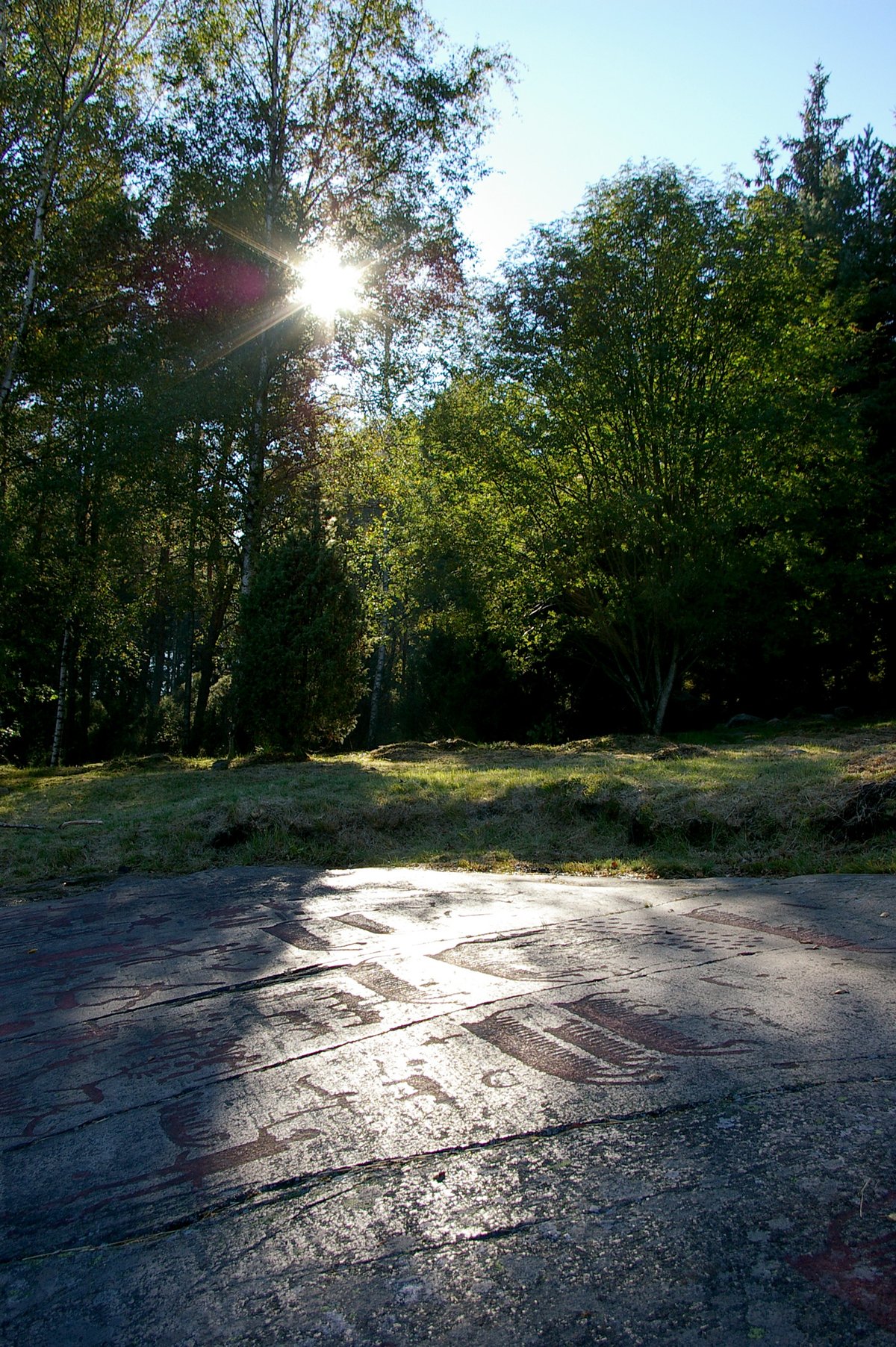
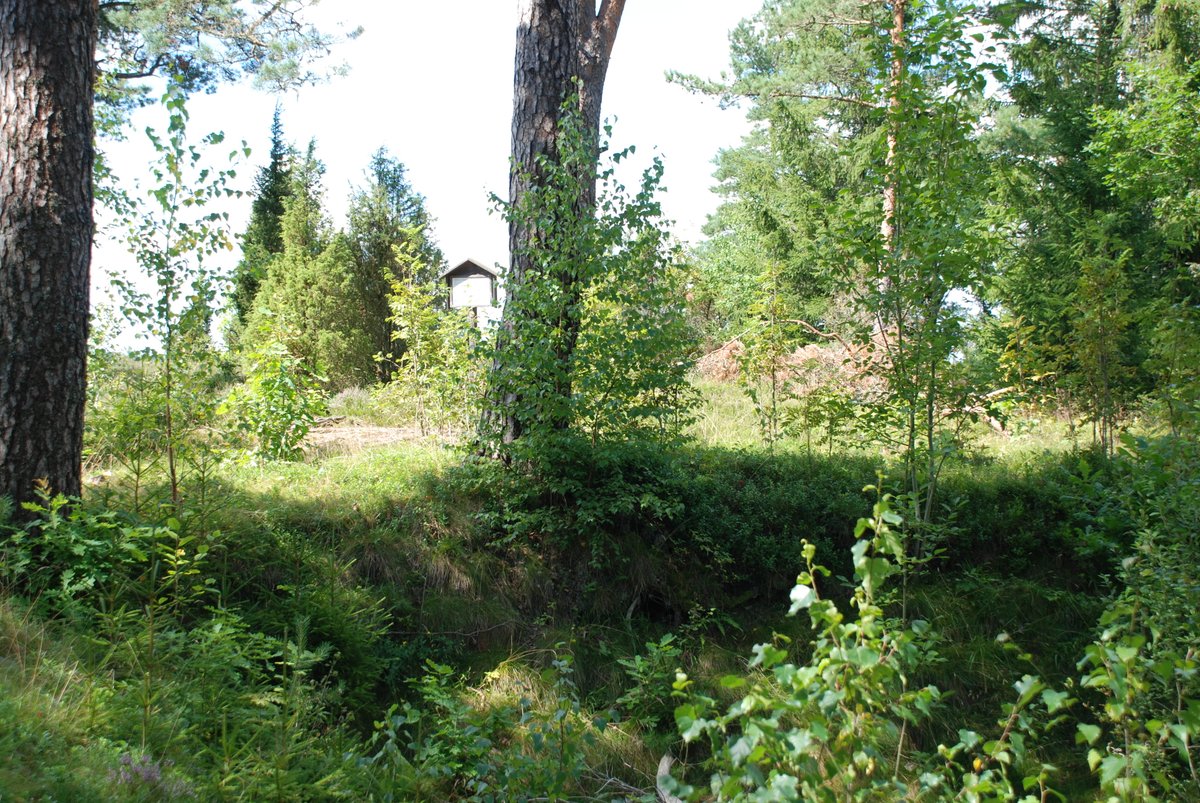
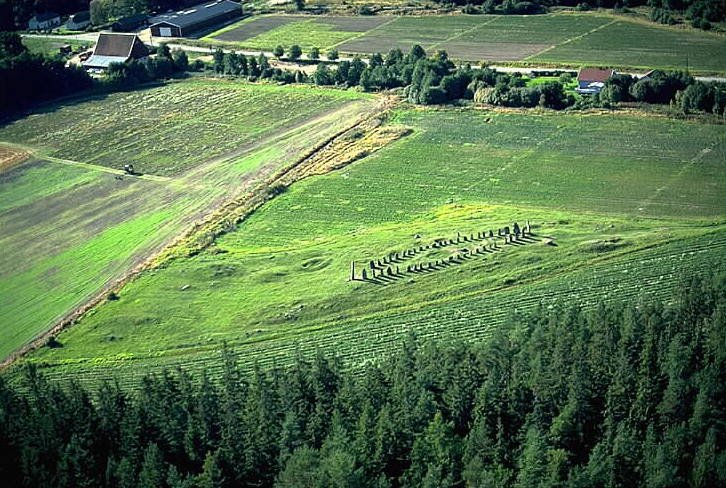
Deep in the forest of Tanum's municipality, a large rock carving features approximately 120 figures. Dated to the period between 1800 and 1000 BC, these petroglyphs are part of a site included in a UNESCO World Heritage list of prehistoric monuments. More than 80 of the figures are boats in the form of paddle canoes, but the site is dominated by a man carrying a spear.
The man figure is drawn with a very small head, a large penis, and very broad calves. According to one theory, this figure represents a god. The rock carving shows a phenomenon where figures are carved into one another. This indicates that the carvings were made at different times, but also that the creators did not care about the background of the existing images. It is possible that the process of creation was more important than the final aesthetic result.
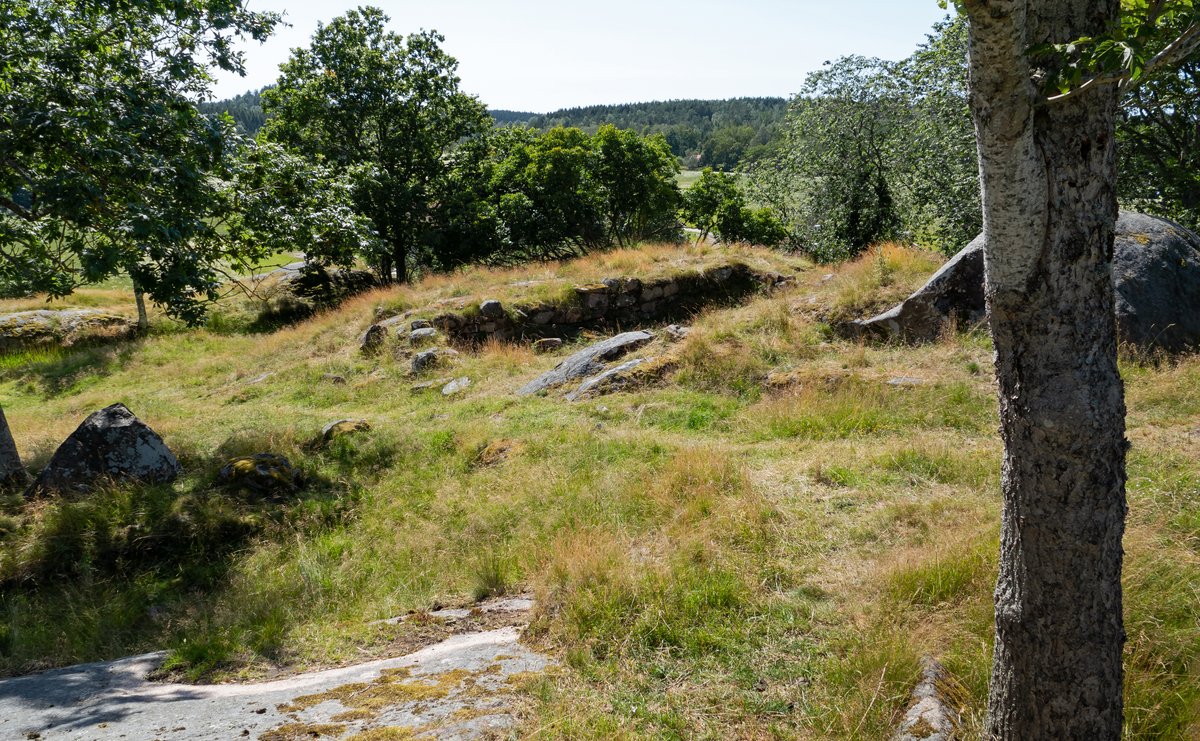
About 100 meters east of the main carving lies a smaller rock with several warriors on horses. These figures are equipped with spears and rectangular shields. These carvings are dated to the period between 400 and 100 BC. In 2026, rock carvings that had been documented in the early 1800s and subsequently forgotten were rediscovered after being covered up for many years.
Sources: Wikipedia, OpenStreetMap, Wikidata, Wikimedia Commons

Written by Nik Frost
Discuss this with the author and others
No comments yet. Be the first to start the conversation.