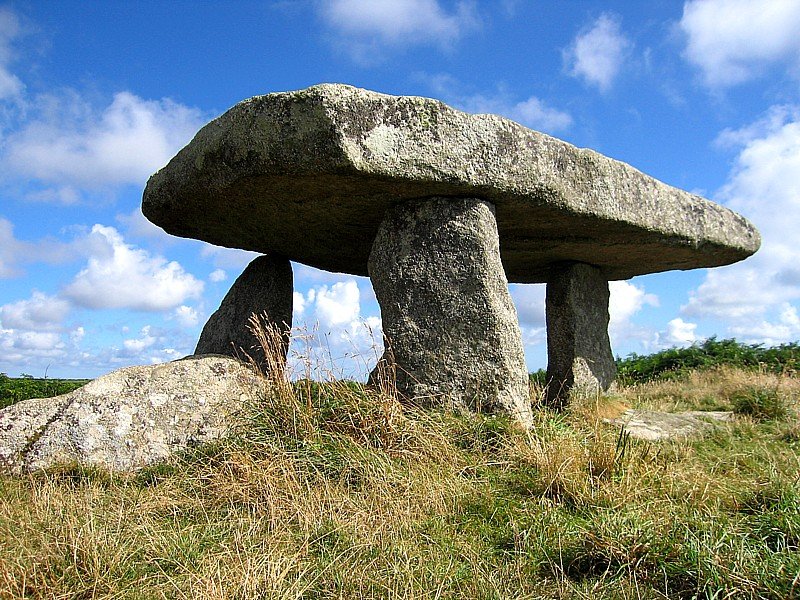

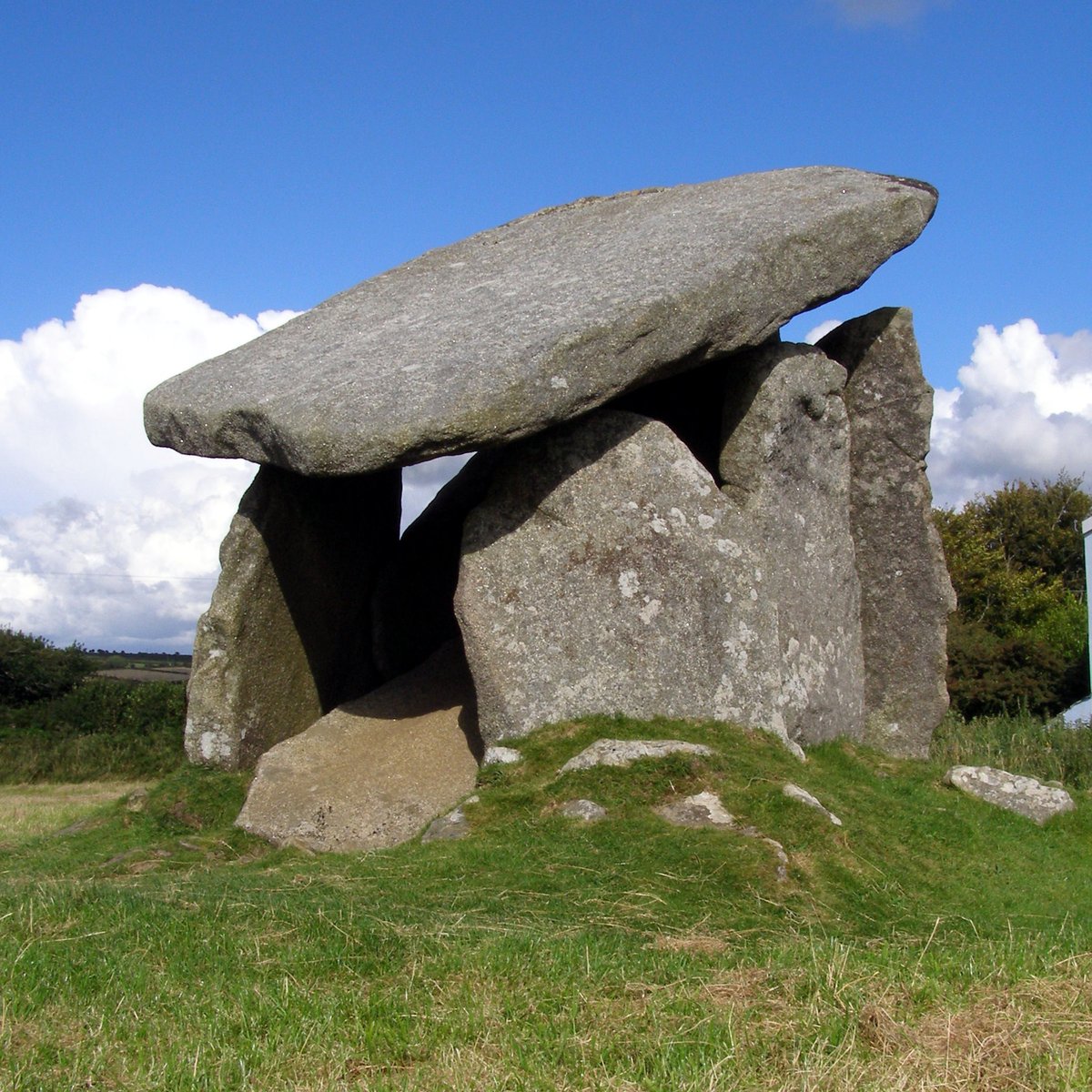
Lanyon Quoit might look like a primitive prehistoric monument, but it is a megalith that has been significantly altered by human intervention. In the eighteenth century, the quoit had four supporting stones and was tall enough for a person on horseback to ride under, but it collapsed during a storm on 19 October 1815.
It took nine years for local inhabitants to raise enough money to re-erect the structure under the guidance of Captain Giddy of the Royal Navy. One of the original stones was considered too badly damaged to put back in place, so the structure now has only three uprights and does not stand as high as it once did.
Most of the stones kept their orientation, though one of the uprights was turned at right-angles when the quoit was re-erected. To the west, there are the remains of another dolmen, West Lanyon Quoit, and the site sits at the north end of a long barrow that is now covered by grass and bracken.
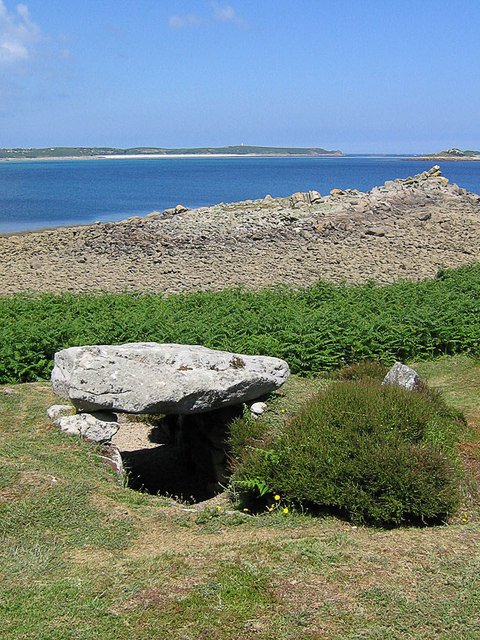
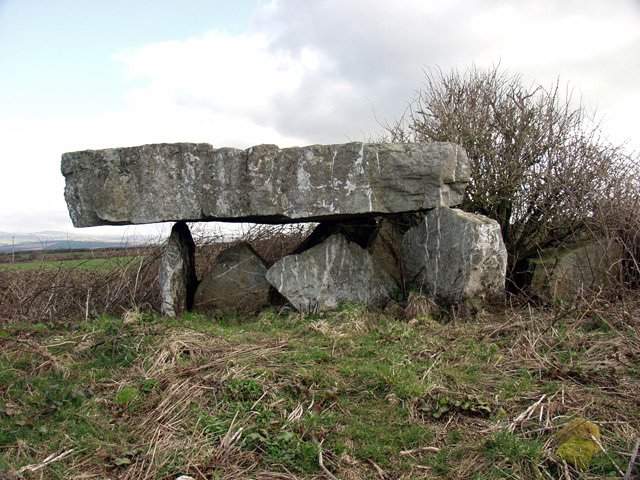
Today, you can see the capstone, which is 5.5 metres long and weighs more than 12 tonnes, resting on its three supports. It is a heavy, silent thing, slightly changed by a storm two centuries ago and the humans who tried to fix it.
Sources: Wikipedia, OpenStreetMap, Wikidata, Wikimedia Commons
Written by Nicolo Ciampini
Discuss this with the author and others
No comments yet. Be the first to start the conversation.