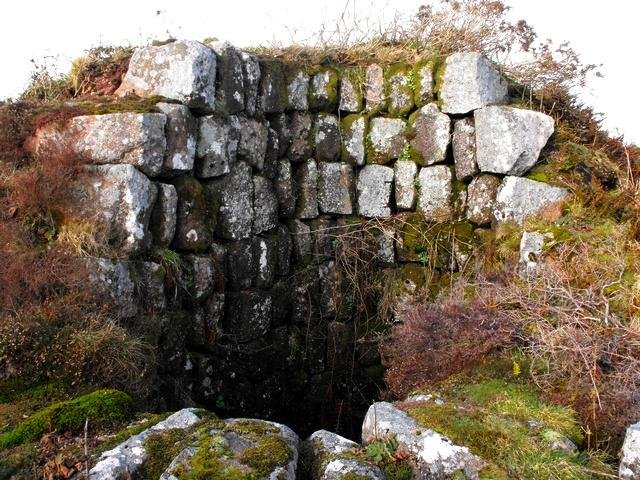
The Ding Dong Mines in Cornwall, UK, are part of an extensive mining area in the parish of Madron. Since 2006, the site has been a UNESCO World Heritage Site, a part of the Cornwall and West Devon Mining Landscape. The Ding Dong Mines themselves are believed to be the oldest in the Westcountry, dating back to prehistoric times. Ding Dong mine is likely one of the oldest mines in the United Kingdom and extends over 500 acres. The mines obtained notoriety during the 18th century due to a infringement lawsuit over James Watt's 'condenser patent'.
In 1796, a 28-inch cylinder inverted engine, designed by Edward Bull, was put into the Ding Dong mine, causing the lawsuit. One of these engines was later erected at the Ding Dong mine in 1797, after a conventional Boulton and Watt engine was inverted by Richard Trevithick and William West. Trevithick was promoted to engineer of the Ding Dong mine in 1796, after working with his father at Wheal Treasury mine. Today, the ruined Count (Account) House is the only remaining structure from Trevithick’s time at the Ding Dong mine.
In the 19th century, the mine was particularly active and yielded some 2,905 tons of black tin, with 206 miners working at the Ding Dong mines towards the end of the 1850s. A pumping house was built at the Greenburrow shaft in 1865, and an engine was transferred to the Greenburrow shaft in 1865. There were two recorded explosions at the mine in the 1860s, and by 1870, production had increased enough to have 200 men working there. However, the mine ceased production on 11 July 1877, mostly due to the exhaustion of the local deposits and increased competition from overseas deposits in places like Queensland.
Sources: Wikipedia, OpenStreetMap, Wikidata, Wikimedia Commons
Written by Nicolo Ciampini
Discuss this with the author and others
No comments yet. Be the first to start the conversation.