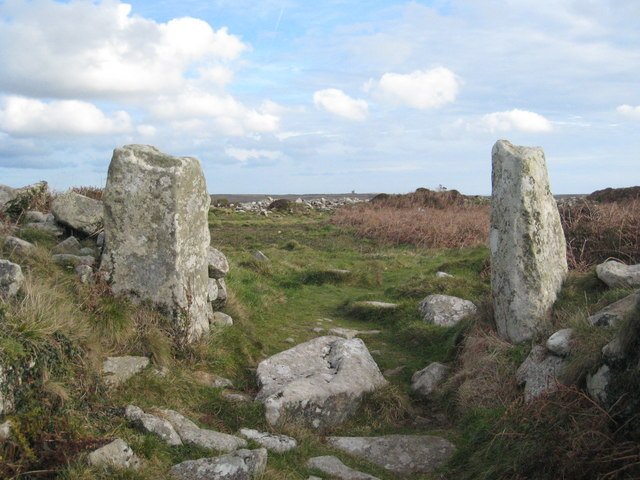

Chûn Castle is a large Iron Age hillfort, or ringfort, near Penzance in Cornwall. In around 1700, Edward Lluyd remarked that its structure and security showed military knowledge superior to any other works of its kind he had seen in Cornwall. The fort features a strategic inner and outer wall and ditch, and it stands on a vantage point overlooking miles of the Celtic Sea to the north and the only land route to the peninsula to the south.
The fort may have been built to protect tin and copper gathered in the nearby tin-rich locality of Pendeen. Excavations have uncovered pottery dating to the 4th century BC, though the fort may have been built upon a much older structure. Iron and tin slags were found within the fort near a well. While the fort fell into disuse around the first century AD, it was possibly re-occupied to protect nearby tin mines in the early centuries AD and modified until the 6th century.
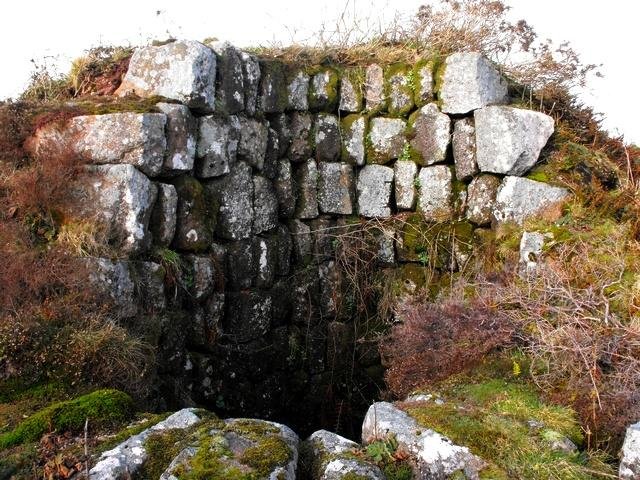
During the 19th century, the fort was used as a quarry for buildings in Penzance and Madron, reducing its once-twenty-foot walls to about five feet high. Despite the loss of stone, the well within the inner walls remained. Locals used the water until the 1940s for domestic purposes and for superstitious reasons, specifically the endowment of perpetual youth. Today, neopagans still make pilgrimages to the site on religiously significant days.
Sources: Wikipedia, OpenStreetMap, Wikidata, Wikimedia Commons
Written by Nicolo Ciampini
Discuss this with the author and others
No comments yet. Be the first to start the conversation.