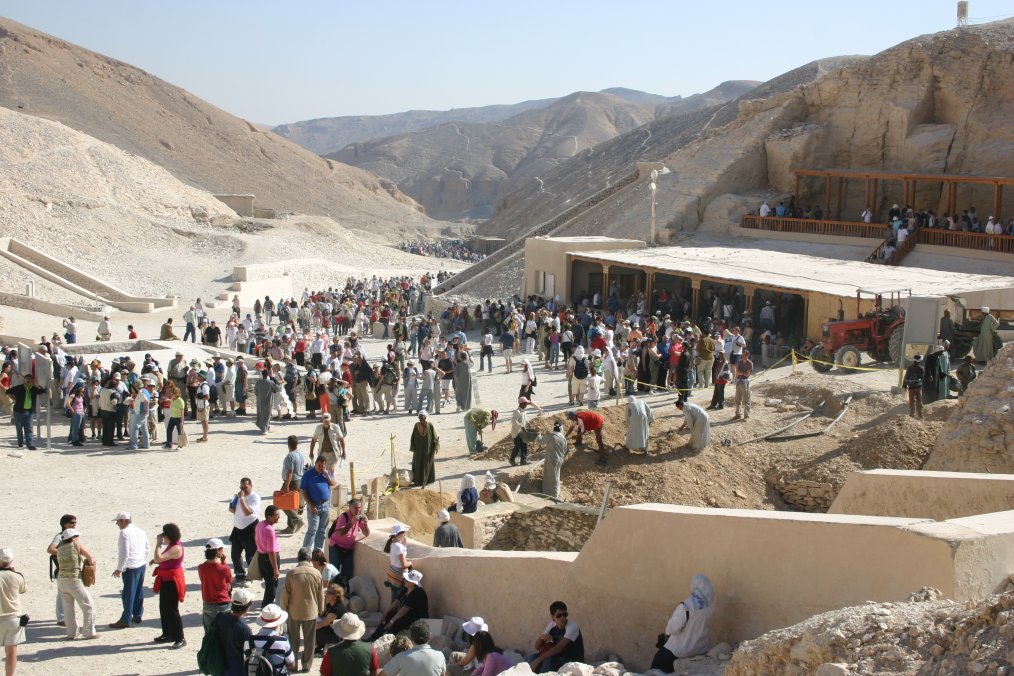

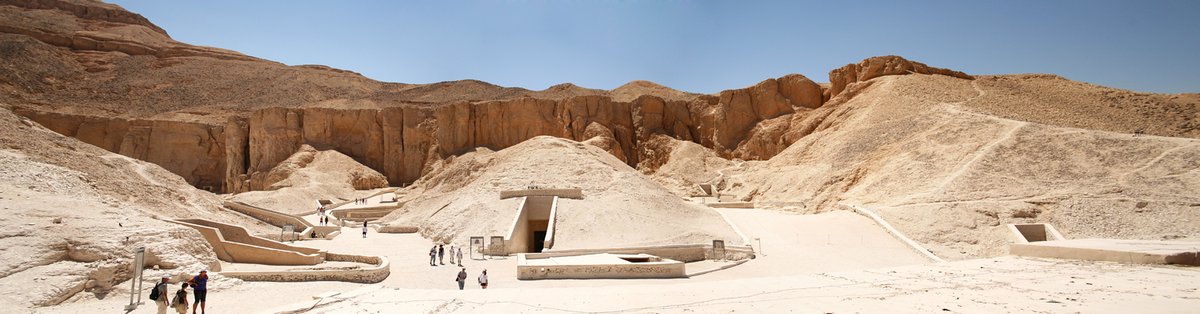
KV63 is a chamber in the Valley of the Kings, a necropolis used by the Egyptian pharaohs. The chamber was initially believed to be a royal tomb, but it is now thought to have been a storage chamber for the mummification process. It was found in 2005 by a team of archaeologists. The chamber contains seven wooden coffins and numerous large storage jars.
Some of the clay seal impressions found within the chamber contain text, such as the partial word 'pa-aten'. This inscription, along with the architectural style of the chamber and the form of the coffins and jars, points to a date roughly contemporary with the tomb of Tutankhamun, which is nearby.
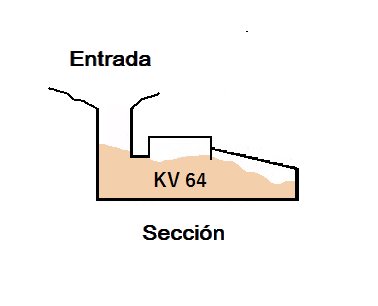
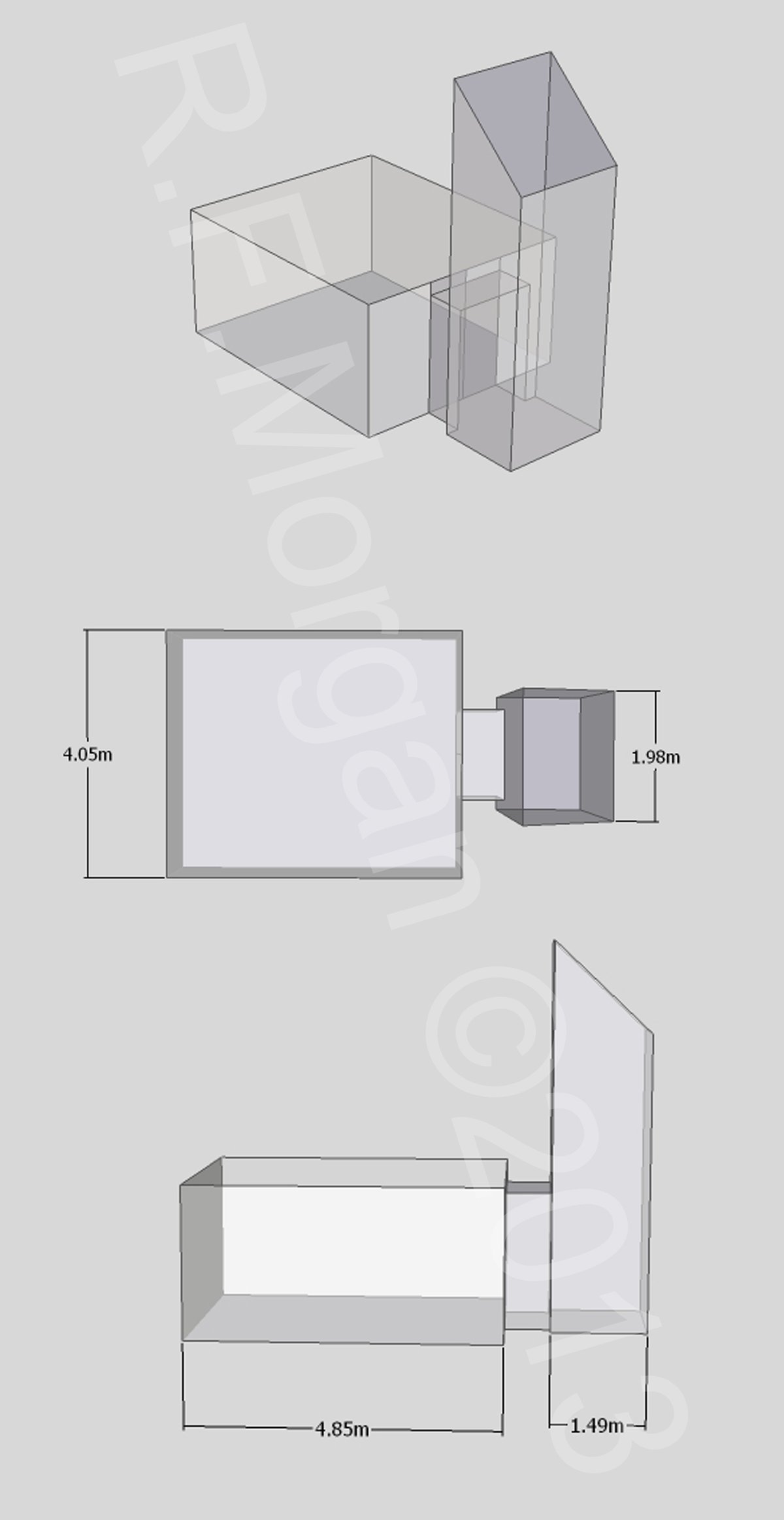
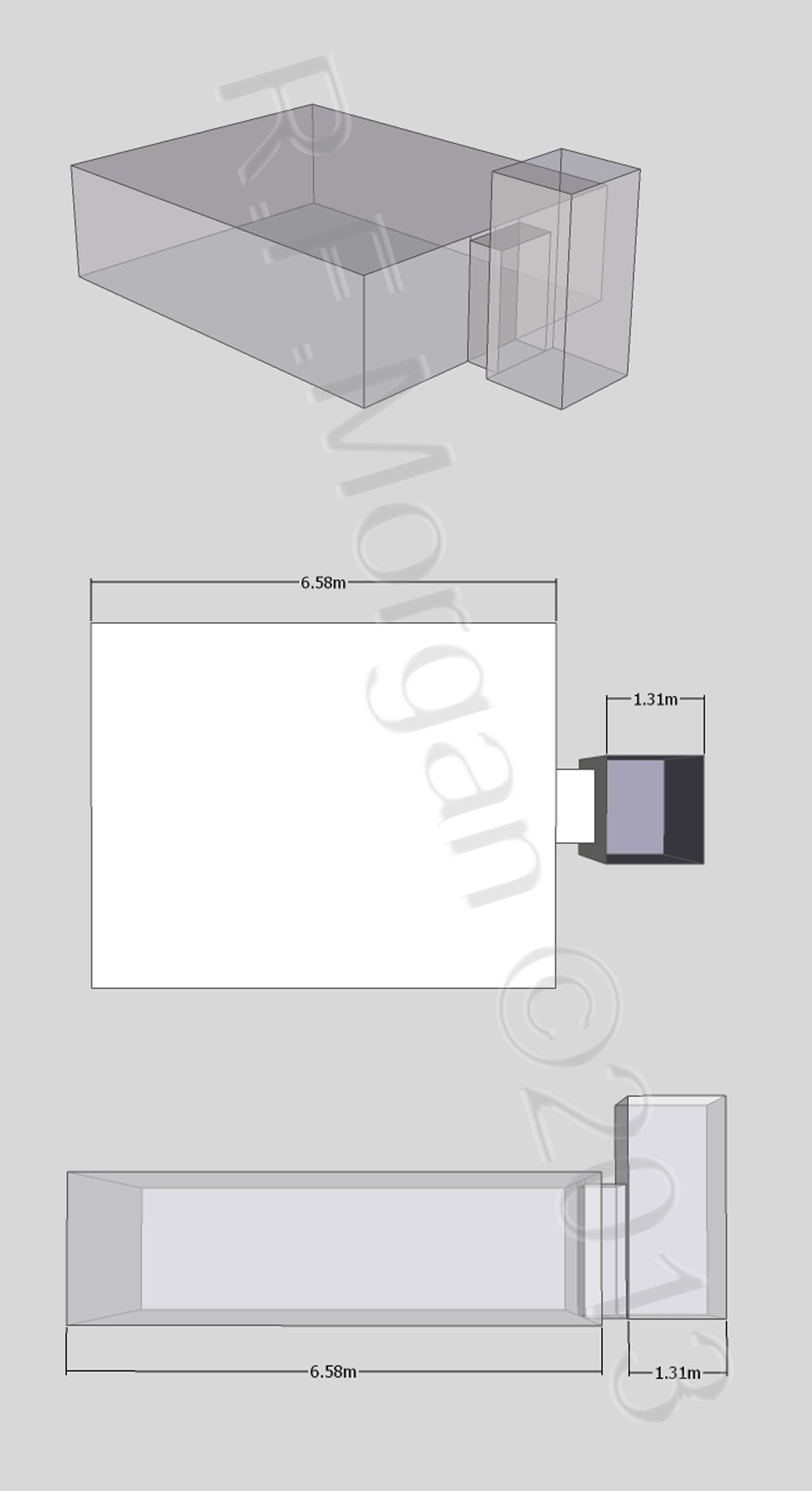
The chamber measures some four metres by five and has plain white walls. It contained seven wooden coffins, including one scaled for a child and one for an infant. Two of the adult coffins and the child's coffin feature yellow funerary masks; the others have black funerary masks. It has been suggested that those with yellow faces may have been designed for female occupants.
There was over 175 kg of natron in the chamber, some inside the coffins and some inside little sacks. The jars and contents are similar to those from KV54, the Tutankhamun embalming cache. Due to its proximity to the tomb of Tutankhamun and the resemblances between the portraits in the sarcophagi, there was groundless speculation at the time of the first discovery that the coffins were once used for the bodies of Kiya and/or even Ankhesenamen. However, there is no reason to believe that the coffins were other than that of basic types used for private persons, probably derived from undertakers' stock for use to contain embalming debris.
Sources: Wikipedia, OpenStreetMap, Wikidata, Wikimedia Commons
Written by Mutabor
Discuss this with the author and others
No comments yet. Be the first to start the conversation.