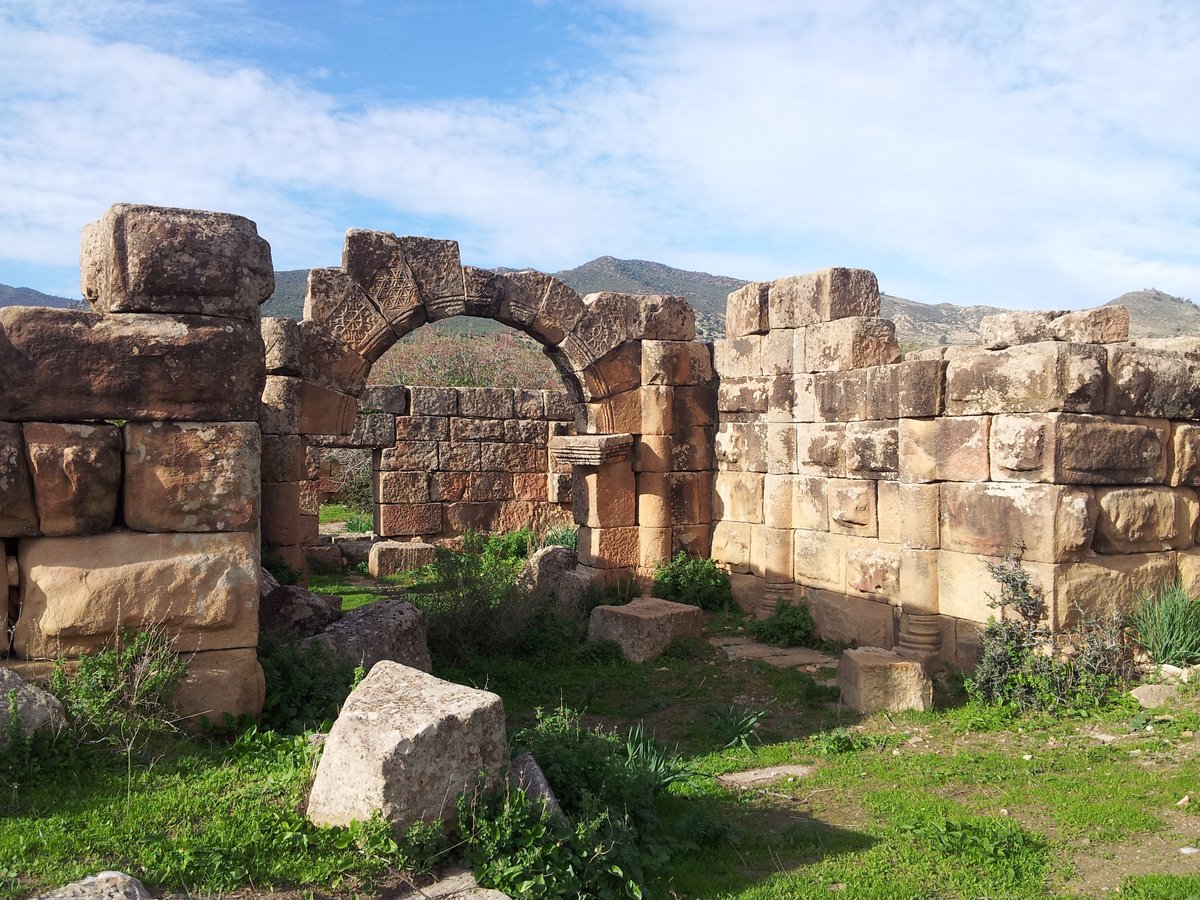
Once upon a time, a fairy-tale castle appeared, captivating the dreams of countless explorers. This castle, at the heart of an elaborate defense system, safeguarded travelers and protected ancient treasures. Today, it is known as Castellum Ksar, located 12 kilometers north of Ammi Moussa, within the Wilaya of Relizane, and bearing the names both The Legendary Ruins of the Latifundium of Kaoua and Castellum castle. As you traverse the winding roads, the castle emerges from the rolling hills, enveloped by lush valleys and magical olive groves.
Strategically placed near the Roman city Castellum Tinginitum, also known as Chlef, it has been enthralling hearts for centuries. In the valley of Sensig, it boasted a significant agricultural system, with the commander of defense and administration splitting their time between Ammi Moussa, where they had a small garrison, and the castle. Time has claimed parts of the castle, but it remains a testament of beauty and enigma, ensconced within the hills of Algeria.
Meticulously built during the reign of Emperor Constantine I in the 3rd century, its unique architecture has gradually been unveiled with the passage of time. The entrance of the fort is an arch, nine of the eleven voussures embellished, leading into the castle where six half-columns stand sentinel. Archaeological excavations have yielded a vast number of bricks and tiles, indicating the existence of dwellings for slaves, servants, and possibly a part of the garrison.
Recently, a western door was discovered, opening to more than 10 connected rooms. During the excavations, human bones, elephant or large animal bones, half an ostrich egg, remnants of pottery, a piece of common mosaic, and a tiny copper piece with an effaced image were found. Reaménagement works on the site were initiated in May 2015, with the aim of safeguarding and showcasing the castle. This operation is part of the plan for the protection and rehabilitation of archaeological sites.
Researchers and university staff from the archaeology and heritage laboratory of Alger 2 University and students from Tlemcen, Tlemcen, and Mascara universities, who are preparing master's theses, supervise this operation. The operation involves cleaning the site, improving external amenities, repairing walls at risk of collapse, constructing supports for the walls, and reconstructing collapsed columns. Castellum Ksar was designated an archaeological site in 1901. On January 23, 1968, it was granted the status of a national monument.
Sources: Wikipedia, OpenStreetMap, Wikimedia Commons
Written by Mutabor
Discuss this with the author and others
No comments yet. Be the first to start the conversation.