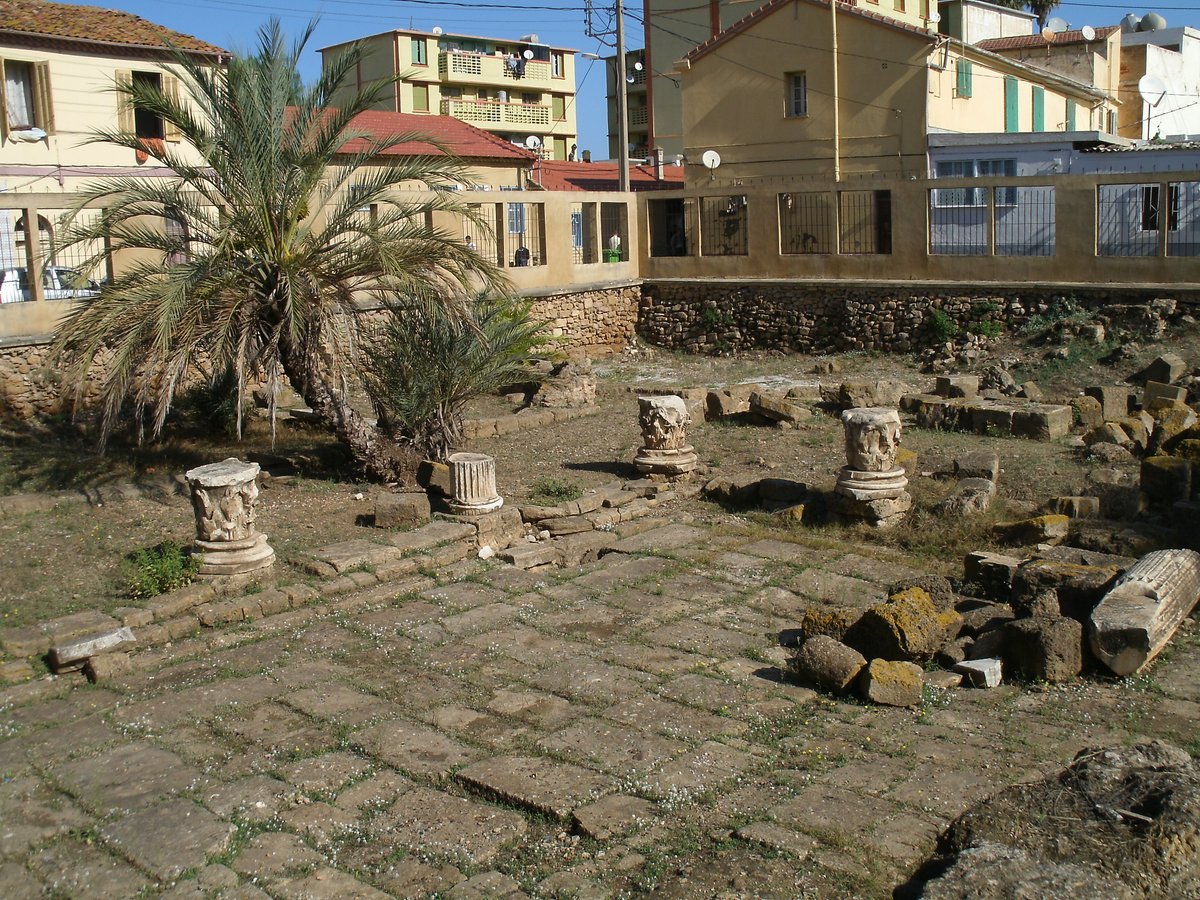

Caesarea Mauretaniae, now called Cherchell in modern Algeria, was founded by Phoenicians from Carthage around 400 BC as a settlement named Iol or Jol. During the 1st century BC, Berber King Bocchus II lived in the city, and new defences were built due to its strategic location. The last Numidian king, Juba II, renamed the city Caesarea Mauretaniae in honor of Emperor Augustus after Rome divided the Numidian Kingdom in 33 BC.
Under Juba II, the city was rebuilt as a Graeco-Roman city on a lavish scale, featuring street grids, a theatre, an art collection, and a lighthouse similar to the one at Alexandria. The construction used a mixture of Egyptian, Greek, and Roman architectural styles. The seaport capital flourished with a population primarily of Greek and Phoenician origin, with a minority of Berbers. After a bloody revolt, the city was captured by Emperor Claudius in 44 AD and became a colonia called Colonia Claudia Caesarea.
Under Roman rule, the city featured a hippodrome, amphitheatre, basilica, and numerous Greek temples. It reached a population of over 30,000 inhabitants and served as a significant power center with trading contacts across the Roman world. In later centuries, the city became a mixed Berber and Roman population, and under Septimius Severus, it grew to nearly 100,000 inhabitants.
Sources: Wikipedia, OpenStreetMap, Wikidata, Wikimedia Commons
Written by Mutabor
Discuss this with the author and others
No comments yet. Be the first to start the conversation.