

In the uppermost course of the Neva River, near Lake Ladoga, there is a fairly large island that the Novgorodians called Orekhov Island as early as the 14th century. On that island, in 1323, they built the Oreshek Fortress. Three centuries later, during the Time of Troubles, the Swedes seized both Novgorod and the Oreshek Fortress. The fortress was renamed Noteburg, rebuilt, and heavily fortified. In 1702, Peter I recaptured it, renaming it Shlisselburg. The following year, 1703, Peter I also took control of the Neva’s mouth, founding several fortresses there (the Peter and Paul Fortress on Hare Island, Kronstadt Fortress on Kotlin Island). As a result, the Shlisselburg Fortress lost its military significance, and its casemates began to be used as a state prison.
Initially, this prison was intended for only ten people. The first prisoner of the Shlisselburg Fortress was a woman — Tsarevna Maria Alekseyevna (Peter I’s half-sister). She was considered a participant in a conspiracy against the tsar, together with Tsarevich Alexei (who died in the Peter and Paul Fortress, which was also turned into a prison).
After Peter I’s death, his second wife, Catherine I, became tsarina. But she probably did not feel very secure on the throne, as Peter I left no will. Therefore, Catherine I ordered the transfer of Peter I’s first wife, Eudoxia Lopukhina, from the Ladoga Monastery to the Shlisselburg Fortress. Thus, the second prisoner of the Shlisselburg Fortress was also a woman, a former tsarina.
However, Catherine I reigned for only two years before she died, and the throne was taken by Peter I’s grandson, Peter II. He freed his grandmother Eudoxia from the fortress, moved her to Moscow (then the capital of the Empire), and settled her in the Kremlin with the status of a dowager empress.
After Peter II’s brief reign (he died after three years), power fell into the hands of six princes (“the Supreme Privy Council”), who invited Peter I’s niece, Anna Ioannovna, to take the throne. Anna, upon becoming tsarina, cruelly dealt with all the “Supreme Privy Council” members; three of them — Golitsyn, Dolgorukov brothers — were brought to Shlisselburg, with Golitsyn executed there, and the Dolgorukovs taken from there to Novgorod and executed there.
Exactly one year after her death, the main culprit for the demise of the “Supreme Privy Council” — Anna’s favorite Ernest Johann Biron — was imprisoned in the Shlisselburg Fortress. He stayed there briefly before being exiled to Siberia. Twenty years later, he was pardoned by the new tsar and returned to Courland, from where he had originally come to Russia.
As a result of another coup, the young tsar Ivan VI was imprisoned. Soon he was brought to the Shlisselburg Fortress, where he remained until the day he was killed during an attempted rescue. Ivan VI lived only 24 years: the first two as tsar, the next 22 as a prisoner.
Since then, less noble prisoners began to appear in the Shlisselburg Fortress. Under Empress Elizabeth Petrovna, for example, one of the Old Believers nicknamed Krugly was imprisoned here. Capital punishment was then prohibited, so Krugly was walled up. The door and window of his cell were bricked up, leaving a small hole for food and drink. Eight days after the prisoner stopped showing signs of life, the fortress commandant requested permission from the Senate to dismantle the wall. Inside the stone “bag,” they found a corpse eaten by rats.
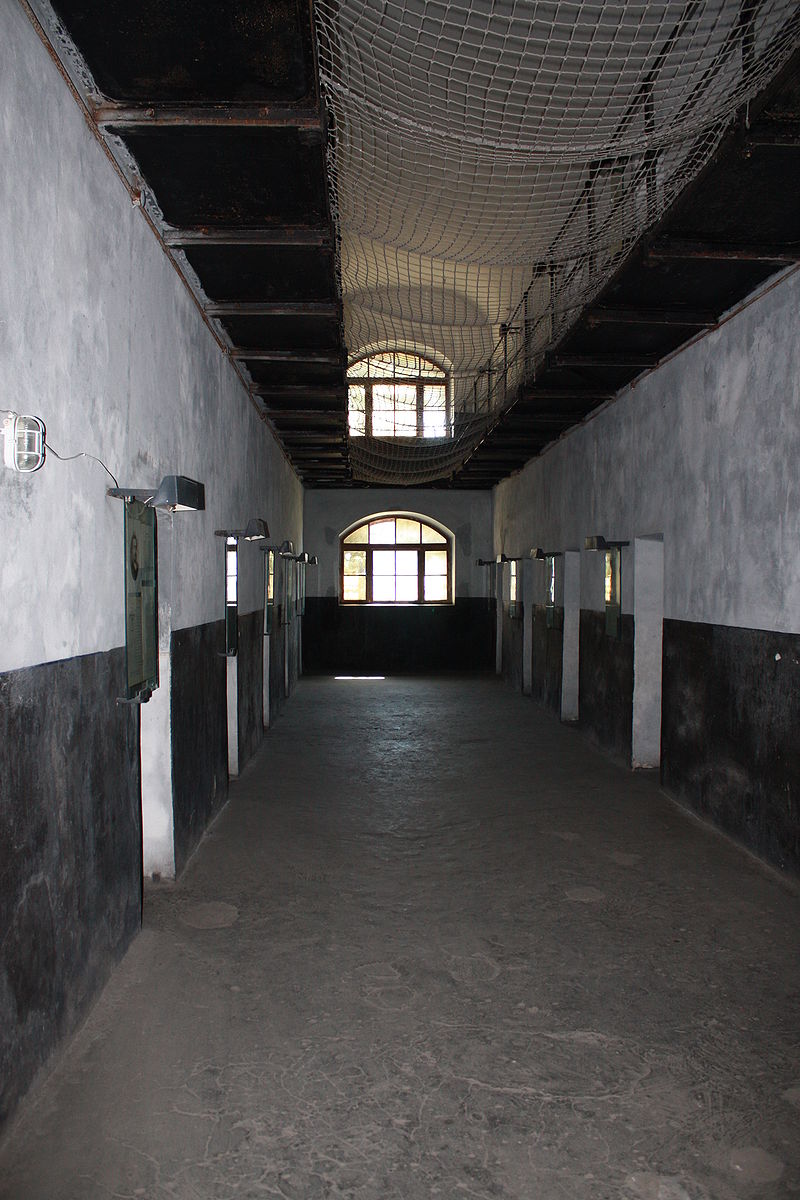
Empress Catherine II sent Novikov, a publisher and journalist, to the Shlisselburg Fortress for 15 years. Owning several printing presses, he published books by French Enlightenment thinkers and distributed them through libraries he had established. Catherine II herself had recently corresponded with the authors of these books — Voltaire and Diderot. But after the French Revolution, the free-thinking ideas of the French seemed very dangerous to the Russian empress, and the publisher and distributor of their works was imprisoned. However, he stayed only four years: the new tsar, Paul I, freed him.
Under Paul I, officers were sent to the Shlisselburg Fortress for various breaches of military discipline, which the emperor was obsessed with. Many were imprisoned at the request of their parents for correction. The offenders sat in damp, gloomy, and cold casemates until their fathers softened.
In 1826, Decembrists appeared in the Shlisselburg Fortress: Pushkin’s Lyceum classmates Puschin and Küchelbecker, the Bestuzhev brothers, Podzhio. They stayed in the fortress for some time, then were sent in shackles to penal servitude in Siberia (only Podzhio stayed in Shlisselburg quite a long time — eight and a half years — but he went to Siberia without shackles, not to penal servitude but to settlement).
In 1830, the Polish officer Valerian Lukasiński was brought to the Shlisselburg Fortress. He was a major in the army. In 1821, as a member of a military court, he refused to sign a harsh (in his view) verdict insisted upon by the viceroy of Poland, Grand Duke Konstantin Pavlovich. The major was arrested, and after two years of investigation, some charges were found, based on which he was sentenced to seven years in prison. Lukasiński was demoted from officer rank, stripped of his orders, shackled, and placed in solitary confinement. On the verdict, Grand Duke Konstantin made a handwritten note: “Do not release without my personal permission.” In 1830, a Polish uprising broke out; the viceroy fled Warsaw but took Lukasiński with him, who was then sent to the Shlisselburg Fortress.
Soon the prisoner’s sentence expired, but the unfortunate note on the verdict prevented his release. Appealing to the Grand Duke, upset by the Polish uprising, was pointless. Then the Grand Duke himself died, leaving Lukasiński’s fate completely uncertain. In 1850, War Minister A. Chernyshev asked the head of the Third Department, Orlov, why the old Pole was still in the Shlisselburg Fortress. “I have no idea,” Orlov replied, “but I have no grounds for his release.”
In 1855, Tsar Nicholas I died, and Lukasiński’s relatives petitioned the new tsar, Alexander II, for his release. The request was denied, but the old man was moved to a drier and lighter cell. Lukasiński died in Shlisselburg, having spent a total of 45 years in prison — without committing any crime.
The new cell where Lukasiński spent his last years appeared as part of a major prison reconstruction: it was now designed to hold 40 prisoners. There was no shortage of them. Here are some who appeared in Shlisselburg’s casemates: anarchist theorist Mikhail Bakunin; one of the leaders of the “People’s Will” party, Vera Figner; member of its executive committee Nikolai Morozov; populists who tried (one after another) to free Chernyshevsky from Siberian exile — Herman Lopatin, Ippolit Myshkin, and others. Other revolutionaries were brought to Shlisselburg only for execution: Ivan Kalyayev (for the assassination of Moscow Governor Grand Duke Sergei Alexandrovich), Zinaida Konoplyannikova (for the assassination of the “pacifier” of Moscow, General Mina), Alexander Ulyanov (for an assassination attempt on Tsar Alexander III), Yakov Finkelstein (for an assassination attempt on St. Petersburg Governor Trepov).
In 1905, all prisoners of the Shlisselburg Fortress were released. For two years it was open to the public as a museum. But then a new prison building was hastily constructed, designed to hold 500 people. The Shlisselburg Fortress became a prison again. Among the new prisoners were Ordzhonikidze (later a People’s Commissar), Trilisser (later deputy People’s Commissar), Petrov (later editor of the “Soviet Encyclopedia” publishing house).
Sources:
Behind the Scenes of History: Yuri Mironovich Sokolsky
https://ru.wikipedia.org/wiki/Орешек_(крепость)
Written by Jermaine
Discuss this with the author and others
No comments yet. Be the first to start the conversation.