Russia: UNESCO Sites or Sites Protected by UNESCO

For Browsing

The UNESCO World Heritage List includes 30 sites in the Russian Federation, which accounts for 2.6% of the total number (1154 as of 2021). Nineteen sites are included based on cultural criteria, with six of them recognized as masterpieces of human genius, and eleven sites are included based on natural criteria, with four of them recognized as natural phenomena of exceptional beauty and aesthetic importance. In 2017, Russia ranked 9th in the world in terms of the total number of World Heritage sites, and 4th in terms of the number of natural sites (after China, the USA, and Australia).

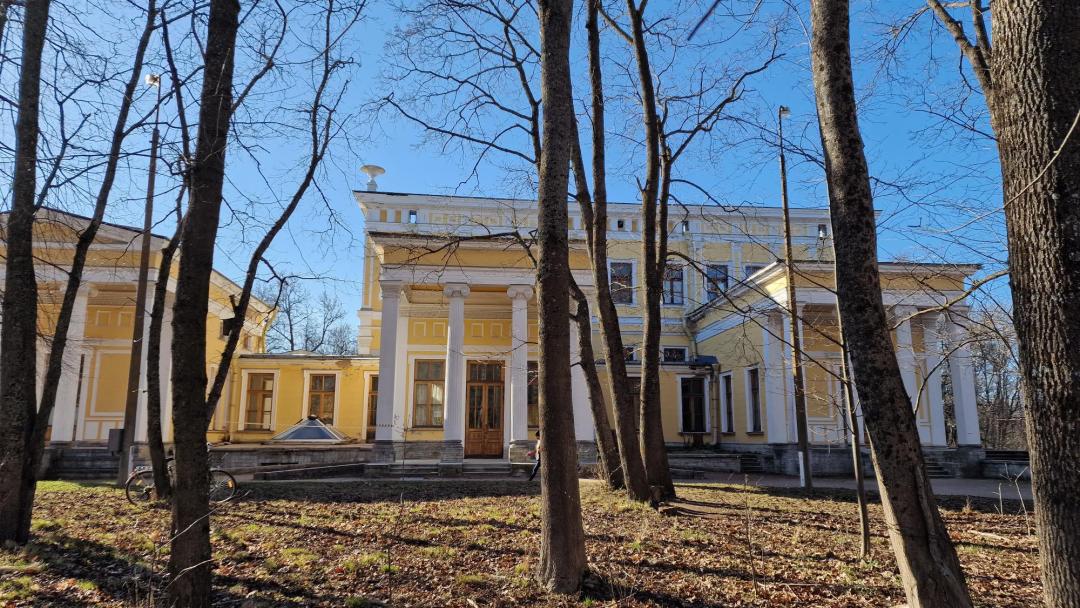
Lost Estates - The Levashov-Vyazemsky Estate

Mezhozyornaya St., 9, Saint Petersburg, Russia, 194362

The Levashov-Vyazemsky Estate is a ruined monument of manor architecture located in the settlement of Osinovaya Roscha (now the Vyborgsky District of Saint Petersburg), at the junction of the Vyborg and Priozersk highways, 4 km from the settlement of Pesochny. It is one of the numerous Petersburg sites placed under UNESCO protection in 1990.

Oreshek Island (Shlisselburg Fortress) - fortress and prison

X23Q+HJ Shlisselburg, Leningrad Oblast, Russia

The Shlisselburg Fortress almost immediately after being conquered by Peter I lost its military significance, and its casemates began to be used as a state prison.

Dubki Park, Sestroretsk

Dubkovskoye Highway, 77, Saint Petersburg, Russia, 197706

The "Dubki" Park in Sestroretsk owes its existence to Emperor Peter I, who on September 20, 1714, while returning across the Gulf of Finland after the Battle of Gangut, stopped to rest in an oak grove on a cape extending deep into the sea, near the mouth of the navigable Sestra River. Individual oaks growing here naturally were 200–300 years old. In 1717, with Peter's involvement, soil was brought into the grove and several thousand young oak trees were planted to support the development of the naval fleet. This is the northernmost oak forest in Russia.

Naval St. Nicholas Cathedral (Naval Cathedral of St. Nicholas the Wonderworker)

Anchor Square, 1, Saint Petersburg, Russia, 197762

The Naval Cathedral of St. Nicholas (Naval Cathedral of St. Nicholas the Wonderworker) is an Orthodox church in Kronstadt, the last and largest of the naval cathedrals built in the Russian Empire. It was constructed between 1903 and 1913 in the Neo-Byzantine style, designed by architect Vasily Kosyakov. Vasily Kosyakov wrote in 1910: “Since 1902, the construction of the Naval Cathedral—a monument to the naval ranks who perished in the line of duty—has been underway in the city of Kronstadt… The church is being built according to a project approved by the highest authority and throughout the construction process has been the subject of special attention from Their Imperial Majesties.”

Palace (Estate) of the Leuchtenberg Family

Leuchtenberg Palace, Oranienbaum Highway, 2, Saint Petersburg, Russia, 198504

The Leuchtenberg Palace is an estate located on the crest of a coastal bluff in the northeastern part of the "Sergievka" park on the western outskirts of Peterhof. The building was constructed by architect Andrey Ivanovich Stakenschneider for Maria Nikolaevna, daughter of Nicholas I, and her husband Maximilian, Duke of Leuchtenberg.

Derbent Lighthouse

Derbent Lighthouse, Derbent, Republic of Dagestan, Russia, 368600

The Derbent Lighthouse is the southernmost lighthouse in Russia, located in the Dagestani city of Derbent. It is the same age as the Makhachkala lighthouse: both are over 1.5 centuries old. The lighthouse is included in the list of protected monuments of Russia and is part of the UNESCO World Heritage list.

Church of the Savior on Ilyina Street

Ilyina St., 26, Veliky Novgorod, Novgorod Oblast, Russia, 173000

The Church of the Savior on Ilyina Street is a decommissioned Orthodox church in Veliky Novgorod on the Trade Side, built in 1374 and famous for being the only church to have preserved frescoes by Theophanes the Greek. The painting was done in 1378. It is the only church in the world to have preserved frescoes by the Byzantine master who painted about 40 churches. The church's wall paintings are unique and unforgettable for the expressiveness of the characteristics of various figures. The bold, free style of painting gives the church a grand resonance. The church is included in the UNESCO World Cultural Heritage list. The Illustrated Chronicle Compilation states: "In the same year, a stone church of Saint Savior was built on Ilyina Street in Veliky Novgorod." The First Novgorod Chronicle contains a record of the church's creation: "In the year 6882 [1374 AD]. They erected a stone church of Saint Savior on Ilyina Street; and Archbishop Alexei of Novgorod consecrated it, with abbots and priests and the kliros of Saint Sophia."

The Church of the Assumption of the Virgin on Volotov Field - the largest puzzle of modern times

Rechnaya St., 36, Volotovo, Novgorod Region, Russia, 173020

The Church of the Assumption of the Virgin on Volotov Field is an Orthodox church located in the village of Volotovo, Novgorod District, Novgorod Region. It is one of the early examples of stone Novgorod architecture. The church is known for its unique 14th-century frescoes. After the end of hostilities, 1.7 million fragments of fresco paintings remained at the site of the church ruins, which were subsequently conserved. On December 14, 1992, the Church of the Assumption of the Virgin on Volotov Field was included in the UNESCO World Heritage list, and in August 1993, Novgorod restorers began restoration work on the fresco fragments.

Lost Estates: The Taitskaya Estate of the Demidovs

Sverdlov Sanatorium, 2, Sverdlov Sanatorium, Leningrad Region, Russia, 198327

To create a luxurious garden and park ensemble, Demidov invited his sister’s husband — Ivan Yegorovich Starov, a young architect and adjunct professor at the Academy of Arts. Construction began in 1774 and continued until 1786. The formation of the ensemble took place in two stages. In the first stage, a manor house was built on the bank of the Verevka River, and to the west, a complex of utility buildings. Behind a long stone fence was a five-part square, which included the two-story residential wing that has survived to this day, the manager’s house, four stables, a gatehouse, a carriage house, and other structures. An alley led to the manor house, curving around an oval parterre in front of its western facade.

The mosque with a minaret is the only ancient minaret in Derbent.

373G+WC Derbent, Republic of Dagestan, Russia

Currently, in Derbent, only one mosque with a minaret has been preserved, which is called the "Mosque with a Minaret" (Minarya-mesdjidi) or the "Minaret Mosque." It is located in the upper (western) part of the city near the Jarchi-Kapa gate and is the oldest mosque in the city.