World: Prison Islands, Active and Historical

For Browsing

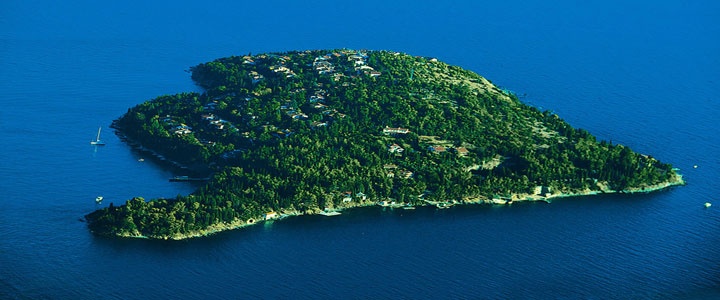
There are several islands in the world that serve or have served as prisons or places of confinement. The advantage of prison islands is their almost complete isolation from the outside world. So where are these "Château d'Ifs" located, and who are their inmates? Below is a selection of the most famous prison islands in the world.

Gorgona Island (Tuscany) - the last prison island of Italy

CVJX+9J Gorgona Skalo, Livorno, Italy

Perhaps not everyone knows that 18 miles from Livorno, between the Tyrrhenian and Ligurian Seas, there is Gorgona, a small island known by the unofficial name "The Prison Island." For the few who know it, Gorgona Island is home to an open-type correctional colony. This place could have been a paradise on earth, but for some reason, it became Alcatraz. Its second name is owed to the correctional facility located here, where about 70 prisoners serve their sentences and roughly the same number of staff work.

Bastøy Island – a Norwegian hell turned into a paradise for prisoners

9GJF+3X Horten, Norway

Located just an hour’s drive from Oslo, Bastøy Island is a picturesque place accessible only by water transport. There are several beaches, equipped tennis courts, and even a sauna. Instead of being behind bars, 115 inmates of this remarkable prison live in comfortable wooden cottages. What has never existed on Bastøy Island, however, is barbed wire and angry guards with automatic weapons and German Shepherds. And this is despite the fact that the island houses some of the most notorious criminals of all kinds: from drug dealers and fraudsters to rapists and murderers.

Alcatraz Island - a former prison in San Francisco Bay

Alcatraz Main Cell House, Pier 39, San Francisco, CA 94133, USA

Alcatraz, also known as The Rock, is an island in San Francisco Bay. The island's territory was used as a fort, later as a military prison, and then as a maximum-security prison for particularly dangerous criminals and those who attempted to escape from previous places of detention.

Solovetsky Special Purpose Camp (SLON, "Solovki")

3JGQ+X8 Isakovo, Arkhangelsk Oblast, Russia

People were exiled to the Solovki Islands both during the Russian Empire (this practice was introduced by Ivan the Terrible) and in the Soviet Union era. The labor camp on the Solovetsky Islands has a very long and horrifying history. The following will discuss the history of the largest corrective labor camp in the USSR located on the territory of the Solovetsky Archipelago, the well-known prisoners, and the conditions of their detention.

Fire Island (Vologda Pyatak) - a special regime zone for life-term prisoners

X63Q+J4 Sweet Island, Vologda Oblast, Russia

The Federal State Institution "Correctional Colony No. 5 of the Federal Penitentiary Service Directorate for the Vologda Region," better known as the "Vologda Pyatak," is one of the special regime correctional colonies for life-sentenced prisoners in Russia; it is located in the former Kirillo-Novoezersky Monastery on Lake Novom (Fire Island) near the town of Belozersk, in the Belozersky District of the Vologda Region.

Mont-Saint-Michel Island - The Sea Bastille, the French Solovki

JFPQ+CC Mont-Saint-Michel, France

Mont Saint-Michel (Mont Saint-Michel — the mountain of Archangel Michael) is a rocky island, a fortress island, located on the northwest coast of France, in Normandy, Manche department. On the island stands a formidable granite rock, and on the rock — a majestic monastery with a Gothic church soaring into the sky. Around the island — not water, but sandy dunes, yet every day from the abbey walls one can observe the entire landscape transform — as the tide comes in. Up until the French Revolution, the political prisoners held in the abbey’s metal cages and dungeons were mostly pamphleteers and Jansenists. Having a dubious reputation as a place from which there is no escape, the prison at Mont Saint-Michel became popularly known as the "Sea Bastille."

Rikers Island is the largest correctional facility in the world.

1600 Hazen St, East Elmhurst, NY 11370, USA

Rikers Island is the largest correctional facility in the world, a prison island in the East River, belonging to the city of New York, the boroughs of Queens and the Bronx. The distance to the opposite shore is 80 meters.

Robben Island - Prison Museum in South Africa

59RC+XF Robben Island, South Africa

The prison is located in South Africa, on Robben Island, opposite Cape Town. Seals once inhabited these waters, but then the island was settled, and for 400 years it alternately served as a penal colony, a leprosarium for the mentally ill, and a maximum-security state prison for political prisoners. It was here that the hero of Africa's liberation movement, Nelson Mandela, was held in chains, which is why Robben Island gained its grim notoriety in the global public eye.

The Island and Château d'If – a Terrifying Prison with a 200-Year History

Embarcadère Frioul If, 1 Quai de la Fraternité, 13001 Marseille, France

The Château d'If – a fortress located on the eponymous island and famous thanks to Dumas' work – is situated just a mile from Marseille and is clearly visible from the city’s waterfront. Since the late 16th century, the castle has been used for isolating and guarding particularly dangerous criminals. It was from that time that the fort received the name Château d'If. The dungeons housed Huguenots, politicians, leaders of the Paris Commune, as well as individuals who posed a threat to France.

Devil's Island - a French prison for particularly dangerous criminals

68Q97CW9+56

From 1852 to 1952, the island served as a prison for particularly dangerous criminals. The prison was established by the government of Emperor Napoleon III in 1852. It is one of the most notoriously infamous penal colonies in history. Penal settlements were located on all three islands and on the coast in Kourou. Over time, they all came to be collectively referred to as the "Devil's Island."

Peter and Paul Fortress - the main secret prison of the empire

Territory: Peter and Paul Fortress, 6, Saint Petersburg, Russia, 197198

In the Peter and Paul Fortress, two facilities were used as prisons. Initially, it was the Trubetskoy Bastion. In the first quarter of the 18th century, the casemates of the Trubetskoy Bastion were used as detention cells for the Secret Chancellery. In 1718, Tsarevich Alexei Petrovich, son of Peter I, who was accused of participating in a state conspiracy, was held here; he died (or was executed) on July 7, 1718. Later, the Alekseevsky Ravelin prison was used.

Spike Island – the infamous prison of Ireland

RPM7+QG Rocky Island, Cork, Ireland

On the island stands the 200-year-old Fort Mitchell, a star-shaped fortress that served as a prison housing more than 2,300 inmates. At the time, it was the largest prison in the world, and neither before nor after has there ever been a larger prison in Ireland or the United Kingdom.

McNeil Island - former federal prison, now a center for housing sex offenders

6879+89 Gertrude, Washington, USA

McNeil Island is an island in the northwest United States, southwest of Tacoma, Washington. For most of its history, the island belonged to the government; it was a federal prison for more than a century, from 1875 to 1981. It was transferred to the Washington State Department of Corrections and became the McNeil Island Corrections Center until its closure in 2011. It was the last remaining island prison in the country, accessible only by air and sea. The island still houses a detention center for sex offenders (rapists).

Gorgona Island (Colombia) - the forgotten Colombian Alcatraz

67J3XR98+86

Gorgona, a remote Colombian island, has a dark secret. It is a natural fortress, surrounded by shark-infested seas, covered with impenetrable jungles, and teeming with deadly snakes. For this reason, the Colombian government chose it as the site for a maximum-security prison, Colombia's own Alcatraz.

Norfolk Island – Hell in a Pacific Paradise

154 Taylors Rd, Burnt Pine 2899, Norfolk Island

Norfolk was an English penal colony where the most dangerous criminals were sent from England and Australia. In 1814, the colony was abandoned as it was too costly, but in 1825 the prison was reinstated, and dangerous criminals—both common and political—began to be imprisoned there. Even minor offenses from England could lead to transportation. For thirty years, Norfolk served as a penal prison with a strict regime. The penal colony on the island was finally closed in 1854, but the prison buildings are still carefully preserved on the island and have become a tourist attraction.

Saint Helena Island - a hellhole of the Pacific Ocean or Queensland hell

J67M+WQ Saint Helena Island, Queensland, Australia

Saint Helena Island is located in Queensland, Australia, 21 kilometers east of Brisbane and 4 kilometers east of the mouth of the Brisbane River in Moreton Bay. Originally, it was used as a prison, but it has now been transformed into a national park. In the 19th century, Saint Helena Island was a quarantine station that became one of the most profitable prisons in Queensland's history. The island was used to house prisoners and staff for 65 years. Many of those involved in the 1891 Australian shearers' strike were imprisoned there alongside murderers and bushrangers.

Saint Helena Island – From Napoleon to the Present Day

27MR+XCW, STHL 1ZZ, St. Helena Island

The fate of Saint Helena Island as a prison island was decided when the Portuguese nobleman Fernando Lopes became a voluntary exile there in 1515. Geographically, the island is perfectly suited for use as a prison. The sheer cliffs surrounding the interior make Saint Helena Island an almost impregnable fortress. The first mention of a prison being built on the island appears in the island’s records from 1683. Saint Helena Island was once used by Britain as a prison for such notable figures as Emperor Napoleon, Prince Dinizulu, and the Sultan of Zanzibar. The island was also used to house nearly 5,000 Boer prisoners of war.

Goli Otok Island - Yugoslav Political Prison

RRR4+G9 Lopar, Croatia

Goli Otok is a Yugoslav political prison located on a small island of the same name in the Croatian part of the Adriatic Sea. It emerged during the intensified Soviet-Yugoslav confrontation in the late 1940s, which occurred after the Communist Party of Yugoslavia rejected the 1948 Informburo resolution and subsequent repressions were carried out against those Yugoslav communists who supported the policies of Stalin and the USSR.

Santo Stefano Island - the prison where the dream of a united Europe was born.

QFR3+6P Ventotene, Latina, Italy

Santo Stefano is a tiny island in the Tyrrhenian Sea, where for almost two centuries there was a penitentiary institution built based on the so-called ideal prison project of the late 18th century.

The Princes' Islands - the main prison of the Byzantine Empire, the island of Proti

Kınalıada, Akgünlük St. No:13, 34977 Adalar/Istanbul, Turkey

The closest island to Istanbul is Kınalıada, also known as Henna Island, historically known as Proti, meaning the first island to New Rome. On this small island, covering just over one square kilometer, there were at least three monasteries, one of which held Emperor Michael I Rangabe in captivity. In response to the betrayal by his general Leo the Armenian in 813, he decided to become a monk and go into voluntary exile on Proti, where he peacefully died in 844.

The Princes' Islands - the main prison of the Byzantine Empire, the island of Antigoni

Burgazada Mah No: 89069, Burgazadası, 34975 Adalar/Istanbul, Turkey

Originally, the islet was called Panorm, and in 298 BC it was noticed by Demetrius Poliorcetes, the son of one of Alexander the Great's generals, Antigonus I Monophthalmus. In the struggle against Lysimachus of Thrace and Cassander of Macedon, Demetrius built a fortress on this islet to establish a foothold on the Sea of Marmara, and he named the island after his father.

Princes' Islands - the main prison of the Byzantine Empire, the island of Halki

Heybeliada, Refah Martyrs Street No:49, 34973 Adalar/Istanbul, Turkey

It is to this island that the archipelago owes its original name - the Red Islands, because an ancient copper mine (Chalkos - "copper") was located on this island. The copper here was of exceptionally high quality and was used for making statues for temples and imperial palaces.

Princes' Islands - the main prison of the Byzantine Empire, Büyükada Island (Prinkipo or Prinkipos)

Çınar Square No. 3 Büyükada, Büyükada-Nizam, 34970 Adalar/Istanbul, Turkey

The largest island of the Büyükada archipelago (Prinkipo or Prinkipos), where most travelers staying in Istanbul go for vacation. It is notable for its high and steep shores, dense forest, and ancient monasteries. The first records of influential figures of the Byzantine Empire exiled here date back to the 6th century, when by order of Justinian I the Great in 565, the Patriarch of Constantinople, Eutychius, was exiled to the island for his teaching on the incorruptibility of the flesh of Jesus Christ. It was this island that gave its name to the entire archipelago – the Prinkipo Islands, which in Russian came to be called the Princes' Islands. No "princes" were ever exiled here. The island has many beautiful wooden mansions.

Princes' Islands - the main prison of the Byzantine Empire, Sedef Island

Büyükada - Maden Neighborhood, Füsun Street No:30, 34970 Adalar/Istanbul, Turkey

The outermost of the Princes' Islands, Sedef Island (Mother-of-Pearl Island), Terevintos or Terevinf, is located east of Büyükada Island (Prinkipo). Originally, the island was called Terebint (Anderovitos) due to the turpentine trees of the pistachio genus growing there, which is why Russian travelers referred to this island as Pistachio Island. A beautiful Turkish legend says that these trees were brought to the island by the son-in-law of Sultan Abdülmecid, but in reality, this was done by ancient Greek settlers. Currently, the island is privately owned and can be admired from the shore of Prinkipo, as the islet is only about 250-300 meters away. Historians, however, call this patch of land the Island of the Two Patriarchs.

Princes' Islands - the main prison of the Byzantine Empire, island Yassıada

VX7V+P6, 34970 Princes' Islands/Istanbul, Turkey

This is the official name of the island Yassıada (Flat Island) since 2013 - the Island of Democracy and Freedom. Originally it was called Plati (Platos - "flat"). The most mysterious of all the islands due to the abundance of ruins of ancient temples and churches. Part of the underground chambers, which were used as dungeons, warehouses, and cisterns, still remain on the island to this day. It was from here that the practice of exiling particularly important figures of the empire began. Thus, one of the first prisoners of the island (in the second half of the 4th century) was one of the founders of the Armenian Orthodox Church, Patriarch Nerses I the Great, who was exiled to the island by the Roman Emperor Valens because the patriarch condemned him for his adherence to Arianism.

Princes' Islands - the main prison of the Byzantine Empire, the island of Oksia

VXGF+92 Princes' Islands/Istanbul, Turkey

No one tried to escape from this island; on the contrary, people sought by all means to reach it and seek unity with God. During Byzantine times, a house for orphans, the Church of Archangel Michael, and a monastery were built on the small island, from the walls of which several patriarchs emerged. The Patriarch of Constantinople, Michael II Kourkouas, voluntarily went into exile on the island after realizing in 1146 that he was not suited to manage the church affairs of the empire, earning the respect of his contemporaries for this. In 1073, John Doukas, brother of Emperor Constantine X, fled to the island, fearing retribution from Nikephoritzes—the regent of Michael VIII. However, Nikephoritzes himself soon fell into disgrace and was also sent to Oxeia in 1078, where he died from torture.

Pyanosa Island - prison for the Red Brigades and the mafia

Isola di Pianosa, Campo nell'Elba, 57034 Campo nell'Elba LI, Italy

In the 1970s, by order of General Carlo Alberto Dalla Chiesa, a former sanatorium was converted into a maximum-security prison for housing mafia bosses and terrorists of the "Red Brigades": Giovanni Senzani, Renato Curcio, Alberto Franceschini, and Bruno Seghetti. In accordance with Article 41-bis of the prison regime, in May 1977, airplanes and helicopters transported 600 inmates from all over Italy to Pianosa in just two days.

Asinara Island - a maximum-security prison for the mafia and terrorists

X6QC+VF Porto Torres, Sassari, Italy

There used to be 12 prisons on the island. One of them, called Fornelli, was considered “the most secure prison in the world.” In the 1970s, the prison facilities were converted into a maximum-security prison. In past years, it was mainly intended for holding members of the mafia and the “Red Brigades” terrorists, and housed people such as mafia boss Toto Riina.

Longholmen Hostel, the former Central Prison of Sweden on the eponymous island

Långholmsmuren 20, 117 33 Stockholm, Sweden

Longholmen Prison, officially the Central Prison of Longholmen (Långholmens centralfängelse), was historically one of the largest prison institutions in Sweden with more than 500 cells, located on the island of Longholmen in Stockholm. It was built between 1874 and 1880 as Sweden's central prison and was temporarily closed from 1972 to 1975.

Fort Porokhovoy or the Gunpowder Cellar of the Naval Department

XRQ7+R9 Kronstadt District, Saint Petersburg, Russia

In Kronstadt, there used to be many powder magazines in ancient times. Both on the island itself, at the forts of the Kronstadt fortress, and on the ships. Throughout Kronstadt’s history, gunpowder explosions happened frequently: due to lightning, careless handling, and as a result of sabotage. Therefore, when they began building the Northern numbered forts, it was decided to construct a powder magazine close to the forts but still far from the city. The entire architecture of the fort fully met the requirements for the safe storage of gunpowder and ammunition: island location, a powerful foundation made of granite blocks, two-meter-thick brick walls, and the most advanced heating and ventilation system of that time. Inside, the “Powder Magazine” is a two-level warehouse, with rooms connected by galleries; on the floor, you can still see the remains of rails along which small wagons were moved—this allowed for the rapid transportation of ammunition within the fort.