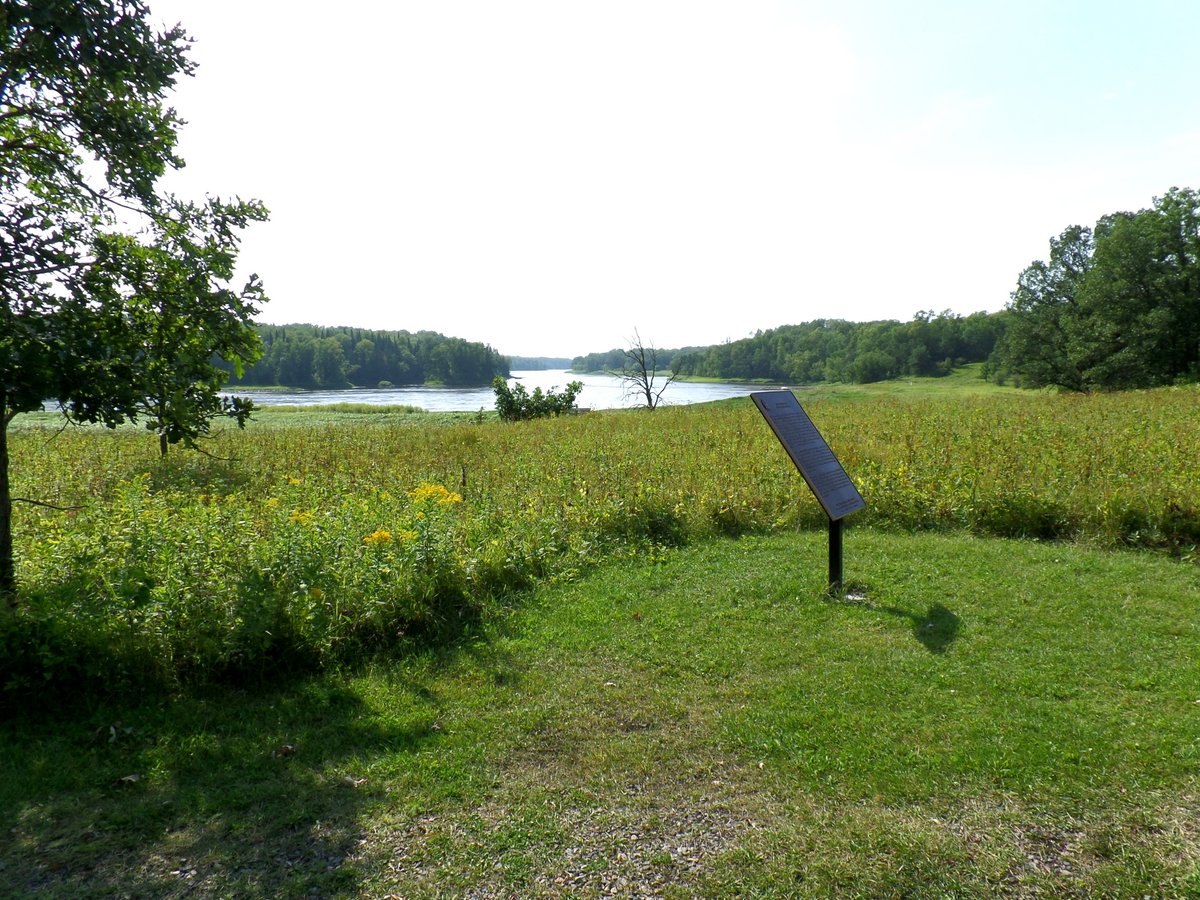

Welcome to Kay-Nah-Chi-Wah-Nung, also known as Manitou Mounds. Constructed during the Archaic period as early as 5,000 years ago, this site hosts a network of 30 village sites and 15 ancient burial mounds. The larger network of mounds extends from Quetico in the east through Rainy River and Lake of the Woods into south-eastern Manitoba. Designated as a National Historic Site of Canada in 1969, Kay-Nah-Chi-Wah-Nung boasts the country's largest concentration of earthwork burial mounds.
The mounds were erected by the Laurel culture (c.2300 BP - 900 BP) and the Blackduck culture (c.1200 BP to 400 BP). Sitting at the heart of major North American waterways, the site was part of a vibrant continent-wide trading network. The Ojibway and their ancestors used the river rapids for fishing and the hills for growing, harvesting, and sharing medicinal plants.
Kay-Nah-Chi-Wah-Nung holds deep cultural and spiritual significance for the Ojibway people as a living link in the continuum of past, present and future. It served as a gathering place where people would trade, share, celebrate and mourn. Today, the Rainy River First Nations serve as the guardians of the site, maintaining an interpretive centre and a conservation lab with more than 10,000 artifacts in storage.
Sources: Wikipedia, OpenStreetMap, Wikidata, Wikimedia Commons

Written by Friendly Jane
Discuss this with the author and others
No comments yet. Be the first to start the conversation.