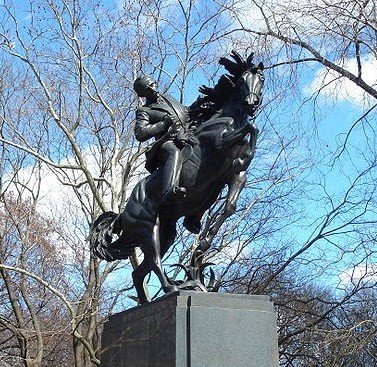

José Martí, a Cuban wordsmith, journalist, and revolutionist, championed the fight for Cuba's independence from Spain. For 15 years, he resided in exile in the Big Apple. In New York City, a grand, bronze equine statue of Martí was erected, gazing northward, in Central Park. This statue, the work of American artist Anna Hyatt Huntington, was debuted and hoisted in 1965. Two replicas of the same equestrian statue can now be found in Havana's Plaza 13 de Marzo. This Havana statue was a gift from Cuban expats in the United States, whereas the one in New York was a gift from the Cuban government itself. The statue in the Malecón-adjacent Plaza was set upon a dark Barre granite base, and the Central Park statue, given by the Cuban government, is embellished with inscriptions in both English and Spanish, celebrating Martí's bravery in both his homeland and his adopted city.
Sources: Wikipedia, OpenStreetMap, Wikidata, Wikimedia Commons
Written by Friendly Jane
Discuss this with the author and others
No comments yet. Be the first to start the conversation.