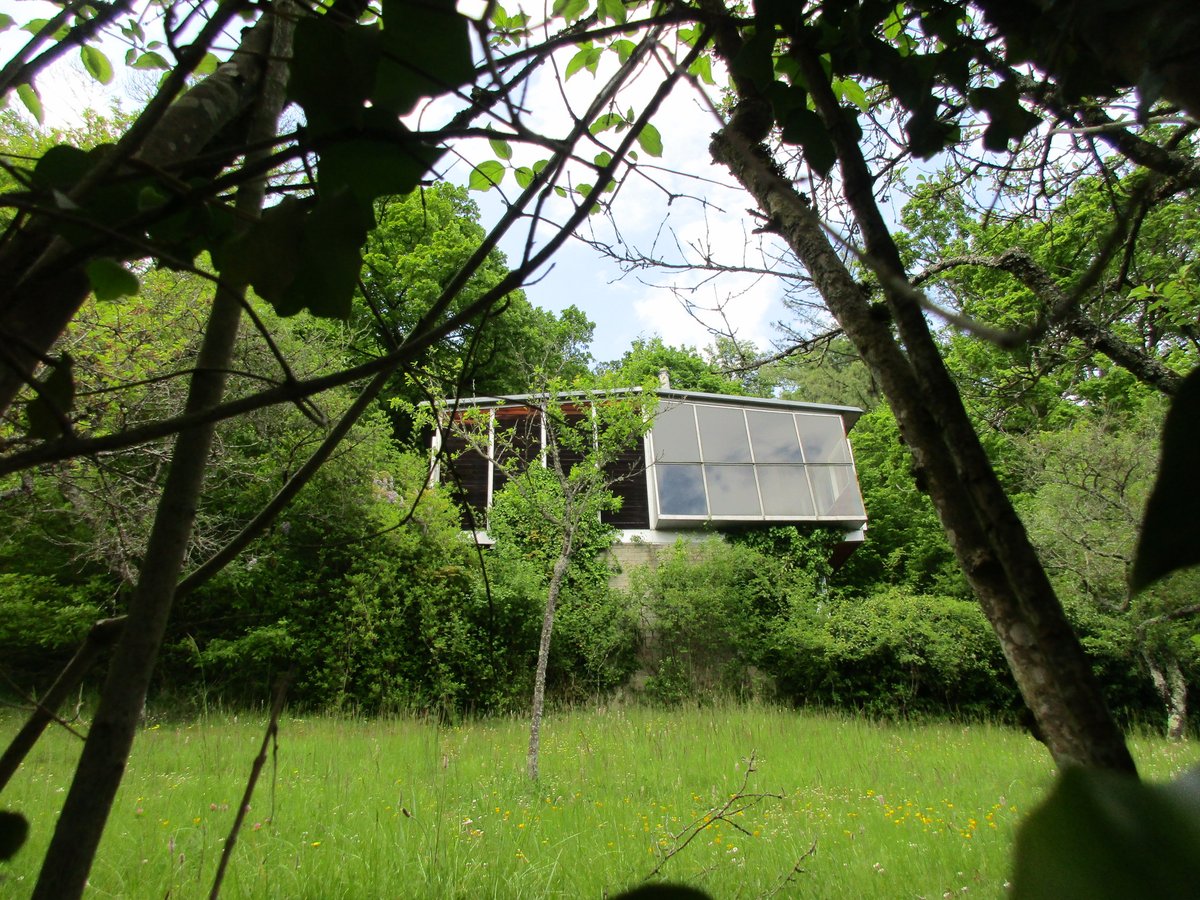

In the heart of Nancy, Lorraine, you'll find a petite, unassuming cinder block sweatshop. Planned and erected by the resourceful architect Jean Prouvé in 1924, it served as both home and workshop, nurturing the creative sparks that would ignite Prouvé's career and immortalize him in the annals of modernist design. Born in 1901, Prouvé, son of the art blacksmith Victor Prouvé, was ingrained with passion for craft and the 'art for all' principle. After years of art study and blacksmithing, Prouvé shifted his sights to architecture.
In 1924, he signed a lease for a plot in Nancy and built the tiny sweatshop for himself, crafting the structure and its components, including the peculiar window counterweight mechanism, primary features in his later projects. The construction only took a mere three-month stint. Fast-forward to 1954, and Prouvé would exist the architectural world with his most renowned creation, the Jean Prouvé House. However, the current state of the mini sweatshop - whether residence or museum – remains shrouded in mystery.
Sources: Wikipedia, OpenStreetMap, Wikidata, Wikimedia Commons
Written by Nicolo Ciampini
Discuss this with the author and others
No comments yet. Be the first to start the conversation.