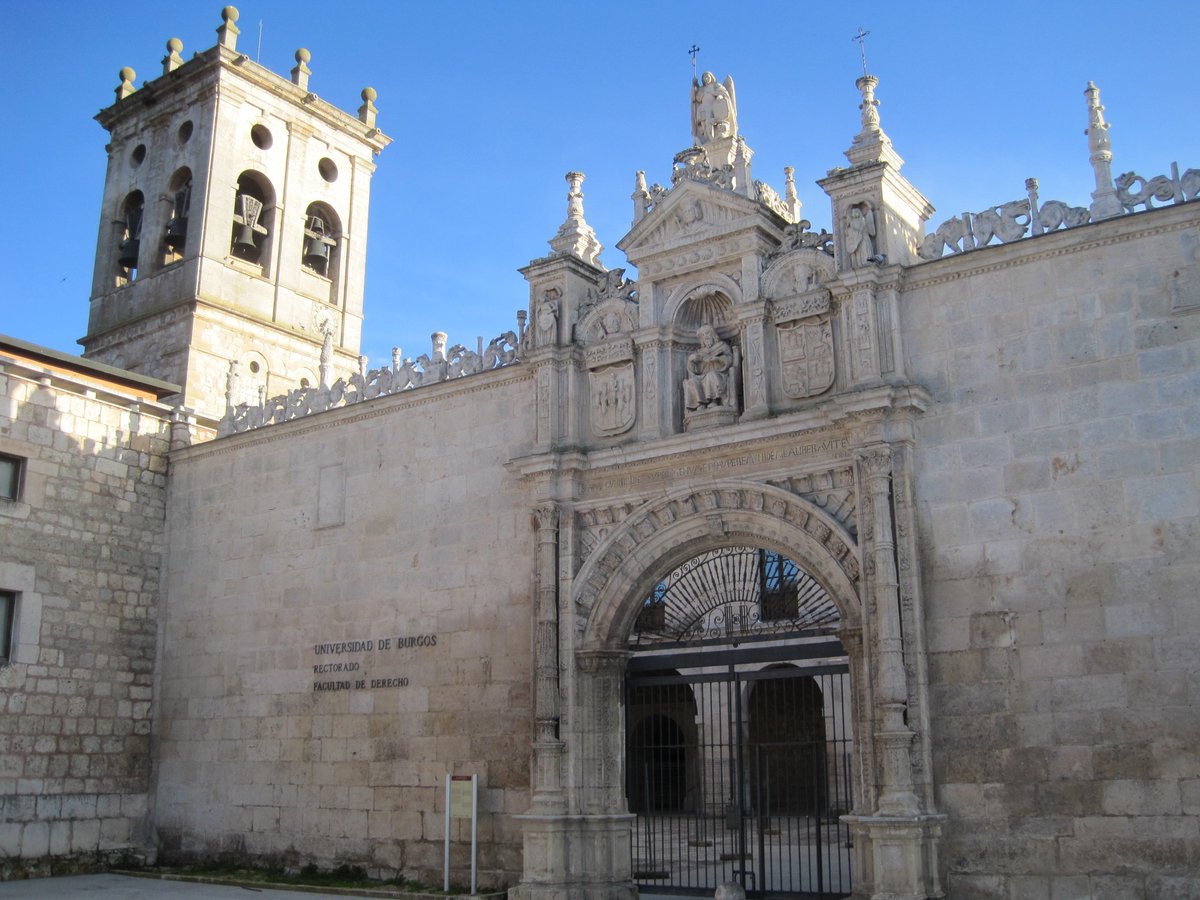

Founded in 1195 by King Alfonso VIII of Castile, the Hospital del Rey was established as a center to welcome pilgrims along the Way of St. James as it passes through Burgos. It originally functioned as a medical facility for travelers and was dependent on the Monastery of Las Huelgas. In the early 13th century, documentation from the friars referred to it as the Hospital de la Reina, indicating the involvement of Leonor Plantagenet as a promoter of the institution. Its administration was overseen by the abbess of the Cistercian monastery of Las Huelgas.
In 1234, the Hospital de Valdefuentes and its domains were incorporated into the Hospital del Rey. Following the disentailment laws of the 19th century, the facility transitioned from the jurisdiction of the monastery to the Municipal Charity Board of Burgos, before being absorbed by the crown in 1874. During the Civil War, the building was used as a hospital for Moroccan Muslim troops, which led to transformations such as the construction of a mosque in the courtyard that lay in ruins by the late 1940s.
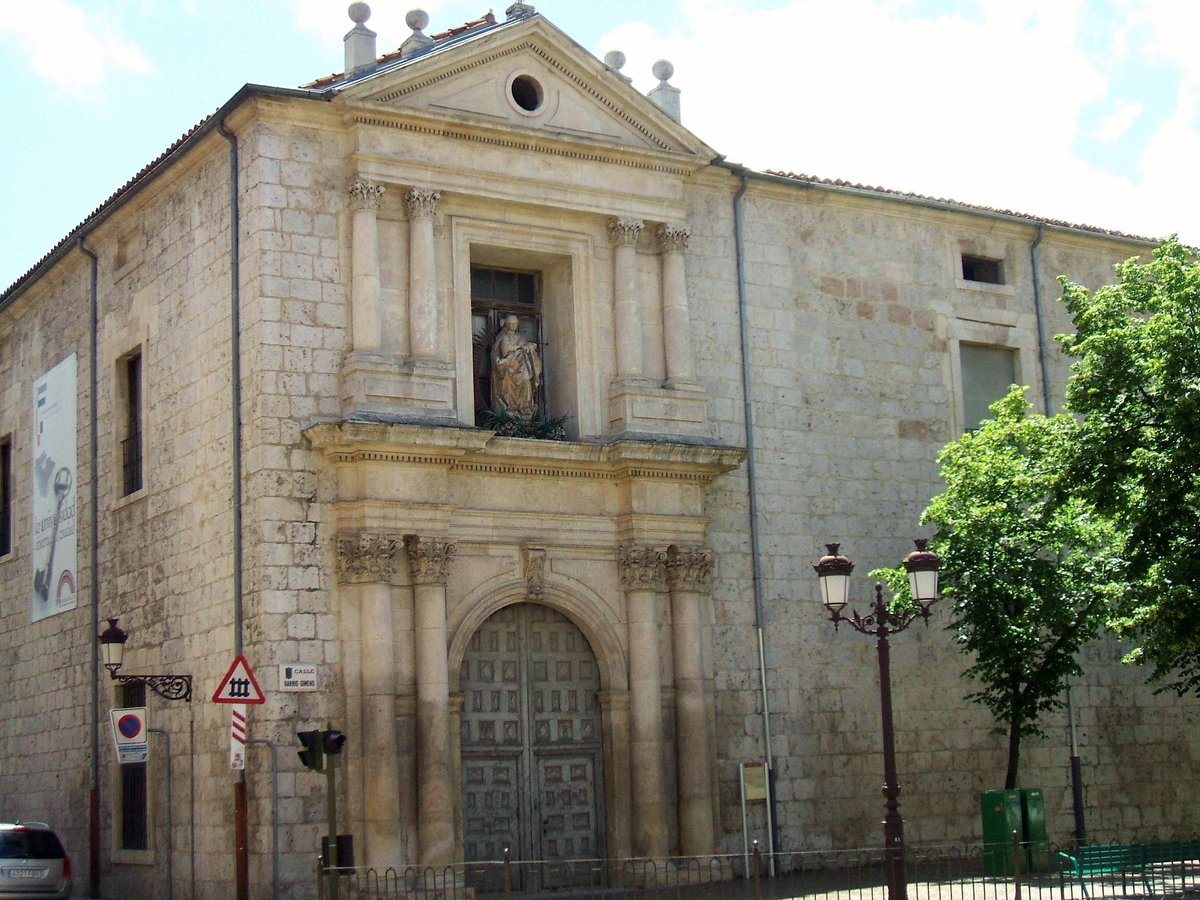
The building was recovered in the 1980s for university use and now houses the Rectorate, the Faculty of Law, and the old library of the University of Burgos. The site, which is part of the National Heritage, features a landscaped garden where a chess board is located for summer musical activities. Adjacent to the main entrance, known as the Puerta de Romeros, stands the hermitage of San Amaro and the cemetery where pilgrims who died along the pilgrimage route were buried.
Sources: Wikipedia, OpenStreetMap, Wikidata, Wikimedia Commons
Written by Nik Frost
Discuss this with the author and others
No comments yet. Be the first to start the conversation.