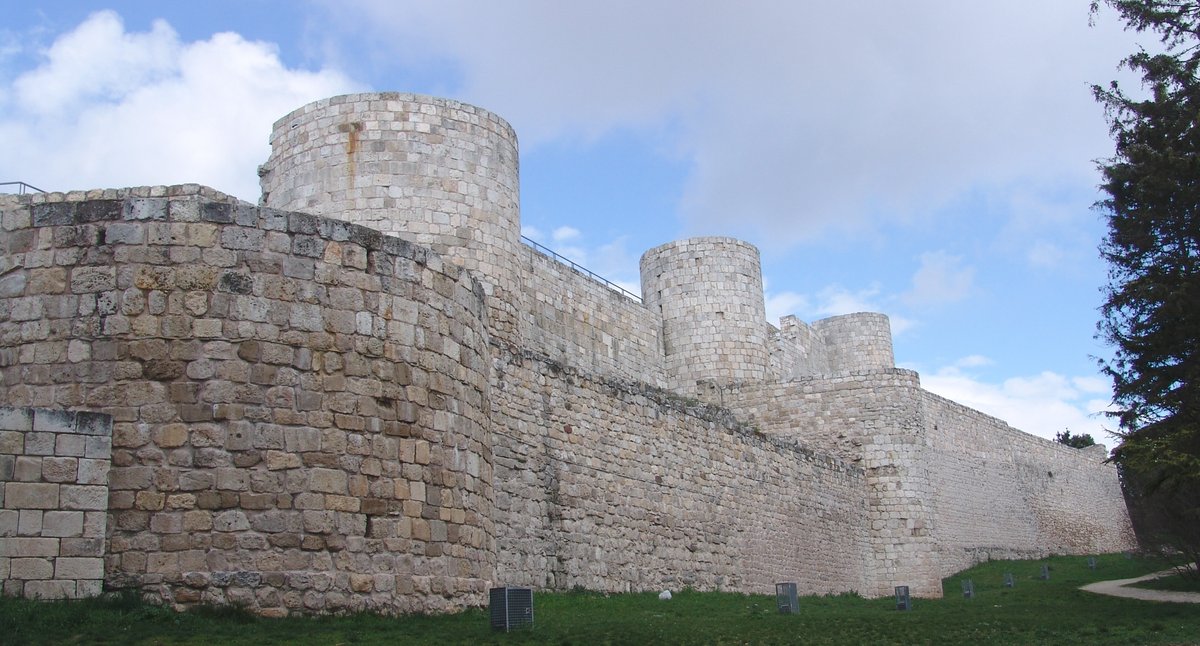

The Castillo de Burgos served as the first training school for gunners in Spain. By 1542, the fortress was producing twenty quintals of gunpowder every single day to supply Spain's overseas wars. This occurred during the Early Modern Age as the castle gradually lost its defensive function due to the evolution of military techniques.
While the ruins today stand 75 metres above the city on the hill of San Miguel, the foundation is much older. Archaeological evidence points to Roman origins and Visigothic occupation. It grew into a royal residence for the kings of Castile, receiving major transformations under Alfonso VIII and Henry IV. At one point, the fortress was so significant that contemporary travelers noted the feeling of strength and security it offered.
Conflict defined its later centuries. It served as a state prison for kings and was the site of the execution of Infante Frederick of Castile in 1277. The fortress saw brutal sieges, including a fierce conflict in 1474 to cut off its water supply. Its ultimate fate came in 1813 when French forces, retreating from the Duke of Wellington, used explosives to blow up the castle to ensure it could not be reused by their enemies.
Sources: Wikipedia, OpenStreetMap, Wikidata, Wikimedia Commons
Written by Nik Frost
Discuss this with the author and others
No comments yet. Be the first to start the conversation.