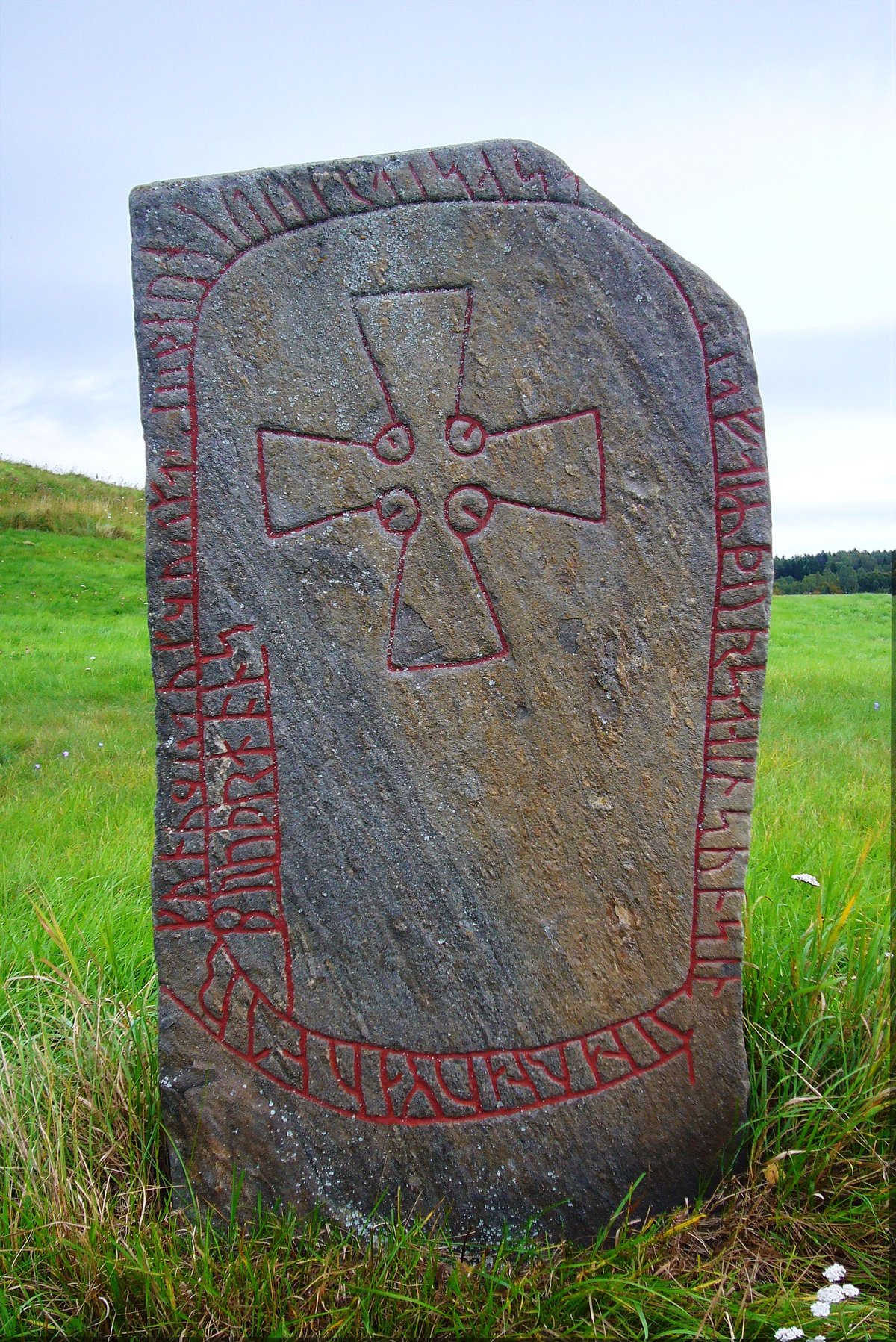

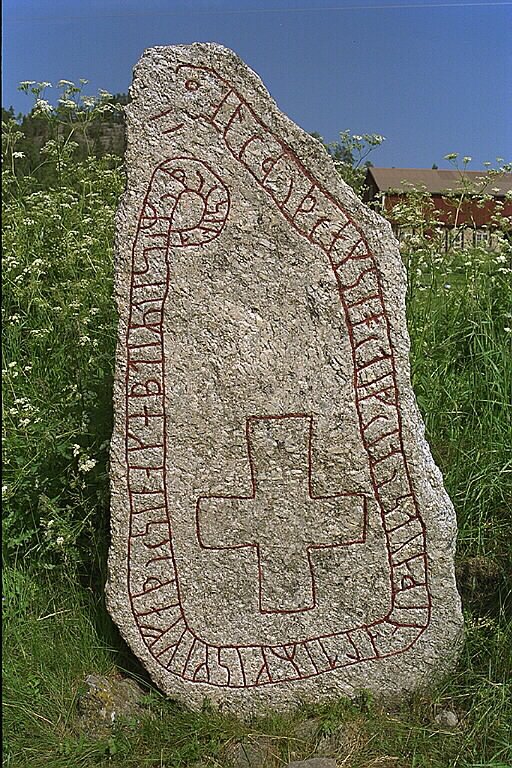
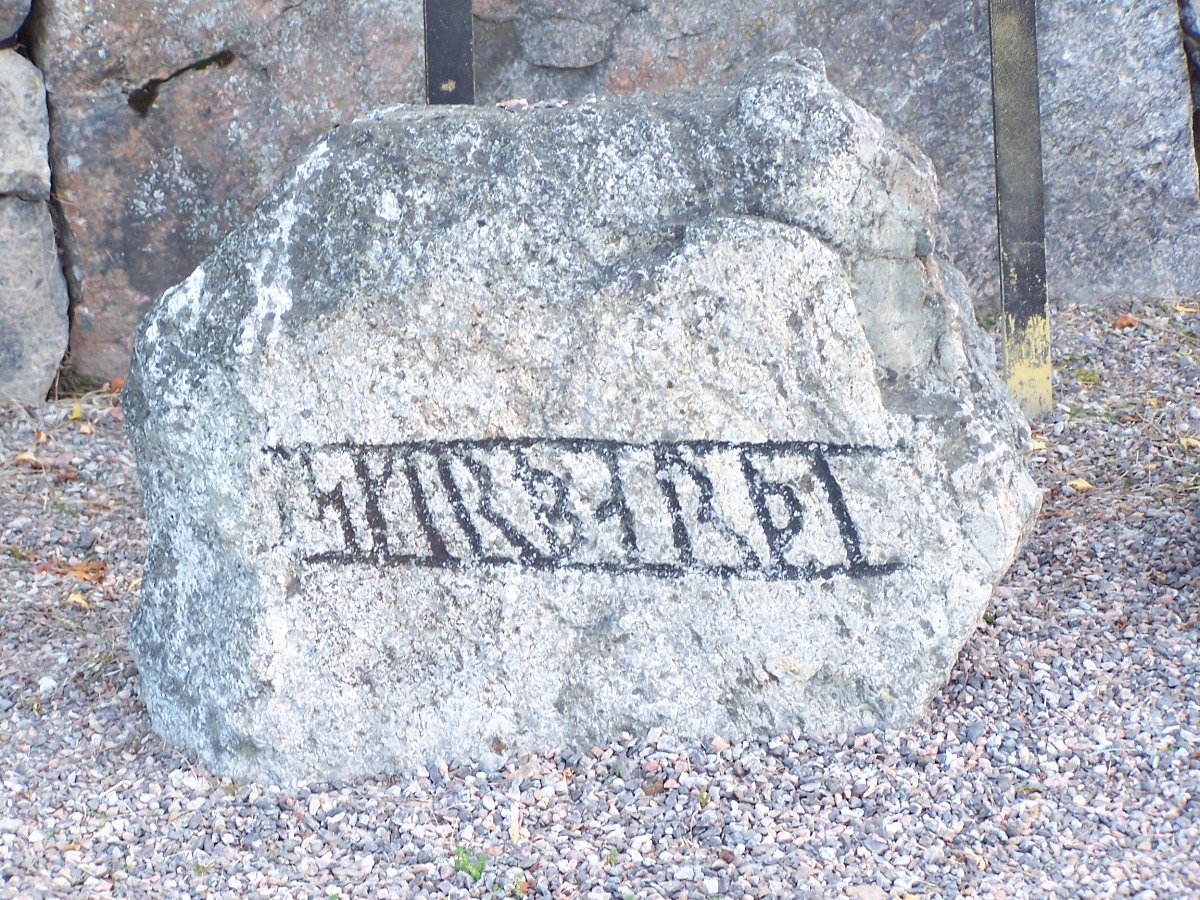
The Högomstenen stands as a sturdy witness to the past, a blue-black block of gneiss or diabase reaching 130 centimetres into the air. Its surface holds a clockwise band of runes and a cross at its heart. Although several runes are damaged or erased, the inscription records that Gunnuðr and Torgöt, or possibly Gunvid and Torgärd, raised the stone for their son Torsten and his brothers.
We can trace a restless journey through the records of this stone as it traveled toward its current home in Sundsvall. In 1868, it was documented in a field, yet local memories hint at an earlier life on a burial mound. A tradition from 1948 describes a woman from Högom who lived in the 1840s and remembered the stone serving as a bench by a stove in a kitchen. It later sat in a yard where it split into two pieces before being mended with iron clamps in the 1860s.
Further exploration of its timeline reveals a nocturnal move in 1912 that occurred despite the wishes of the locals. It traveled to Medelpads fornhem to be cleaned and repainted in Stockholm before being erected on its current site in 1948. Today, it stands near road 86 in the Högoms gravfält as a heavy, tangible bridge between the past and the domestic lives of those who lived nearby.
Sources: Wikipedia, OpenStreetMap, Wikidata, Wikimedia Commons
Written by Nik Frost
Discuss this with the author and others
No comments yet. Be the first to start the conversation.