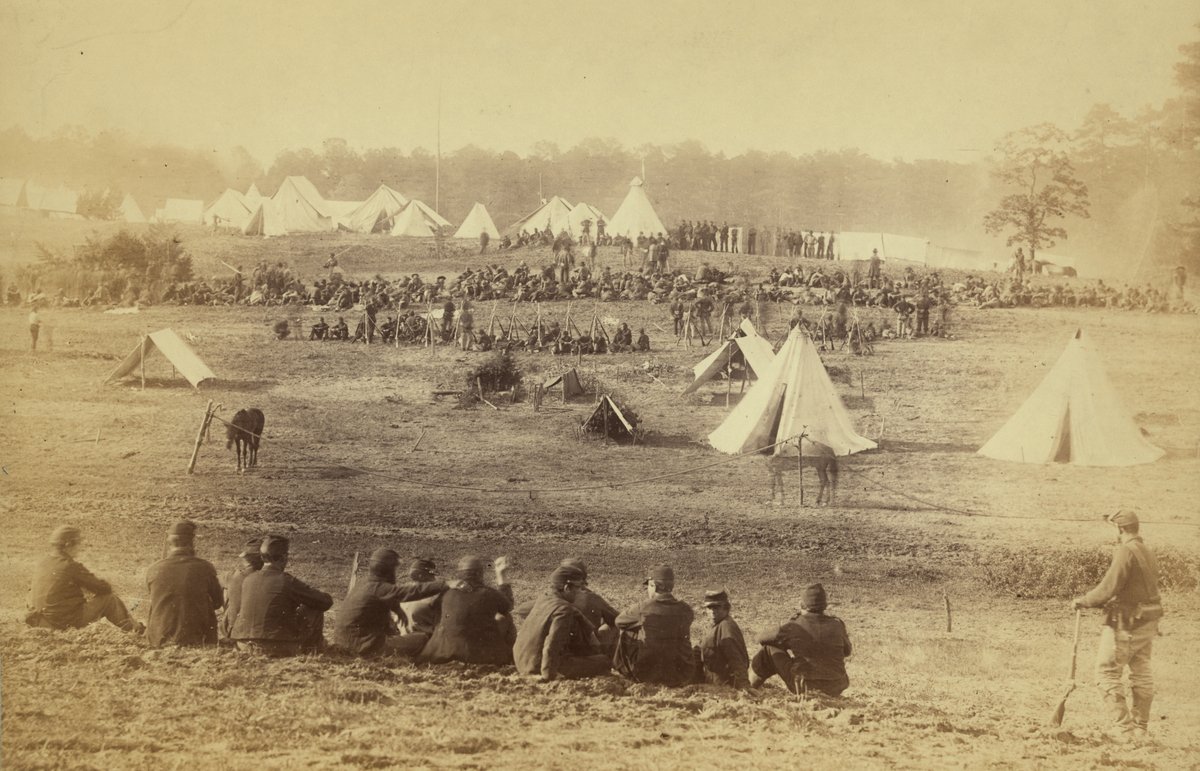

The Battle of Fisher's Hill, on September 21-22, 1864, was one for the history books during the American Civil War. A Union force of approximately 35,000, led by Maj. Gen. Philip Sheridan, faced off against the Confederate troops of Lt. Gen. Jubal Early's 10,000. The Confederate army's right loomed over the North Branch of the Shenandoah River, while their left infantry settled atop Fisher's Hill. Maj. Gen. George Crook, recommending a flanking maneuver, encouraged Sheridan to go through the forested slopes of the mountain, targeting the Confederate cavalry.
However, the Confederates were busy reinforcing their lines before the attack. On September 22, around 4 p.m, the attack began, shoving the Confederate boys aside. Maj. Gen. Stephen Dodson Ramseur held his ground on the left flank of his division, but the charges of Crook and Brig. Gen. James B. Ricketts's division of Horatio G. Wright's VI Corps broke Ramseur's line, pushing forward. Wright's remaining divisions and XIX Corps smashed the Southern line, and the Confederates retreated to Waynesboro, Virginia.
Union Brigadier General Alfred Torbert was sent to impede their escape, but he half-heartedly obliged, leaving enough wiggle room for Early to escape. However, the battle signaled the end of Early's successful Fall campaign, with Sheridan hot on the heels of his retreating soldiers. Four Union Army enlisted men and one officer won the Medal of Honor during the action at Fisher's Hill. The Civil War Trust and its partners have conserved and marked 362 acres of the battleground, which visitors can explore via trails and interpretive signs.
Sources: Wikipedia, OpenStreetMap, Wikidata, Wikimedia Commons
Written by Friendly Jane
Discuss this with the author and others
No comments yet. Be the first to start the conversation.