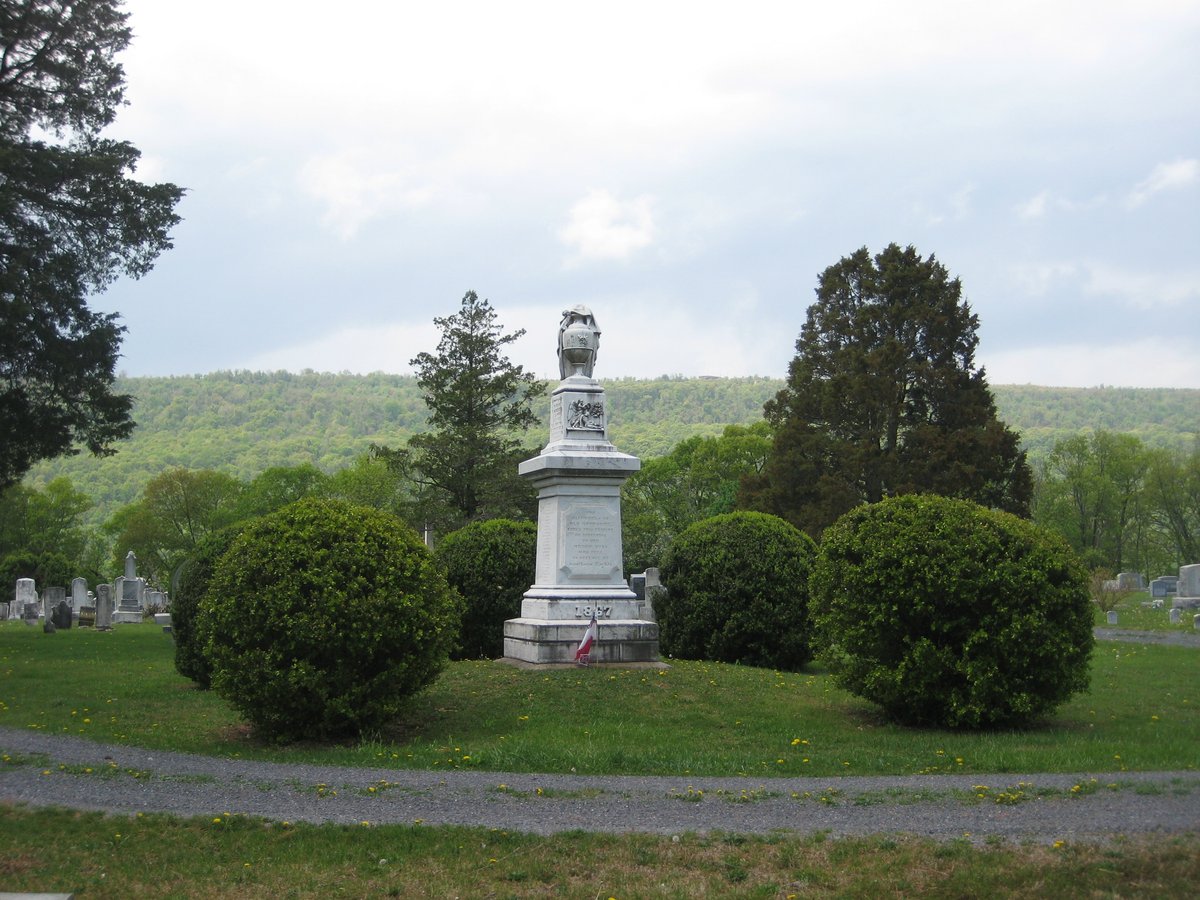

The Confederate Memorial, also known as the First Confederate Memorial, stands at Indian Mound Cemetery in Romney, West Virginia. It commemorates the residents of Hampshire County who died while fighting for the Confederate States of America during the American Civil War. Sponsored by the Confederate Memorial Association, the monument was dedicated on September 26, 1867, after the association began fundraising for its construction in 1866. The town of Romney claims this is the first memorial structure of its kind in the United States and that the town performed the nation's first public decoration of Confederate graves on June 1, 1866.
Despite the county lying within Unionist West Virginia, members of the Confederate Memorial Association and their families marched through Romney in 1866 to decorate the gravestones, even as many residents feared Federal authorities. The contract to build the monument was awarded to the Gaddes Brothers firm of Baltimore to fabricate a white Italian marble memorial costing US$1,133.63. During its fabrication, the words "Southern Rights" were initially omitted due to bitter post-war feelings and Federal statutes, but were secretly etched into the marble after the components were packaged for shipping.
Today, the memorial stands on a raised mound ringed by five boxwoods in the original section of the cemetery. Every year on the first Saturday in June, Hampshire County Confederate Memorial Day, participants march down Main Street with reenactors to place a 30-foot evergreen garland and wreaths on the memorial. The construction of the monument marked a period of post-war revitalization for the county, serving as a symbol of restored confidence as citizens worked to rebuild institutions and businesses destroyed during the war.
Sources: Wikipedia, OpenStreetMap, Wikidata, Wikimedia Commons
Written by Friendly Jane
Discuss this with the author and others
No comments yet. Be the first to start the conversation.