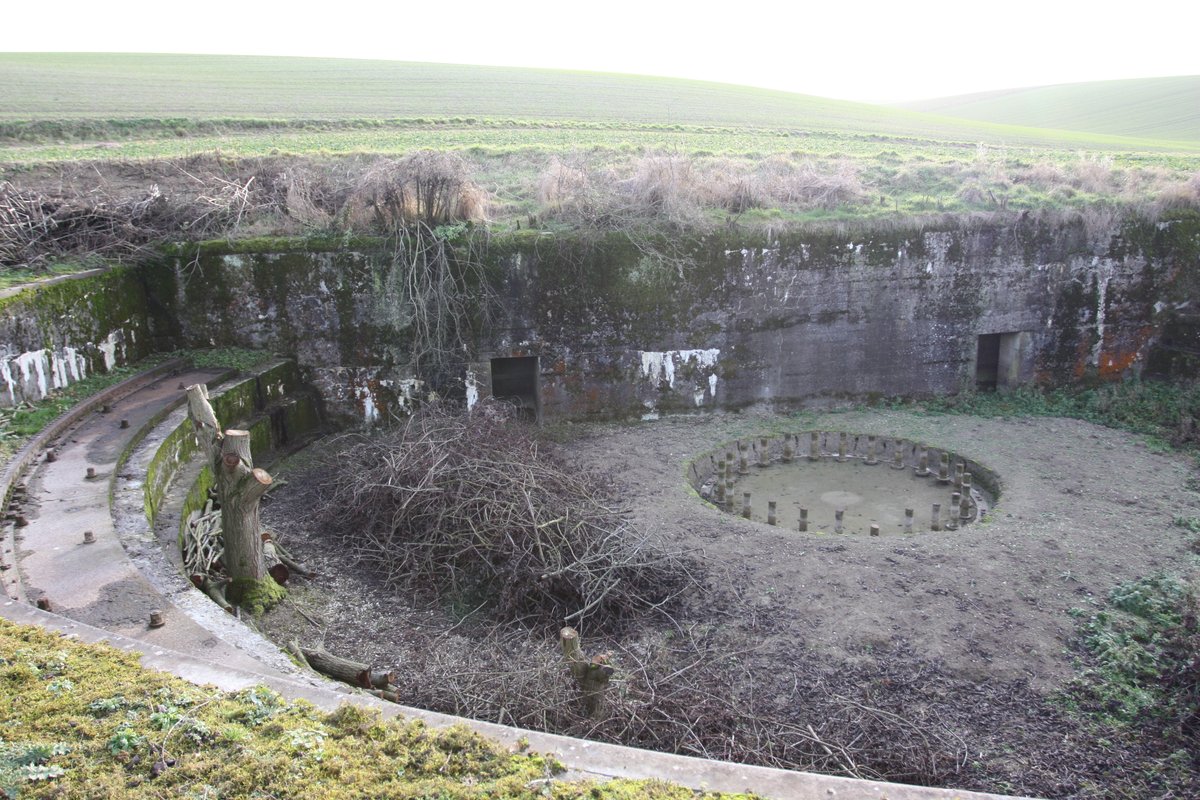

Can you picture a naval gun so gargantuan that its only purpose was sinking ships? Now imagine the German military deciding that lobbing shells at railway stations was a suitable alternative. That was the logic behind the 380 mm SKL/45 gun, part of a group of pieces baptised "Max". It was a piece of maritime hardware, originally intended for the German navy but ceded for land combat. To adapt it for use on solid ground, the Germans had to install a counterweight to balance the weight of the breech.
How did they move this piece into position in 1916? The Germans constructed a standard-gauge railway from the station at Contreuve, passing through the village of Semide. They kept the location secret, tucking the site into a thick forest at les Valettes to evade aerial reconnaissance. Local villagers saw massive tubes on two wagons moving under the cover of night, yet the site itself remained a forbidden zone.
Construction of the 2,000 square metre concrete platform took over a month. It featured a semi-circular firing base, ramps for shells and powder, and underground bunkers for storage. Once it was ready in November 1916, the Marine-Sonderkommando Schulte took command. They fired only about 24 or 25 shells toward nearby train stations before the gun was dismantled and shipped away by railway, leaving the concrete platform behind.
The gun served for only a few days before being moved. The site remains a silent footprint of this military history. Today, the platform stands as a protected historic monument in the Ardennes, a relic of a piece of artillery that was moved, used, and moved again in a matter of days.
Sources: Wikipedia, OpenStreetMap, Wikidata, Wikimedia Commons
Written by Nicolo Ciampini
Discuss this with the author and others
No comments yet. Be the first to start the conversation.