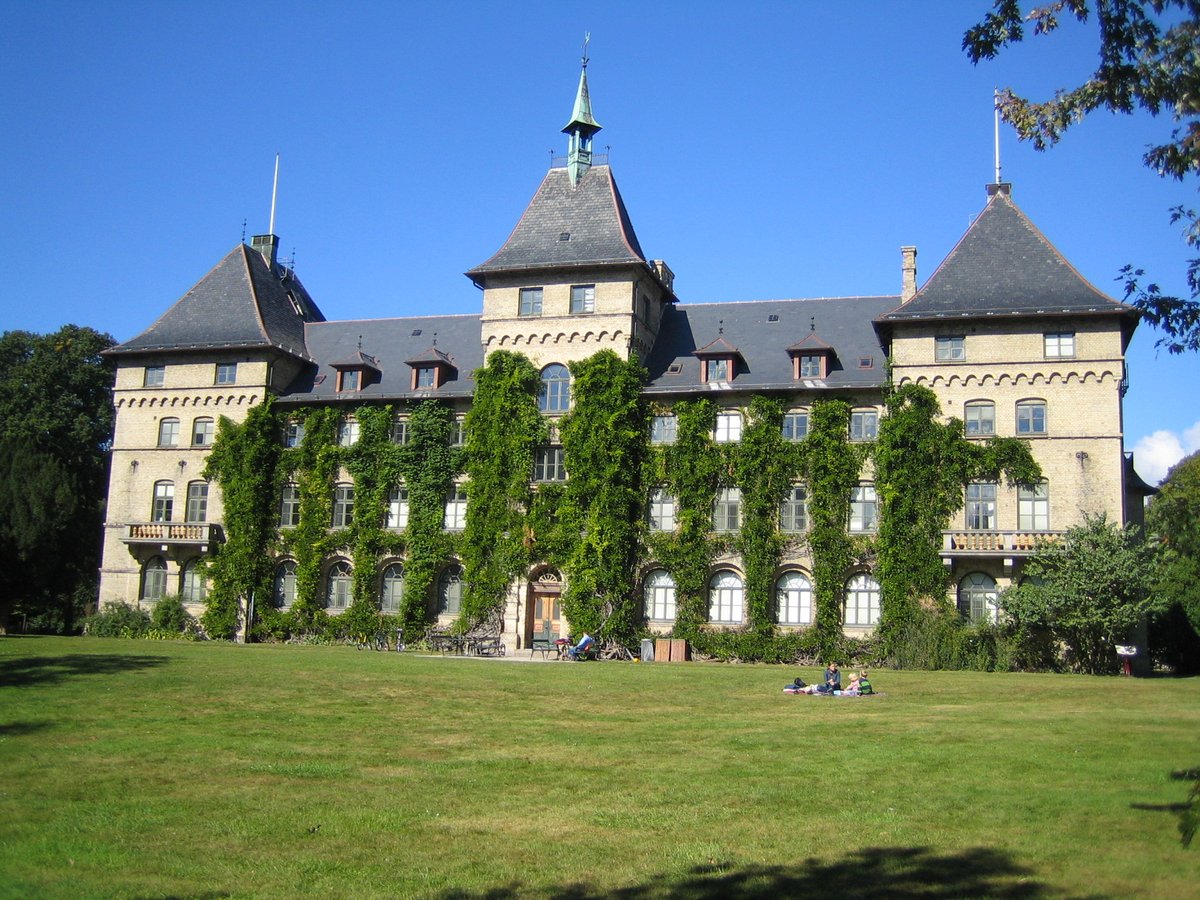

Alnarp Castle (Swedish: Alnarps slott), located in Alnarp, Lomma Municipality, Scania, approximately 10 km north of Malmö in southern Sweden, is a curious case of French Renaissance architecture in the heart of Sweden. The present building was erected in 1862, replacing the original castle built in the 12th century. This French-styled castle, however, came into Swedish ownership only in the 19th century. The castle park, open to the public year-round, has the second-greatest variety of trees in Sweden.
Alnarp Castle is steeped in history, having changed hands numerous times. In 1325, Alnarp came into the possession of a knight named Anders Pedersen. The Ulfeldt and the Thott families, who were members of the Scanian nobility, later owned the castle. The Ulfeldt family held it in the early 15th century, and the Thott family in the 1440s. The castle eventually passed to the Krummedige family.
Erik Krummedige, a cousin of Henrik Krummedige (an advisor to the Danish king), took possession of the castle in 1500. After the Treaty of Roskilde in 1658, King Charles X Gustav of Sweden gave the castle to a commandant of Malmö, Johan von Essen. From 1694, it became the residence for the Governors-General of Sweden in Scania.
Today, Alnarp Castle houses offices and meeting rooms used by the Swedish University of Agricultural Sciences.
Sources: Wikipedia, OpenStreetMap, Wikidata, Wikimedia Commons
Written by Nik Frost
Discuss this with the author and others
No comments yet. Be the first to start the conversation.