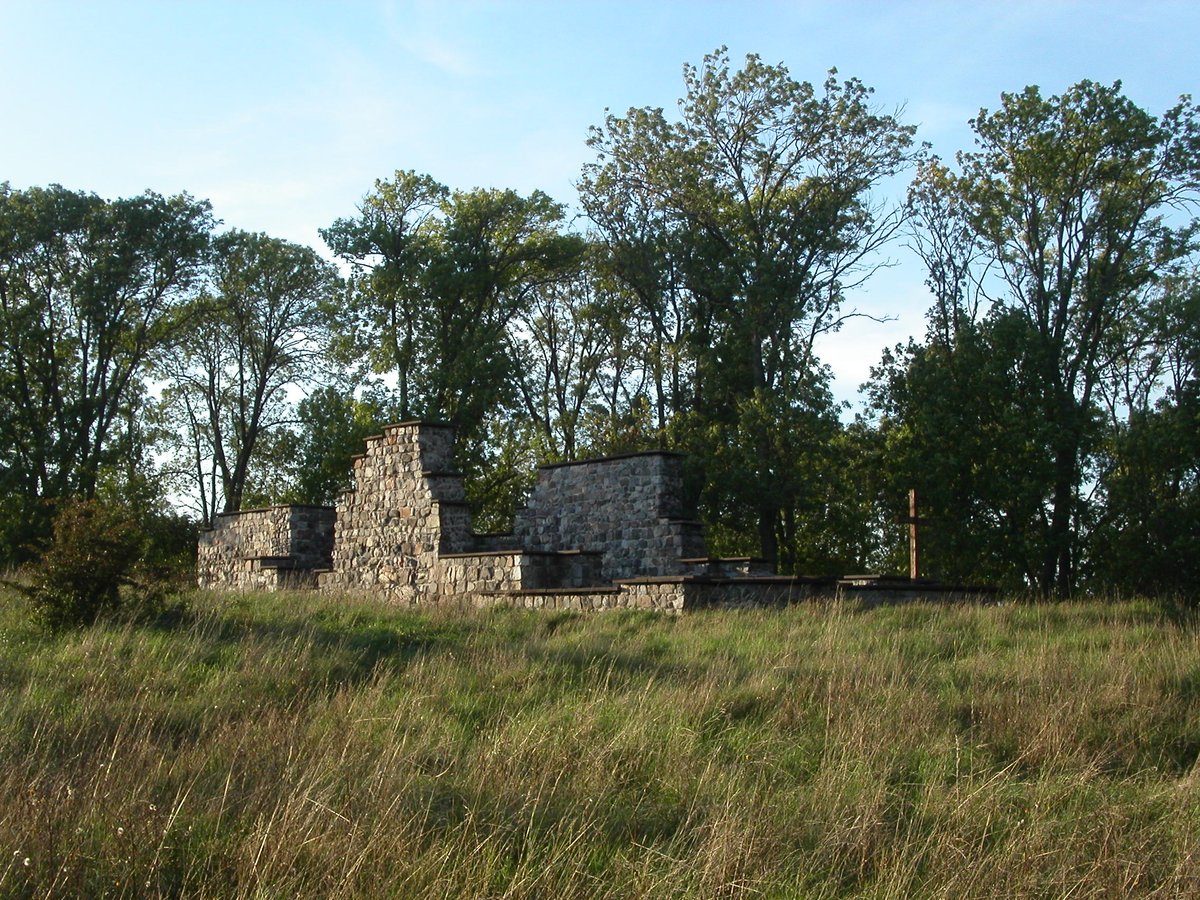

The granite remains of Flasta mur are the leftover walls of Flasta's old church, built in a Romanesque style during the first half of the 1100s. The architecture featured a longhouse and a narrower choir with a rounded apse, with a tower located in the west. On the southern side of the choir, there was an extension whose use remains unknown - possibly a burial chapel for a noble family.
In the 1230s, Cistercian nuns from Byarums kloster in Småland came to Uppland. They likely established their first dwellings near the old parish church of Flasta, which probably became their very first monastery church. By the 1240s, construction began on Skokloster church and its monastery complex on the eastern coast of Skohalvön. A few years later, the old Flasta church burned down and its regular use ended.
Archaeological excavations in 2006 revealed several artifacts within the ruin's area. These included a fragment of a cup belonging to a medieval baptismal font, featuring relief carvings of twisting plant vines, parts of a deer, and a lion. Other finds included two oval buckles and a necklace from a woman's grave, as well as a rare enamel mount found within the ruin's walls.
The ruins are located near Flastavägen 9, about one kilometer northwest of Skokloster church. Outside the stone walls lies the former, now abandoned, graveyard.
Sources: Wikipedia, OpenStreetMap, Wikidata, Wikimedia Commons


Written by Nik Frost
Discuss this with the author and others
No comments yet. Be the first to start the conversation.