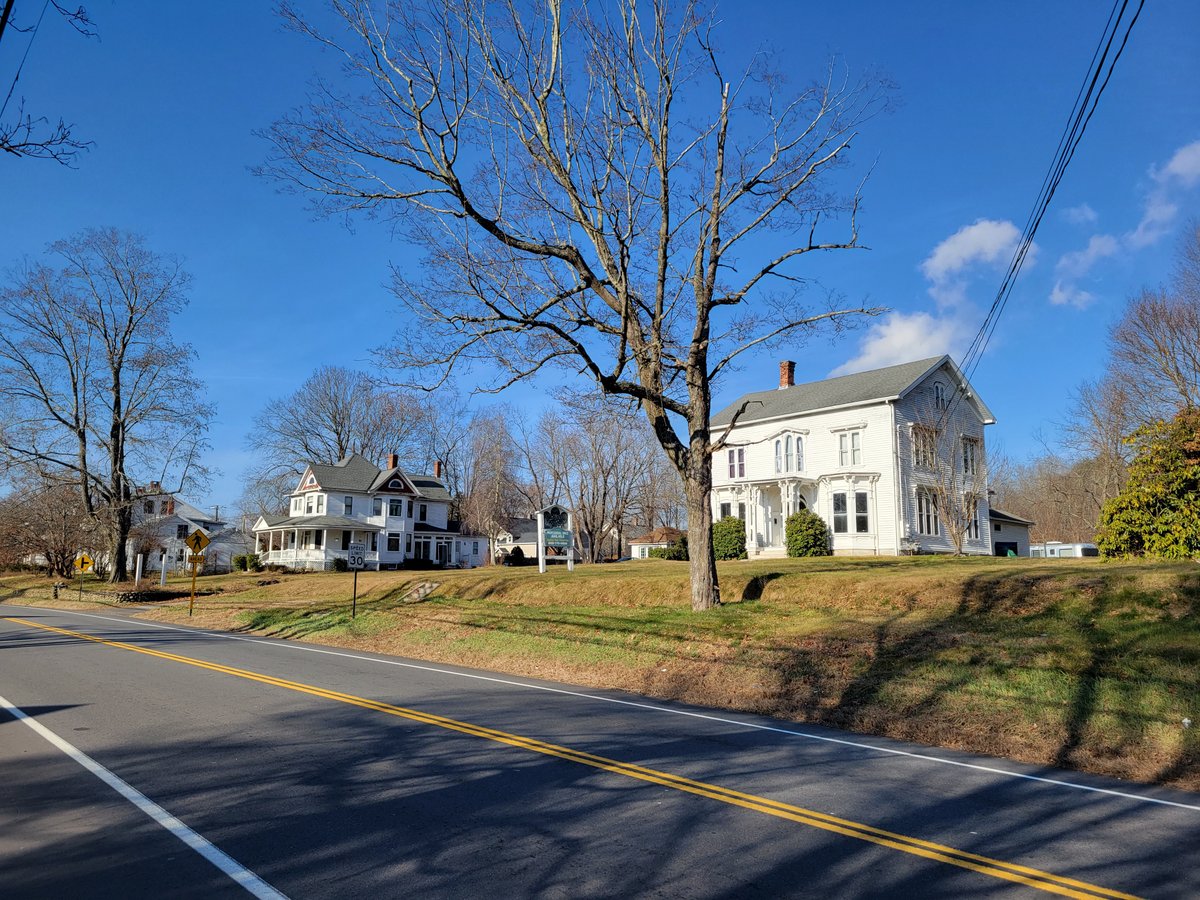

Welcome to Dayville! Tucked away in the heart of Killingly, Connecticut, this gem transports you back to the 1800s as you wander through its historic district. Established in 1988, Dayville made history by gracing the National Register of Historic Places. Named after Captain John Day, who was the proud owner of the water rights on the Five Mile River, Dayville offers a captivating blend of the old and new. By 1849, the Village had grown considerably to accommodate the Dayville Congregational Church, a stunning creation of Alexander Blanchard during the Greek revival period.
Blanchard also built his own Greek Revival mansion in the same era. With the arrival of the Norwich and Worcester Railroad in 1830, Dayville grew further, transforming into a bustling manufacturing hub. By the 1860s, the village flourished, showcasing fine examples of Italianate and Queen Anne architecture. These architectural gems were often built for the owners of nearby manufacturing facilities. The Thomas Sayles House, a 1866 masterpiece, even boasts a period carriage barn.
The Henry Hammond House, constructed around 1888, is a fascinating fusion of Italianate and Queen Anne styles, complete with Italianate brackets and turned porch balusters. A persuasive later example of Queen Anne architecture is the William Labelle House, built in 1912.
Sources: Wikipedia, OpenStreetMap, Wikidata, Wikimedia Commons
Written by Friendly Jane
Discuss this with the author and others
No comments yet. Be the first to start the conversation.